The European Court of Auditors (ECA) has inspected the Union’s nuclear-safety foreign aid and found large cracks. In a special report published on 4 March the watchdog wrote, “The Commission lacks an integrated, up-to-date strategy” to steer the €3.2bn Instrument for Nuclear Safety Cooperation (INSC) and €3.7bn in Euratom loans disbursed since 1994.
Auditors reviewed 14 grants and loans worth €1.6bn, visited Armenia, Ukraine and Central Asia, and interviewed Commission, European External Action Service (EEAS), European Bank for Reconstruction and Development (EBRD) and International Atomic Energy Agency staff.
Only two of those 14 contracts finished on schedule; the other 12 slipped by between 11 and 48 months. The three largest INSC projects overshot their budgets spectacularly: the New Safe Confinement (NSC) over Chernobyl cost 233 per cent more than planned; the ISF-2 dry-storage facility rose by 122 per cent; and the Central-Asian Environmental Remediation Account climbed by 47 per cent.
Four remedies
“Without systematic, comparable outcome data, Brussels cannot prove that its €6.9bn in cumulative nuclear-safety spending since 1991 has actually lowered accident probability or radiation doses,” the Court warned.
The auditors prescribed four remedies. First, the Commission should draft a single strategy by mid-2027 that maps other donors, sets quantified objectives and clarifies when to use grants or loans. Second, from 2026 every proposal should be ranked transparently for urgency, risk, added value and sustainability. Third, budgets must be realistic and contracts laced with performance incentives or penalties. Fourth, monitoring must capture real-world safety gains—such as reduced worker doses—instead of mere construction milestones.
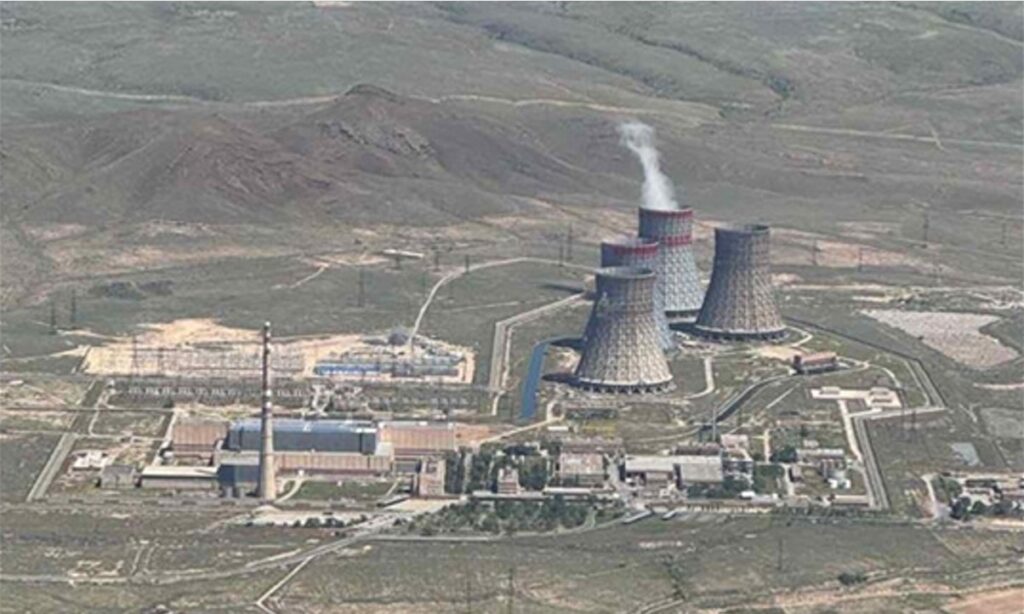
Selection blunders fed the Court’s ire. The Union financed life-extension works at Armenia’s ageing Metsamor plant although its own policy calls for closure. It began cleaning Soviet uranium pits in Central Asia before feasibility studies were complete, causing redesigns and extra costs.
Project choices under fire
Several Iranian actions collapsed after the US quit the nuclear deal, a risk the Court says had been “under-assessed”. And cumulative EU grants for Chernobyl reached €770m—well beyond the 41 per cent cost-share long used by the G-7—because others failed to pay their share.
Strategy, too, is missing in action. Current planning papers cover the INSC but barely mention Euratom loans, and they ignore what the IAEA, America, Russia or Japan are funding. Because, the auditors write, “the global nuclear landscape has changed drastically since the first INSC in 2007, the omission is serious.” They insist that only a unified blueprint can prevent duplication and target cash where it saves most lives.
Monitoring fares no better. Seven of nine grant agreements measure outputs, not outcomes. In Ukraine Russian occupation slowed fuel transfers into ISF-2 from the planned two casks a day to two a month, yet disbursements continued. For the Ukrainian €300m loan the Commission relied on EBRD consultants “without defining responsibilities in writing” and approved payments even when the borrower had not paid contractors.
Commission concedes, conditionally
The Commission and the EEAS answered on March 6th. They defend the two instruments as “indispensable” but accept, in part or whole, every recommendation. “We partially accept Recommendation 1,” the reply says. “We will refresh the 2008 strategy in the context of the next Multi-annual Financial Framework and deliver it by end-2029.” That timetable misses the Court’s mid-2027 target by two years.
On project selection Brussels retreats further. “This recommendation is accepted in full.” Future files will show how each proposal scores on risk, urgency and sustainability, and—where operators earn revenue—why a grant, not a loan, is justified. Yet the reply stresses that Euratom loans are legally confined to member states or to non-EU countries designated under Council Decision 77/270/Euratom, narrowing the field.
Without systematic, comparable outcome data, Brussels cannot prove that its €6.9bn in cumulative nuclear-safety spending since 1991 has actually lowered accident probability or radiation doses. — The Europan Court of Auditors report
Cost control draws a half-nod. The Court trumpeted an €85m bonus that sped up the NSC and sliced €130m off further overruns as proof that “performance incentives work”. The Commission counters, “We partially accept.” Bonuses or penalties will be inserted “when relevant and feasible”, but insisting on firm foreign pledges before EU money flows “could be counter-productive”.
Ways of measuring safety
On monitoring Brussels folds. “This recommendation is accepted.” Follow-up visits will grow more frequent, outcome indicators such as reduced unplanned outages will populate new log-frames and the EBRD’s role in loan oversight will be “formalised”. Still, officials caution that nuclear-safety impact is “intrinsically hard to measure” and that chasing perfect data could stall urgent repairs.
The institutions also defend disputed cases. On Armenia they insist that “financing life-extension work complied with all legal provisions and served immediate safety needs.” On Iran they maintain that volatile politics argues for flexibility, not rigid scorecards. Coordination with the IAEA and other donors, they add, is already “regular”, even if not captured in one glossy document.
Brussels lists achievements it does not want eclipsed by audit numbers: €770m for Chernobyl’s giant steel sarcophagus, 128 post-Fukushima upgrades across eight Ukrainian reactors, and the launch of a fund to clean Soviet uranium mines. Those feats, it says, “directly protect Europeans from cross-border radiological hazards.” The Court does not dispute their value; it questions only whether the spending was the cheapest way to obtain it.
Deadlines at issue
Timing now forms the main fault line. The auditors want their prescriptions in force by 2027, when the current INSC expires. The Commission positions most fixes inside the 2028-34 budget cycle and its refreshed strategy in 2029. That lag, the Court fears, could see new projects approved under the same fragmented rules it has just condemned. Brussels replies that tying reforms to a fresh budget spares everyone the hassle of retrofitting live contracts.
(In the case of Armenia,) financing life-extension work complied with all legal provisions and served immediate safety needs. — The European Commission‘s reply to the ECA report
Member states will decide whose clock matters. Germany and the Netherlands, wary of budget creep, note that only €300m remain undisbursed from the €3.7bn loan window and ask why progress is still so slow.
Poland wants Central-Asian mine clean-ups accelerated before another tailings dam bursts. France, nuclear power’s loudest EU backer, whispers that sloppy overseas governance could tarnish the technology’s image at home.
Numbers still bite
The ECA’s statistics continue to sting: two on-time completions out of 14; average delay 29 months; cost blow-outs topping 233 per cent. Those figures sit awkwardly beside the Commission’s claim that its management system is fundamentally sound. The auditors reiterate, “Until the European Commission writes a single strategy, ranks projects transparently, contracts in ways that curb slippage, and tracks real-world safety results, taxpayers cannot know whether every extra euro actually lowers nuclear risk.”
Brussels insists the cure has begun. A pilot scoring matrix is being applied to two fresh INSC proposals in Kazakhstan and Georgia. Standard grant clauses now let the Commission claw back money if beneficiaries fail to maintain equipment for at least five years. Euratom lawyers are drafting a memorandum obliging the EBRD to produce quarterly, not annual, progress snapshots.
A follow-up audit is pencilled in for 2028, just before the Commission’s promised strategy should appear. If that second probe still finds drift, the Court will have fresh ammunition. If, instead, Brussels can show a ranking grid in use, incentives biting and outcome data improving, it will claim vindication.