The war in the Middle East has sent gas prices to their highest level since 2023. A cold winter depleted stores across the continent. Competition from Asia threatens to divert liquefied natural gas away from Europe. Add Hungarian blackmail with a dash of environmental limitations for a perfectly combustible cocktail.
Gas storage across the bloc is less than 30 per cent full, compared with a five-year average of around 45 per cent for this time of year. “It’s a double punch. Europe is only coming out of an industrial energy crunch and now we’ve got the next one,” Henning Gloystein, an energy expert at Eurasia Group, told Financial Times.
“Stocks have never been so low over this point of the year,” said Simeone Tagliapetra, a senior fellow at think-tank Bruegel. “Refilling the gas storages for the next winter starts now. If that has to happen at these prices, it would be a huge burden for Europe.” On Tuesday Dutch Prime Minister Rob Jetten said, “The main focus is filling gas reserves as soon as possible.” A senior energy trader added, “We are pretty much ceasing withdrawals already.”
Supply crunch gathers pace
Officials note that since 2022, the EU has diversified supplies and is no longer reliant on Russian gas. Instead, it is importing much larger quantities of American LNG and drawing more supplies from Norway. Europe sources about 10 per cent of its LNG from Qatar. But if competition for supplies elsewhere continues to drive up prices, inflation could rise substantially and throttle economic growth, especially in Italy and Germany.
An EU official told Bloomberg it would be possible to refill storage to 90 per cent before next winter and said member states had not called for co-ordinated measures to limit prices during a meeting on Wednesday morning. Yet the absence of joint purchasing agreements leaves national capitals bidding against each other.
Utilities could make a short-term switch from gas to coal in some power plants, as Germany did during the energy crisis in 2022. This would undermine the European Union’s climate objectives.
Policy misfires compound the squeeze
Brussels plans to end free carbon allowances to heavy industry next year. Many firms now factor in carbon costs as a central budgeting item. Critics warn that the change could hollow out manufacturing and send jobs east. The emissions trading system (ETS) has driven carbon prices to record levels, pushing up power costs across the board.
Grid bottlenecks hamper new solar and wind farms from coming online. Developers face long delays for permits and connection fees. That, in turn, raises power prices for both home-owners and factories. Without reliable baseload power, Europe defaults to gas or coal at the first sign of trouble — a formula for higher emissions and volatile bills.
The bloc lacks a unified energy strategy. Member states haggle over burden sharing rather than co-ordinating gas purchases. An EU official confirmed that no coordinated price-cap measures have yet been proposed. The scramble for supplies is turning patchwork policy into penury.
Market volatility meets climate targets
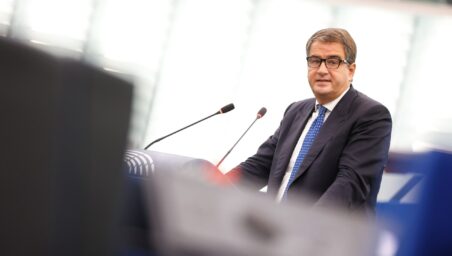
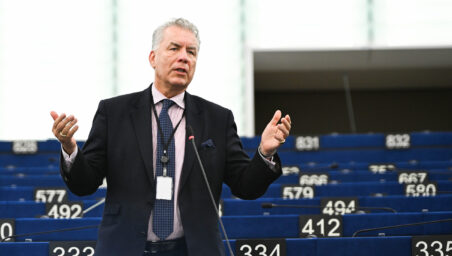
“While this measure is under scrutiny from the Commission, I strongly argue for a more moderate approach,” MEP Peter Liese (EPP/DEU) told reporters about planned ETS changes. Calls to delay the next phase of free-allowance cuts have grown louder in Brussels. Failure to temper the ETS could force industries to cut output or relocate.
Finance ministers face a dilemma. Sacrificing climate ambitions for short-term relief risks eroding Europe’s credibility on green investment. Yet sticking to the existing timetable could inflict a hefty energy-cost premium on key manufacturers.
While (the ETS) is under scrutiny from the Commission, I strongly argue for a more moderate approach. —MEP Peter Liese (EPP/DEU)
Russia still accounts for an estimated 13 per cent of EU gas imports. The Union has slated a gradual ban on pipeline and LNG exports from Moscow by late 2027, but now it’s the Russians who threaten earlier action. On state television Russia’s strongman President Vladimir Putin said, “Other markets are opening now.” He added, “Maybe it’s better for us to end supplies to the European market right now? To go to those markets that are opening now and get a foothold there.”
Trade and funding in limbo
Those remarks risk prefiguring a sudden cut-off that would blindside a continent unprepared for coordinated emergency purchases. The Arctic Pioneer, a Russian-flagged LNG tanker sanctioned by the US, halted in the Mediterranean Sea on March 3rd after a nearby ship was attacked by drone boats, Bloomberg reports. (Moscow blames the attack on Ukraine.) That vessel had just dropped off a shipment to China and was bound for Russian waters. The incident underlines how military flare-ups can disrupt shipping routes and spook insurers.
Europe’s vulnerability extends beyond Russian supplies. The EU-US trade deal remains frozen after the European Parliament decided to keep ratification paused in the wake of a court ruling invalidating President Donald Trump’s global tariffs. “We will communicate towards the US we want to have clarity that they are sticking to the deal,” said MEP Bernd Lange (S&D/DEU), who chairs parliament’s trade committee. Prolonged uncertainty over tariffs could stifle investment in new energy infrastructure.
The war in Ukraine compounds the squeeze. The EU agreed in December to provide Kyiv with €90bn in loan assistance for this year and next, financed through joint borrowing. Hungary last month vetoed the aid as part of a dispute over supplies via the Druzhba pipeline. The bloc now faces the prospect of raising an extra €30bn to plug the shortfall.
The perils of national vetoes
EU leaders will call “for intensified outreach to third countries to help close the remaining gap of €30bn” when they gather for a summit in Brussels later this month. Failure to fund Ukraine will risk the integrity of transit routes for both oil and gas.
Maybe it’s better for us to end supplies to the European market right now? — Russia’s President Vladimir Putin
Hungary’s hold-out over the Druzhba pipeline underlines how diverging national energy policies can imperil collective security. Member states that forge bilateral deals with suppliers undermine EU bargaining power. The result is fragmentation, not solidarity.
Fuel imports remain the single largest component of the EU’s trade deficit. Market shocks now echo across industries, from steelmakers to chemical plants. A prolonged spell of high energy costs would also erode household spending and fan political discontent.
A long and winding road
“It makes clear that we need to continue to be less dependent on fossil fuels. This is again an example that wherever you depend on fossil fuels you are always subject to price challenges,” said Mr Liese. Officials, once again, stress the need for a renewed focus on electrification, building out grid infrastructure and cleaner energy sources.
The Union finds itself unable to forestall blackmail by the head of a single member state. The bloc also shows rigid insistence on self-imposed environmental rules. This combination of internal mismanagement elements leaves the continent dangerously exposed to detrimental external developments, such as the fallout of actions by a chronically volatile US president.
Europe can ill afford a replay of its 2022 crisis at the height of a cold snap. If Brussels does not co-ordinate purchases, fast-track new interconnectors and carve out pragmatic exemptions for industry, the winter of 2026–27 may prove harsher still.