The European Commission’s new energy package landed in the European Parliament on Tuesday as Europe and the rest of the world continue to suffer shockwaves in global energy markets because of the war involving Iran.
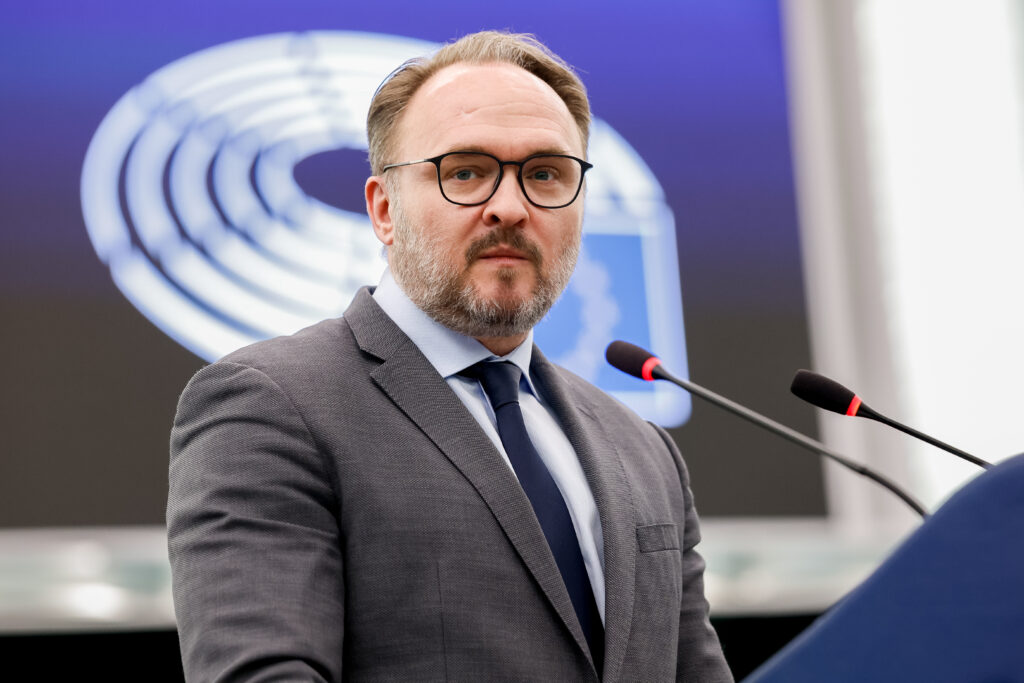
The package, presented to Parliament by Energy Commissioner Dan Jørgensen on Tuesday, was designed as a long-term answer to Europe’s vulnerability to energy price shocks. But it arrived at a moment when oil and gas prices have surged following the initial surprise attack on Iran by Israel and the United States. The parliamentary debate therefore unfolded against the backdrop of rising oil and gas prices driven by the war and renewed concern over the security of global energy supplies.
First Russian aggression, now Iran
Europe is still dealing with the structural consequences of the 2022 energy crisis triggered by Russia’s invasion of Ukraine, which forced the 27-member bloc to rapidly reduce its reliance on Russian gas. While that shift has reshaped Europe’s energy system, policymakers warn that the continent remains exposed to price volatility whenever geopolitical conflicts disrupt global supply.
Energy Commissioner Dan Jørgensen presented the package as part of a broader strategy to reduce Europe’s exposure. While the EU has diversified energy imports since the Ukraine crisis, the Commission argues the bloc will remain vulnerable as long as it depends heavily on imported fossil fuels. The proposal therefore combines measures aimed at strengthening domestic energy production, mobilising investment and expanding the technologies available to Europe’s energy system. At the centre of the proposal is a plan to expand energy communities and citizen participation in renewable generation.
“Power citizens should produce and share their own energy. By 2030, we aim to achieve a tenfold increase in the renewable production capacity of energy communities, enabling clean energy supplies for up to 30 million households,” Dan Jørgensen said. The Commission argues that decentralised production and local energy sharing could reduce bills while increasing public support for the energy transition.
Investment strategy and nuclear component
A second pillar of the package focuses on unlocking investment in the energy system.
According to the Commission, the clean energy investment strategy will seek to de-risk projects and draw in private capital for infrastructure, efficiency and new technologies.
“Our strategy will de-risk projects and attract a wider base of investors for clean technologies, energy efficiency and modern infrastructure,” Dan Jørgensen told MEPs.
The plan relies heavily on the European Investment Bank. Commissioner Jørgensen said the EIB Group intends to mobilise around €75bn in financing over the next three years, including support for grid operators and infrastructure projects.
The third pillar of the package is the EU’s first dedicated strategy for small modular nuclear reactors.
“Small modular reactors are a safe nuclear technology. They can contribute to delivering reliable homegrown decarbonised energy while strengthening our industrial competitiveness and reinforcing our energy security,” Dan Jørgensen said.
The Commission estimates that SMR capacity in Europe could reach 53 gigawatts by 2050 and proposes additional EU funding to support the first commercial projects.
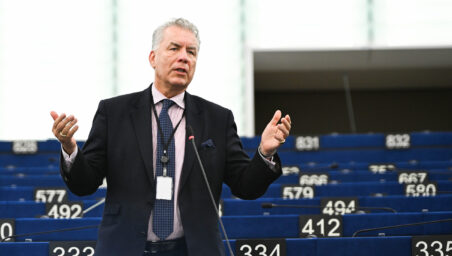
I welcome the SMR points and also the idea of lowering taxes… but we need nuclear without unnecessary restrictions and we should also consider coal and gas under certain conditions – Ondřej Knotek (PfE/CZE)
Debate quickly turns to energy prices
As the parliamentary debate unfolded, lawmakers repeatedly returned to the immediate political reality of rising energy prices. Supply concerns, shipping disruptions and potential blockages of key energy routes dominated the wider geopolitical backdrop.
Several interventions in the debate focused on growing concern among citizens and businesses about the cost of energy. Participants stressed that prices remain a central political issue and warned that high energy costs are already weighing on Europe’s industrial competitiveness and its ability to compete globally.
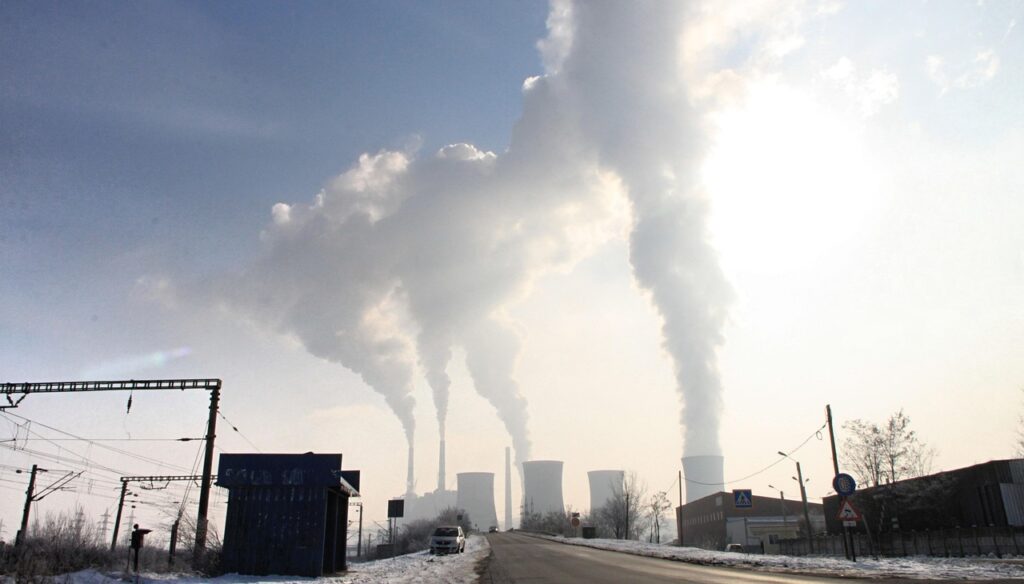
Other contributions highlighted the role of geopolitical instability in driving price volatility. Both the war in Ukraine and the conflict involving Iran illustrate how quickly international crises can push energy prices higher, reinforcing concerns about Europe’s continued exposure to global fossil fuel markets.
Critics attack Green Deal and ETS
More critical interventions focused on what opponents see as the cost of EU climate policy.
Several conservative and far-right lawmakers argued that emissions trading and other regulations were pushing energy prices higher and harming European industry.
Marcus Buchheit (ESN/DEU) delivered one of the more pointed attacks on the Commission’s approach.
“The European Commission tries with its new energy policy and the Clean Industrial Deal to pull the wool over our eyes. It claims it will deliver affordable energy, but in reality it is making the problems that drive prices up even worse.”
Other longtime opponents called for a rethink of the EU’s emissions trading system and a slower pace of decarbonisation.
Ondřej Knotek (PfE/CZE) – a staunch critic of the Green Deal and past rapporteur who tried to hit the brakes on the Commission’s 2040 climate goals – adopted a more mixed tone, welcoming some elements of the Commission’s proposal while criticising what he described as an overly ambitious transition.
“I welcome the SMR points and also the idea of lowering taxes… but we need nuclear without unnecessary restrictions and we should also consider coal and gas under certain conditions.”
Mr Knotek also argued that the EU should reconsider parts of its climate legislation and suggested that the emissions trading system should be postponed or reformed.
How will that lower energy prices for European consumers? It is the dependency on oil, gas and coal that makes energy prices soar. – Emma Wiesner (Renew/SWE)
Exchange over fossil fuels exposes political divide
But his remarks quickly drew a challenge from another MEP through a blue card intervention, exposing the sharp divide in the chamber over the causes of Europe’s energy price problems.
Emma Wiesner (Renew/SWE) questioned the logic of weakening climate policies at a time when fossil-fuel dependency is already contributing to price volatility.
“Do I understand you correctly that oil and gas prices are skyrocketing because of the war in Iran and the situation in the Middle East, and what you want to do is remove the climate policies that help us move away from fossil fuel dependency?”
She continued:
“How will that lower energy prices for European consumers? It is the dependency on oil, gas and coal that makes energy prices soar.”
The exchange captured the central fault line in the debate: whether Europe’s price problems stem mainly from fossil-fuel dependence or from the policies designed to phase those fuels out.
Mr Knotek responded by arguing that the EU should slow the pace of decarbonisation rather than abandon it entirely.
“I do not question decarbonisation as such, but the pathway. We are doing it too ambitiously.”
Renewables supporters stress energy independence
Other lawmakers insisted that the only sustainable way to stabilise prices is to accelerate the shift to domestically produced clean energy.
Marie Toussaint (Greens/FRA) linked rising energy bills directly to geopolitical dependence.
“Energy prices are skyrocketing once again. One out of ten households find it difficult to heat their homes. As long as Europe depends on fossil fuel imports, our bills will hinge on autocrats and geopolitical crises.”
Several MEPs also emphasised the role of local energy communities and renewable generation in lowering costs for citizens.
Next steps for the package
The Commission’s proposal now enters the early stages of the EU legislative process, where the Parliament and member states will shape the final form of the package.
The debate in Strasbourg shows broad agreement on the need to strengthen Europe’s energy security, but little consensus on how quickly the transition should proceed or which technologies should play the largest role.
What began as a Commission attempt to present a coherent strategy for affordable and secure energy has already become another battleground in the wider debate over Europe’s energy transition, competitiveness and the future direction of the Green Deal.