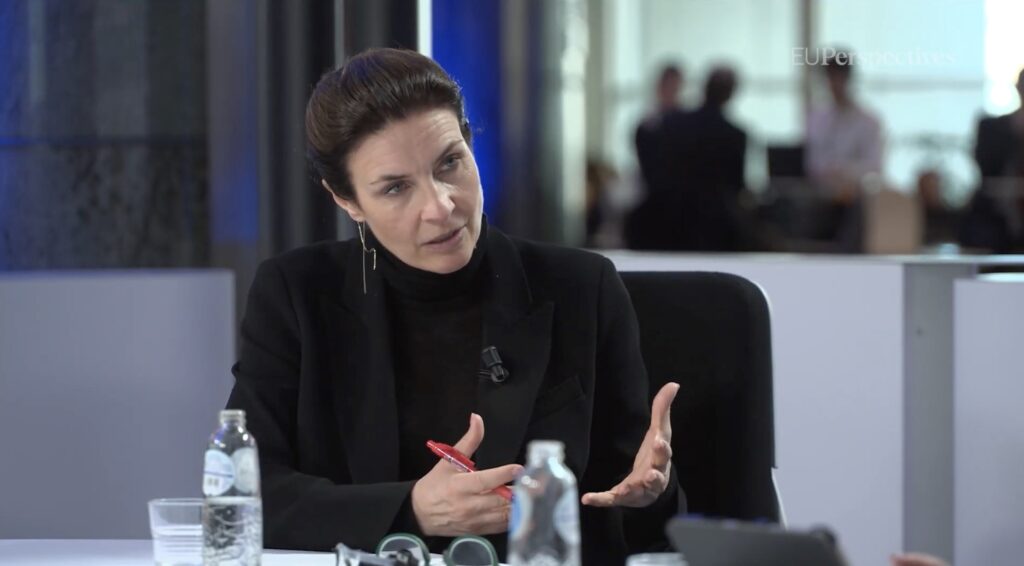
Mounting challenges are testing Europe’s pharmaceutical sector. According to MEP Alessandra Moretti (S&D), the solution lies not only in sectoral interventions but also in a broader shift of competencies to the EU level. In the latest episode of the EU Perspectives podcast, she shares her views on the current state of play and the future of Europe’s pharmaceutical industry.
Europe’s pharmaceutical sector is struggling — and she says the fix requires more than targeted laws. In the latest EU Perspectives podcast, Alessandra Moretti (S&D/ITA) makes the case for shifting real decision-making power to the EU level. Without it, she warns, Europe will keep paying the price for being far from a federal union.
Ms Moretti, an MEP sitting on the European Parliament’s public health committee, sees the root cause in the EU’s limited powers to act quickly when it matters. “We pay the price of being still far away from a federal union in challenging times where decisions need to be taken within a day,” she said. The fix, in her view, goes beyond sector-specific steps like the Critical Medicines Act. It requires a broader shift of competences at EU and national levels.
She also took aim at how the EU allocates research money out, singling out Horizon Europe. As an alternative, she backed the creation of a European Medicines Facility. The public, non-profit body would step in where the market falls short, pooling public and private resources for pharmaceutical research.
“I see some missed opportunities. Our proposal could have changed the panorama for pharmaceutical sector in Europe, but unfortunately the EPP and other groups did not support it,” she said. She remains convinced the idea still has a future, even if it fell short this time.
Dedicated budget where every euro counts
Staying on the topic of financing, she spoke about healthcare funds within the next EU’s long-term budget, the so-called Multiannual Financial Framework for the years 2028–2035.
“We regret the decision to place much of the health-related resources into the Competitiveness Fund. Health is not just a matter of competitiveness—although it’s very important—but it is also a social issue,” she argued. Because of that, she said, S&D “would like to have a dedicated budget programme for health-related issues.”
Ms Moretti argued that every euro spent on healthcare must be tied to clear objectives and conditions, genuinely supporting both patients and innovation. “We should never forget that everything we do is directed at promoting better access for patients to treatment and care,” she said.
Listen to the full discussion featuring Alessandra Moretti, Ines Windisch—Head of Corporate Affairs and Sustainability at Zentiva Group and Chair of the Sustainability Committee at Medicines for Europe—and Andrew Bounds, Financial Times EU correspondent.