Brussels has finally put numbers on its long-trailed promise to speed up Europe’s defence innovation. The European Commission has proposed AGILE, a one-year, €115m pilot that will fund disruptive defence technologies from European start-ups and SMEs, promising four-month grant decisions and full cost coverage to meet urgent military needs.
On 25 March 2026 the European Commission released the legal draft for the Programme for Agile and Rapid Defence Innovation, or AGILE. The dry name hides an experiment with haste: a one-year, €115m scheme that promises small and medium-sized enterprises up to 100 per cent of their development costs if they can turn cutting-edge ideas into kit for Europe’s soldiers within three years.
Officials link the push to the war on the EU’s doorstep. “The war in Ukraine has taught us that for the European defence industry to become more competitive, we must be faster in our innovation, combining disruptive technologies such as AI, quantum, robotics and cyber to our warfare,” said Commission Vice-President Henna Virkkunen during Wednesday’s press conference on the topic. Ms Virkkunen added that Brussels now urges governments to spend at least ten per cent of their armament budgets on emerging technologies.
One-year experiment
The scheme draws on Article 173 of the Treaty on the Functioning of the European Union, which lets Brussels prop up industrial competitiveness. It raids existing pots. A third of the money will come from the European Defence Industrial Programme and another third from the European Defence Fund, the union’s main military R&D purse.
The final €45m will be siphoned evenly from the EU Space Programme and the Secure Connectivity Programme. Because the cash is redeployed, officials insist that no fresh burden falls on taxpayers.
Timing is as compressed as the budget. AGILE’s pilot will run only between 1 January and 31 December 2027, the last year of the current Multi-annual Financial Framework, the EU’s seven-year budget. The Commission bets that this narrow window will sharpen minds on both sides of the grant ledger. Its internal target for moving from a call deadline to a signed grant is four months—half the average under European Defence Fund procedures.
AGILE breaks with another Brussels habit: it will accept single-company bids. The European Defence Fund insists on at least three firms from three member states, a rule meant to foster cross-border industrial ties but one that often ties small outfits in knots.
Shrinking the funnel
By contrast AGILE lets a lone start-up pitch, so long as it is established in an EU country or in one of the few associated states, such as Norway. Foreign investors cannot control the applicant, and any workshop or laboratory used for the project must also lie on EU or associated soil.
Even that firewall has a door. A so-called inducement intervention allows a promising outsider—say, an American quantum-sensing firm—to take part if it promises to shift ownership or production inside the bloc within a set deadline. Brussels will not hand over cash until the paperwork proves the shift, a neat way to lure talent while minimising the risk of foreign capture. The idea reflects a wider European preoccupation with strategic autonomy.
The war in Ukraine has taught us that for the European defence industry to become more competitive, we must be faster in our innovation, combining disruptive technologies such as AI, quantum, robotics and cyber to our warfare. — EU Commission Vice-President Henna Virkkunen
The new plan must cohabit with several older siblings. The European Defence Fund, worth €8bn over 2021-27, finances early-stage research. The EU Defence Innovation Scheme, still embryonic, aims to knit public and private money. The Hub for EU Defence Innovation, or HEDI, acts as a think-tank inside the European Defence Agency. AGILE sits above them, focused on the last sprint before procurement. Officials call the layers complementary; sceptics mutter about overlap.
A crowded acronym soup
Still, AGILE offers real novelties. Costs incurred up to three months before each call deadline will be eligible, acknowledging that inventors rarely wait for bureaucrats before spending on prototypes.
The Commission will use simplified checks, leaning on self-declarations rather than forensic audits to verify security and ownership. Monitoring will be continuous but light-touch until the year ends, when a targeted assessment will judge the programme’s effectiveness, efficiency and EU added value.
Audit hawks will note familiar safety nets. The European Court of Auditors may swoop in, and OLAF, the union’s anti-fraud office, can investigate. Classified data will travel on the secure IT pipe already built for the European Defence Fund. Such measures reassure national finance ministries that speed will not breed sloppiness.
From promise to practice
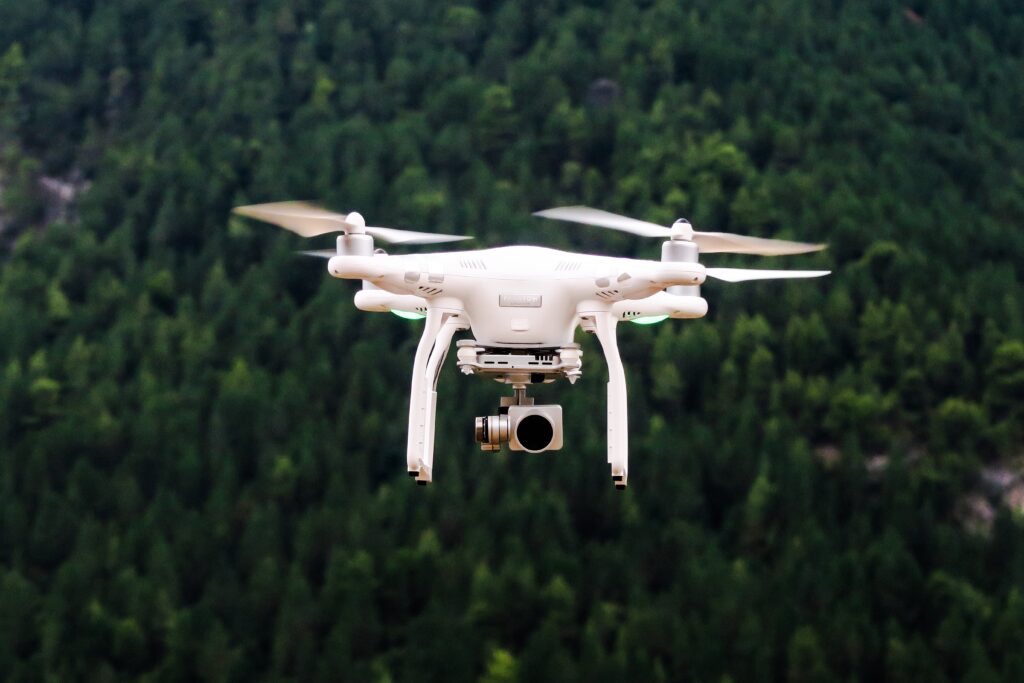
Whether AGILE’s €115m can move the needle is another matter. Defence ministries spend that sum in a morning. Supporters reply that the pilot’s value lies less in its cash than in the precedent it sets. “Wars and battlefields are changing. Militaries need new tech, speedy deliveries, very competitive prices,” said EU Defence Commissioner Andrius Kubilius. Mr Kubilius argued that only faster instruments can lure the start-ups able to churn out cheap drones and software at scale.
The stakes extend beyond Brussels. Washington and Beijing funnel billions into unmanned systems and space warfare, while Israel and Türkiye have shown how nimble firms can tilt battlefields with loitering munitions. Europe risks strategic irrelevance if it cannot match that tempo. AGILE is an admission that the continent’s thick procedural undergrowth cannot survive first contact with twenty-first-century conflict.
Wars and battlefields are changing. Militaries need new tech, speedy deliveries, very competitive prices. — Andrius Kubilius, EU defence commisisoner
Yet even the best-designed scheme needs takers. Many European start-ups avoid defence work, fearing reputational harm or tangled export controls. Others complain that national militaries seldom buy from new entrants, preferring trusted primes. AGILE cannot solve those cultural hurdles alone. But by paying full costs and by courting firms too small for traditional consortia, it may tempt a new breed of contractor to dip a toe in the military pond.
Future proof or fiscal footnote?
If the pilot flops, critics will blame the tiny budget and the single-year span. If it thrives, member states will push to widen it, perhaps folding it into the next European Defence Fund round. Either way, the experiment will test Brussels’ knack for marrying speed with scrutiny—an art it has seldom mastered.
The Commission has fired the starter’s pistol. Grant writers across Europe will already be sketching drone swarms and quantum compasses, calculators poised over the promise of a four-month turnaround and a cheque that covers every cent. AGILE may be small, but in a capital where projects often crawl, it feels refreshingly fleet of foot.