Just as technology drives war, war also drives technology. The Russo-Ukraine battlefield thus provides the European Union with a unique laboratory. Unmanned autonomous vehicles have taken the lead with much vigour. The bloc had better use it to marry its much-maligned antiquated defence structures with a constellation of ingenious—but fragmented and underfunded—forerunners of tomorrow’s innovation.
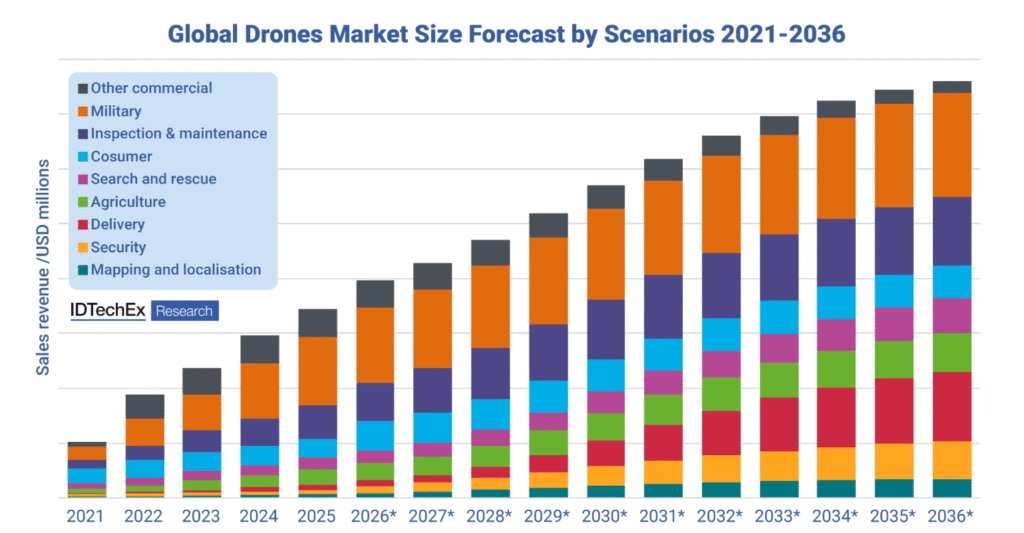
Europe’s armies discovered drones late but now rush to catch up. The region will spend almost €11.99bn on military UAVs this year and may reach €17.27bn by 2030, says Grand View Research. Even the more conservative Markets & Markets forecast puts the 2029 tally at €7.25bn, a 45 per cent rise on its 2026 estimate.
From Tallinn to Taranto, contracts proliferate. Germany alone adds more than €35bn for advanced capabilities by 2030, notes RAND. The European Commission has ring-fenced part of its €90bn Ukraine support loan for drones, making the unmanned fleet the first product schedule for 2026–27 deliveries. Demand no longer surprises; the question is who supplies.
Getting smarter
American champions still dominate high-end MALE and HALE (medium- and high-altitude long endurance class) aircraft, yet Europe’s skyline is thick with local entrants. Venture capital for defence technology almost doubled in 2025 to €3.5bn, with drones the most frequent deal type.
Small firms drew 38 per cent of 2025 European Defence Fund grants. Ministries now launch tenders that specify open architecture, sovereign supply chains and price caps closer to consumer electronics than to fighter jets.
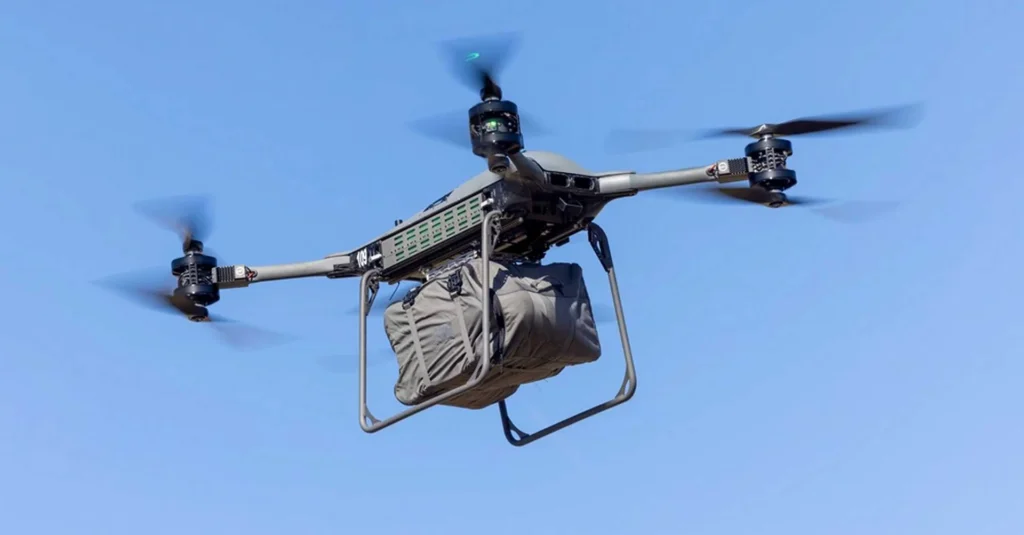
As a result, garage inventors graduate to factory owners in months rather than decades. ‘Smart-defence’ concept rests on drones as low-cost, attritable ISR/strike nodes. The average Ukrainian quad-copter costs under €3k, yet neutralises assets worth €160k, observes Victoria Vdovychenko of Cambridge University’s Centre for Geopolitics in her policy paper Ukraine and the Transformation of European Defence.
Swarming and man-machine teaming cut artillery sensor-to-shooter loops from more than 20 minutes in 2021 to under three minutes in late 2025, the study adds. The same research, however, warns of bottlenecks. Europe lacks 12,000 aeronautical engineers and relies on China for 90 per cent of refined rare-earth magnets. Neodymium, cobalt and lithium stocks would run dry after eight months of high-tempo operations. Without diversification, production targets are fiction.
Scale, sovereignty and speed
Munich’s new drone darling, Twentyfour Industries, illustrates the pivot. “We set out to deliver three pillars: drone technology, sovereign production capacity, and an organisation capable of being a credible supplier to governments,” said Clemens Kürten, the chief executive. The Luxembourg-based firm stayed in stealth for a year, shipped hundreds of Q-X quad-copters, then raised $11.8m from Lakestar and OTB Ventures.
Customers span several unnamed European armed forces; the drones fly daily. Erik Linden, the chief commercial officer, underscored the tempo. “From day one, our focus has been prioritising execution over complexity and proving capability through delivery,” he said.
From day one, our focus has been prioritising execution over complexity and proving capability through delivery.
—Erik Linden, Twentyfour Industries (Luxembourg)
Harmattan AI of France takes the same view. Its €200m Series B in January, led by Dassault Aviation, valued the company at €1.4bn. The French defence ministry has ordered 1,000 attritable combat drones, and the British have followed suit. Portugal’s Tekever, a maritime-ISR veteran, reached unicorn status after a €70m round that brought in Baillie Gifford and the NATO Innovation Fund. Germany’s Quantum Systems mixed €63.6m in equity with €150m in EIB debt and a €210m German-army order.
Startups energise the market, yet old hands still own deep integration. Airbus teams with Quantum to fold swarming software into future Eurodrone cargo bays; Thales buys a stake in Autonomous Devices to marry jamming payloads with battalion-level command-and-control.
Battlefield laboratory
The Munich Security Report 2026 frets that “National industrial policy may still trump scale,” warning that duplication remains a risk unless joint procurement grows teeth. Even so, the tide appears to go the other way. The EDF, the new €1.47bn Defence Industry Programme and multiple sovereign-wealth funds now co-finance entrepreneurs and primes in the same transactions.
Ukraine’s skies provide the largest open-source test range since Spain in the 1930s. In January 2026 thirteen Ukrainian Unmanned Systems Forces units—two per cent of Kyiv’s order of battle—engaged more than 28,000 Russian targets and destroyed about one third. For every €1 invested in USF more than €100 of enemy kit vanished. Maritime drones without human crews disabled Black Sea Fleet boats despite Ukraine having no traditional navy.
Aleksander Leonard Larsen—who survived a 620m North Korean cyber-heist while running AxieInfinity, a blockchain game—now heads Stendr, a Norwegian counter-UAS venture. “At Stendr, we are building the technology to find them, track them, and give defenders the information to act, fully sovereign to Europe,” he said when announcing a €5.4m pre-seed round.
Oleg Rogynskyy, co-founder of London-based Uforce, drew the same lesson. “Ukraine’s defence tech community is one of the most important things to come out of this war. Uforce is our way of making sure those innovations reach every ally that needs them,” he said after raising $50m at a valuation above €1bn.
Supply-chain sovereignty
Combat data guide every iteration. Ukrainian FPV pilots feed footage straight to European engineers, compressing design cycles to weeks. By contrast, EU defence programmes still quote 36-month procurement rules, prompting Ms Vdovychenko to call EDDI—the €1.8bn Drone Defence Initiative—reactive and state-oriented. “With battlefield cost-asymmetry favouring the attacker, European forces must adopt a defence architecture optimised for mass deployment of autonomous systems, rapid innovation cycles, and integrated multi-domain operations,” she writes.
Established primes hold the cards on certification, quality-assurance and global after-sales service. Boeing or General Atomics may take 16 months to field a software patch but can guarantee spares in Djibouti five years later. Startups promise faster evolution yet struggle with raw materials. Europe depends on imports for 90 per cent of rare-earth magnets and 65 per cent of lithium. The Cambridge paper proposes pooled stockpiles, forward contracts with Canadian and Australian refiners and a “mineral offset” clause modelled on Brazil’s aircraft deals. Unless member states share critical-material risks, 2030 fleet targets may slip by two years or longer.
At Stendr, we are building the technology to find them, track them, and give defenders the information to act, fully sovereign to Europe.
—Aleksander Leonard Larsen, Stendr (Norway)
The second choke point is people. NATO’s drone-operator pipeline stretches but pilot burnout looms. Training an MQ-9 crew once took eight months; teaching a swarm-scheduler to manage 50 expendables takes weeks but the operators rotate faster. Venture founders say autonomy will ease the strain. Forecasts from ISIS and EUISS see optionally autonomous systems making up a majority of new European UAV purchases by 2028. If that holds, demand for satellite bandwidth will soar. This is another hidden constraint that only incumbents have begun to tackle.
Entry barriers and exit ramps
Counter-UAS offers the clearest niche. MarketsandMarkets expects global sales to jump from 6.6bn in 2025 to 20.3bn by 2030, a 25 per cent CAGR. The EU has set aside €30m for joint counter-drone buys in 2026–27. Stendr’s vertically integrated sensor stack, backed by Norway’s Andøya Space Centre, wants a slice. So does UK-based Autonomous Devices with its drone-hunting EW pods. Their prospects hinge on standards convergence. Without common data formats armies will wire in American jammers and call it a day. Another pitfall is price erosion. Attritable models work only if unit costs stay low. Croatian FPV maker Orqa claims its new line can churn out 280,000 drones a year and scale beyond one million through global partners.
Battlefield cost-asymmetry favours the attacker.
—Victoria Vdovychenko, Centre for Geopolitics, Cambridge University
Then again, volume dampens margins. Firms that raised at unicorn valuations on wartime orders must find civil customers to smooth demand curves. Agriculture and linear-infrastructure inspection look tempting; some will under-shoot and fold.
The view to 2030
Assume consensus growth of 8 to 13 per cent a year and Europe’s military-drone outlay will approach €19bn in 2029. Add civil uptake and the overall UAV market could top €30bn. Three scenarios define the spread. First, ‘Fragmented Acceleration’. National budgets surge but stay parochial. Big contractors win large airworthiness mandates; startups become niche subcontractors. Market size meets the lower €15.30bn Grand View level. Second, ‘Co-ordinated Mass’. Joint EDF co-funding and NATO pooling shape common specifications. Primes and startups share work-share packages; attritable systems dominate. Spending leans toward the higher €17.27bn path. Third, ‘Supply-chain Shock’. Rare-earth crunch or bandwidth congestion halts production. Growth drops below five per cent and Europe reverts to imports.
Companies to watch
• Quantum Systems — German VTOL ISR specialist; €150m EIB debt and Airbus tie-up
• Tekever — Portuguese/UK maritime-ISR veteran; €70m unicorn round with NATO IF
• Harmattan AI — French combat-drone maker; €1.4bn valuation, Dassault anchor
• Twentyfour Industries — Munich stealth graduate; hundreds of Q-X quad-copters fielded
• Stendr — Norwegian counter-UAS startup; 5.4m seed, Andøya Space Centre linkage
• Uforce — Ukrainian-founded defence-tech unicorn; 50m to expand allied production
• Orqa — Croatian FPV producer; plans one-million-unit annual capacity.
Incumbents meet insurgents
Legacy players cannot match the cadence of garage coders. Yet raw speed without scale stalls at brigade level. The emergent model pairs the two. Dassault injects capital and flight-safety know-how into Harmattan; Harmattan supplies autonomy brains for a fraction of Rafale cost curves. Thales equips Autonomous Devices EW drones with edge-processing chips it once reserved for missile seekers. Airbus sponsors Quantum’s swarm trials to hedge against American artificial-intelligence restrictions.
Ukraine’s defence tech community is one of the most important things to come out of this war.
—Oleg Rogynskyy, Uforce (Ukraine/UK)
Startups gain credibility, cashflow and access to export licences; primes gain innovation without betting the balance-sheet. Regulators smile because supply risk falls. Still, cultural friction lingers. Primes expect fixed milestones; founders debug at midnight via Telegram channels in Odesa. Procurement officers must find a way to juggle both.
The ‘smartness’ doctrine drawn from Kyiv concludes that expendable mass deters more reliably than a handful of exquisite jets. Neutralising one GPS node costs under €500, while an interceptor missile averages €150k. Electronic warfare outranks kinetic kills. Those truths now anchor French, Polish and Baltic procurement plans.
Civilian use
A second lesson is civilian spill-over. Edge-AI chips born for loitering munitions now inspect wind turbines. U-space traffic-management frameworks drafted for Baltic combat corridors now route pesticide drones in Andalusia. As autonomy spreads, insurance firms demand black-box telemetry; startups that embed secure logs win twice—defence orders today, civil certification tomorrow.
A third takeaway is industrial pragmatism. Ms Vdovychenko’s Cambridge report urges pooled testing ranges and doctrine repositories. EDF money seeds them, but only continuous battlefield feedback keeps them current. Hence the EU quietly funds Ukrainian developer houses to write firmware upgrades. It is cheaper than NATO labs and arrives battle-tested.
Policy priorities 2026–2030
This section accumulates policy recommendations from RUSI, EUISS, Cambridge University’s Centre for Geopolitics, Geopolitical Futures, Grand View Research, MarketsandMarkets, and Financial Times.
• Aggregate demand through EDF and NATO to avoid mini-fleets and split standards
• Underwrite rare-earth stockpiles and lithium refining inside allied borders
• Open satellite-band allocation to swarm traffic and fund anti-jamming resilience
• Fast-track air-worthiness for expendables; reserve long audits for premium ISR assets
• Craft export rules that keep IP in Europe but let SMEs hit volume via friendly markets.
Between now and 2030, Europe’s drone arena will widen and consolidate at once. Startups deliver speed, primes deliver certainty. Governments bankroll both but insist on sovereignty. If mineral inputs flow and bandwidth expands, Europe will field millions of cheap, semi-autonomous craft. If not, it will revert to boutique fleets and imported parts. Either way, drones have moved from curiosity to core, Europe’s default symbol of deterrence.