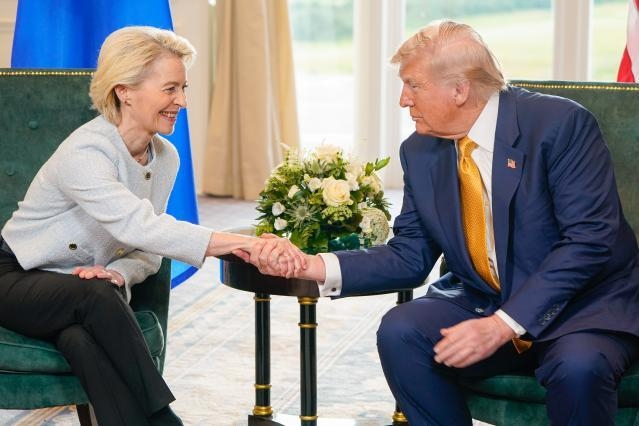
The European Parliament is backing a US-EU trade agreement — but packed with safeguards that allow Brussels to walk away if Washington imposes tariffs again. Lawmakers are openly describing the arrangement as an attempt to ‘Trump-proof’ the deal.
The move follows a pointed warning from US Ambassador to the EU Andrew Puzder. He told the Wall Street Journal this week that Washington would increase tariffs on European goods if Parliament rejected the proposal.
The European Parliament voted Thursday to approve its negotiating mandate for the so-called Turnberry trade agreement, passing the resolution 417 votes in favour, 154 against, and 71 abstentions. That cleared the way for trilogue talks with the Council expected to begin in mid-April. The vote signals broad but fragile political support for the deal, which would suspend tariffs across a €1.6 trillion transatlantic trading relationship.
Three safeguards
Lawmakers attached three key safeguard clauses. They are designed to insulate the agreement from future US violations of the deal — what MEP Karin Karlsbro called ‘Trump-proofing’ the deal in a Renew Europe statement.
This deal comes at the very last moment to avoid a trade war. — Željana Zovko, EPP trade spokesperson
First, EU tariff cuts will only kick in once the US has actually delivered on its own commitments. Second, the tariff suspension has an expiry date of 31 March 2028, after which is necessary to renew the arrangement.
Third, the EU can pull the plug at any point if Washington imposes new tariffs, escalates threats, or — in language clearly aimed at Trump’s remarks about Greenland —threatens the territorial integrity of an EU member state.
“This deal comes at the very last moment to avoid a trade war,” said EPP trade spokesperson Željana Zovko. The EPP group also flagged that steel and aluminium tariffs must be capped at 15 per cent, with automatic EU countermeasures available if needed.
Support from the Socialists was conditional. Lead S&D negotiator Bernd Lange called the agreement ‘imbalanced’. However, the Parliament had built in sufficient protections to make it workable, he added.
Renew Europe’s Sophie Wilmès echoed the sentiment, describing the deal as an acceptable trade-off given Washington’s “chaos” on tariff policy.
A humiliating bargain
The Greens were divided. Lead negotiator Anna Cavazzini acknowledged the deal’s flaws but argued it could provide economic stability. MEP Saskia Bricmont broke ranks, signalling she would not support it.
The far-right Patriots for Europe group voted against. Hungarian MEP Enikő Győri accused Commission President Ursula von der Leyen of making a “humiliating bargain” to preserve US support for Ukraine.
The mandate now goes into interinstitutional negotiations with the Council. A final ratification vote is not expected before April or May.