Airpace violation by Russian drones are becoming a new normal in Europe, and Brussels is moving from worry to action. At a testing hub in Geel, the EU is now racing to build a system that can track and stop hostile drones before they strike. “We also aim at battlefield testing in cooperation with Ukraine,” Maciej Berestecki, European Commission spokesperson says in exclusive interview with EU Perspectives.
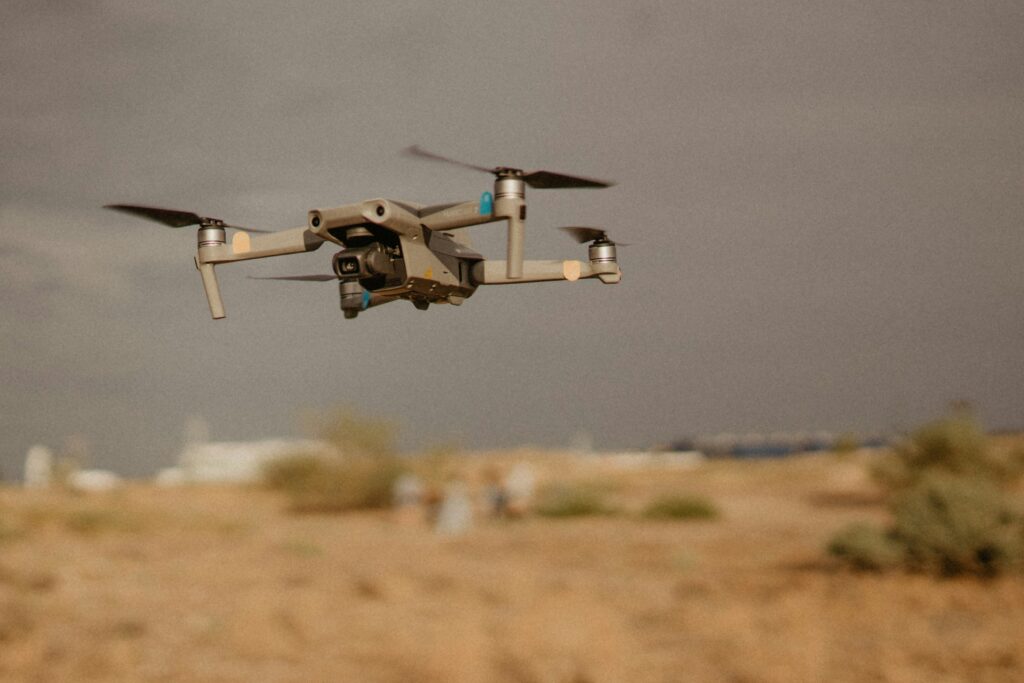
Russia’s military drones are appearing more and more often over European airspace. Brussels suspects these activities go far beyond simple surveillance, extending to sabotage and cyberattacks on critical infrastructure. As the threat evolves, EU officials are stepping up efforts to build a coordinated defence — one that can detect, track and neutralise hostile drones before they pose a real risk.
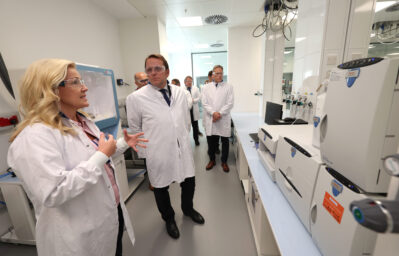
At the centre of this effort is a specialised testing facility in the Belgian town of Geel. Here, the European Commission’s Joint Research Centre (JRC) is working with member states on next-generation counter-drone technologies. Backed by a new Defence Roadmap and the European Drone Defence Initiative, the EU aims to deploy a multi-layered protection against unmanned aircraft systems (UAS) by 2027.
The work began before Russia’s full-scale invasion of Ukraine but has accelerated sharply since. The Geel site hosts several laboratories — including one dedicated to drones, counter-drone systems, and autonomous platforms — equipped with radar, cameras, and acoustic sensors. EU Perspectives spoke to Commission spokesperson Maciej Berestecki about how the system is being developed — and what comes next.
What exactly happens when a drone is detected over Europe?
The process starts by checking whether the drone is authorised to fly in a specific area, according to the UAS Geozone Manager and the rules set to the relevant UAS category. If the drone has authorisation to fly, it is considered a ‘friendly’ UAS. Its flight path is monitored to ensure it stays within the rules.
If it’s not authorised, the Geozone Manager takes action based on their risk assessment. This may involve activating appropriate procedure with the relevant stakeholders and within the legal framework as defined at national level.
The tracking of UAS requires an integrated set of technical measures. These include command-and-control systems, radar systems and response systems, working consistently together to detect, identify and respond to the drone threats.
How does the JRC work with member states on protection of the airspace?
In February 2026, the European Commission launched an Action Plan on Drones and Counter-Drones. The plan calls for the upgrade of the JRC counter-drone Living Lab at the Geel site to an EU centre of excellence. The new centre will enable the development of a dedicated testing facility for the detection, tracking, and identification of UAS. It will also allow member states to test mitigation technologies.
As part of the Commission, the JRC works closely with the Directorate-General for Defence Industry and Space (DG DEFIS) and other services to support member states. It provides independent technical support in counter-UAS, training and technical reports throughout 2026. The centre of excellence will be formally established in the first quarter of 2027.
What will this new centre actually change in practice?
The 2026 Action Plan highlights the importance of testing counter-UAS technologies to ensure they are ready for operational deployment. These tests need to be conducted in dedicated laboratory environments. And that’s precisely where the new Counter-Drone centre of excellence will play a central role.
It will provide a structured environment for testing counter-UAS solutions, understanding their performance, and establishing voluntary performance requirements. These standards should help EU member states identify which systems are best suited to their specific operational scenarios.
The Commission, under the supervision of DG DEFIS, has launched a joint initiative with Ukraine BraveTechEU and innovation support action under EDIP Ukraine Support Instrument. The aim is to develop counter-UAS technologies together with Ukraine, including access to battlefield testing.