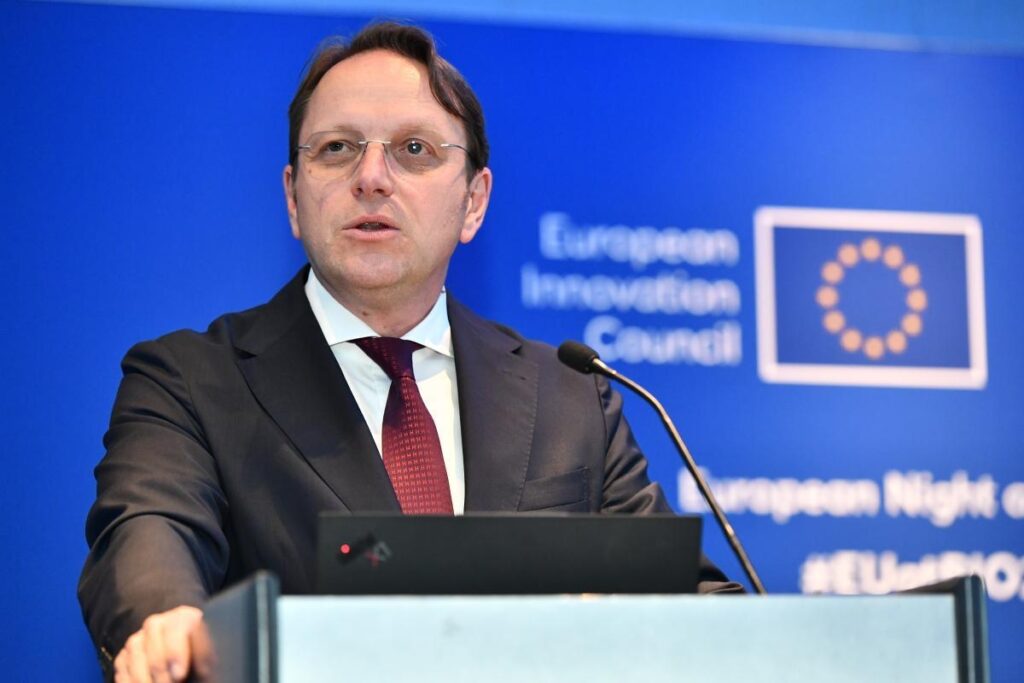
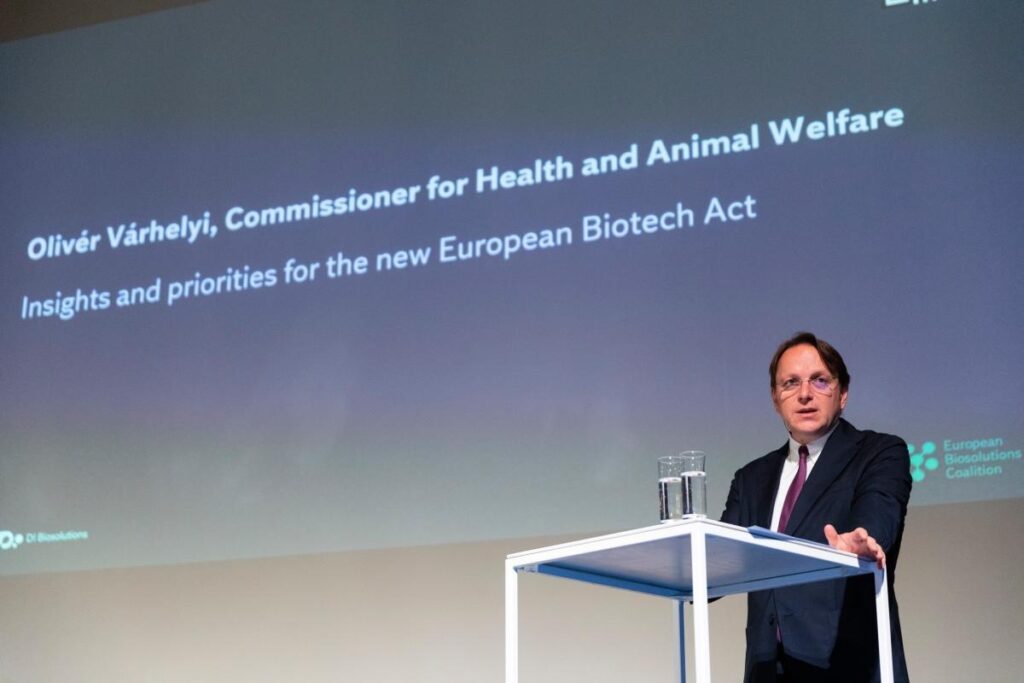
Health will not be squeezed in the EU’s next long-term budget. It is poised to come out stronger, Health Commissioner Olivér Várhelyi told EU Perspectives in an exclusive interview. He is moving to reposition health from a protected spending line to a core driver of Europe’s competitiveness.
Commissioner Várhelyi acknowledges Europe is losing ground in the global life sciences race. He is pushing for a rapid policy reset to close the gap.
That means forcing through the Biotech Act, the Critical Medicines Act, pharmaceutical reform and a broader overhaul of medical devices rules. All of this to boost breakthroughs, accelerate approvals, unlock capital, and rebuild Europe’s manufacturing base. The agenda also reaches beyond industry, with new pressure on prevention through the Safe Hearts Plan and tighter tobacco rules.
Many in the health community warn that without a ringfenced budget, health will lose out in the next Multiannual Financial Framework. Are they right, and will you fight for dedicated health funding? What level of funding do you think would be sufficient?
On the contrary. I believe health can be a winner in the next Multiannual Financial Framework (MFF). The Commission’s proposal for the next MFF 2028-2034 presents a fundamental redesign of the EU budget. It streamlines and harmonises the EU’s financial programmes, maximises the impact of every euro spent, limits budgetary earmarking to what is strictly necessary. In addition, it increases flexibility to reallocate funds to address emerging needs and priorities. The budget includes several programmes focused on health, food safety, research, innovation and health preparedness.
Providing space for flexibility is a key design feature of the architecture of the next MFF. So that Europe can act — and react — fast when circumstances change unexpectedly or when new policy priorities need to be addressed. That matters especially for the two sides of my portfolio. Where crises and new challenges do not always follow fixed timetables or fit neatly within predetermined budget lines.
In that vein, the proposed European Competitiveness Fund (ECF) outlines the indicative budget envelopes at the level of the policy windows. The implementation details will be set out in the work programmes of the relevant policy windows of the ECF and the annual budgetary procedure. Where the European Parliament will also be involved, in its role as budgetary authority. But what is certain, all policy actions that were financed under EU4Health will be eligible for funding under the ECF. For example actions on rare diseases or cancer funding to only name a few.
What is certain, all policy actions that were financed under EU4Health will be eligible for funding under the European Competitiveness Fund. For example actions on rare diseases or cancer funding.
—Olivér Várhelyi, EU Health Commissioner
Across the Biotech Act, the Critical Medicines Act and pharma reform, what concrete budget is attached to each. And is it enough to deliver on the ambition you’ve set out?
We have different actions, financed mainly by the EU4Health programme, to support the implementation and application of the new pharmaceutical legislation and its new regulatory tools and innovative solutions. This includes €32 million for actions to support digitalisation of the network, capacity building for regulatory authorities, AI uptake and electronic product information.
The Critical Medicines Act (CMA) proposal includes an indicative budget of approximately €80 million to support strategic projects for critical medicines for the period 2026–2027. The Commission is closely involved in the CMA negotiations and is committed to working with the co-legislators to reach an agreement as soon as possible on this important file. This is a crucial step. But its impact will depend on rapid agreement and effective implementation.
As the negotiations on the next MFF are still ongoing, we cannot pre-empt their outcome by attaching specific funding amounts to the Biotech Act. That said, the direction we want to go in is clear. We are laying the foundation for the Health Biotech investment pilot. The Commission has proposed over €40 billion in the European Competitiveness Fund and the next Research Framework Programme. In particular for health and biotech, which is a significant opportunity to support the Act’s activities.
However, even before the adoption of the Act and the new MFF, we’re already acting together with the European Investment Bank Group, aiming to mobilise €10 billion investment into Health Biotech through the BioTechEU initative in 2026 and 2027.
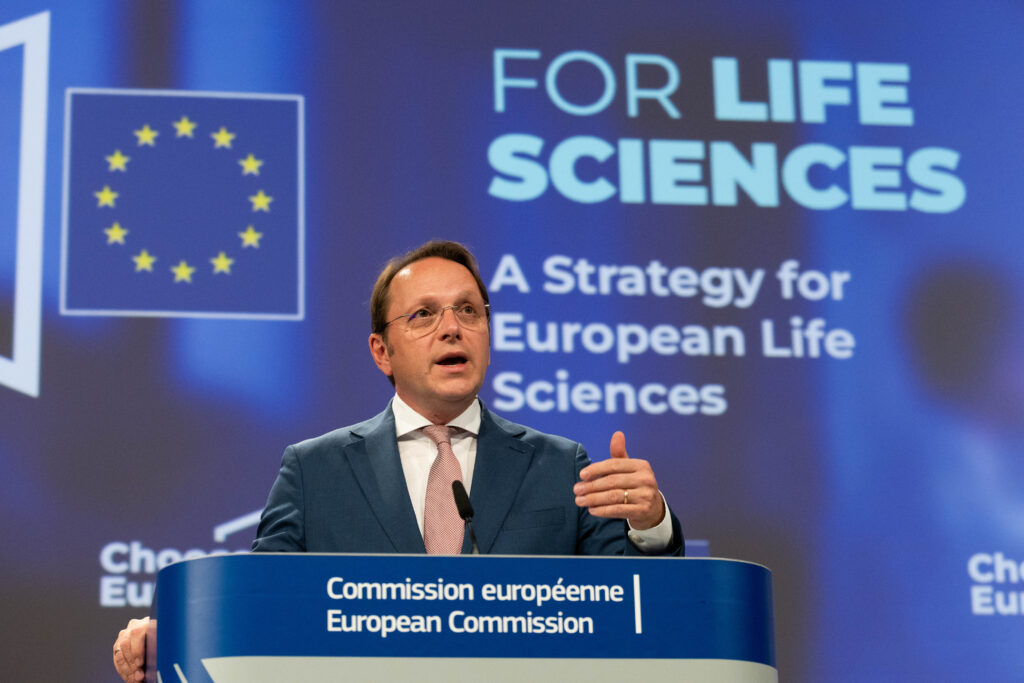
Industry leaders argue Europe will need to pay more for medicines to remain competitive. Is Europe ready to face that trade-off, or is access still expected at the lowest cost?
The pricing and reimbursement of medicines is a national competence. However, the European Commission supports a network of payers in the EU where Member States can exchange information and best practices to safeguard access to medicines for all patients across the EU at the best possible conditions. National pricing and reimbursement decisions should remain evidence-based and recognise the value of innovation, that is why the roll-out of the health technology assessment regulations. Especially the joint clinical assessment, will be crucial to empower Member States to take more informed pricing and reimbursement decisions.
Europe is one of the most attractive places in for pharmaceutical companies, with access to an open, stable and predictable Single Market of 450 million consumers. That scale is a major asset. And Europe is the second largest pharmaceutical market in the world. Its contribution to innovative pharmaceutical sales has increased dramatically over the past decades, with reported increases of 200% since 2000 and a surge in spending on innovative medicines.
My priority is boosting this competitiveness. Initiatives such as the pharmaceutical reform, Critical Medicines Act and Biotech Act will modernise the regulatory system, speed up evaluations of medicines and authorisations of clinical trials, incentivise companies to research and produce in Europe and promote the development of cutting-edge new therapies using AI, data and regulatory sandboxes. In addition, we cannot speak about medicines separately from medical devices as the two sectors are closely interlinked. This is why medical devices reform is an important component of this priority. Not to mention the Safe Hearts Plan that will lay down the foundations for a new public health policy, with strong digital and robust prevention dimension. Collectively, these new initiatives aim to secure Europe’s place as a world leader in the health and pharmaceutical field.
The EU only has a 7% global share of venture capital investment in health biotech.
—Olivér Várhelyi, EU Health Commissioner
Is Europe already losing the global biotech race, and if so, how quickly can it realistically catch up?
Europe has a long history of being a global leader in science and research, and we have a strong scientific foundation. However, it is no secret that we are starting to lose ground compared to our global competitors. Share of clinical trials have dropped by half in the last 10 years. While the EU only has a 7% global share of venture capital investment in health biotech.
That is why we put such urgency on delivering the Biotech Act in the first year of my mandate. This Act is central to turning the tide for Europe and to competing effectively in the global biotech race. We need to catch up quickly, for our citizens, our economy and our long-term competitiveness.
With the Biotech Act, we are boosting access to funding and immediately improving the financing environment for companies, together with the European Investment Bank, while proposing to simplify rules, incentivise research and manufacturing in Europe, accelerate clinical trials authorisations and fast-track the development of cutting-edge new therapies using AI, data and regulatory sandboxes to expedite regulatory pathways for highly complex and innovative health technologies.
We set the bar high because we aim to attract the highest level of innovation and support major biotech breakthroughs that deliver real therapeutic value.
—Olivér Várhelyi, EU Health Commissioner
More investment, less dependencies
You argue stronger intelectual property (IP) protection, including targeted Supplementary Protection Certificate (SPC) extensions, will boost research and development (R&D). But if eligibility is too narrow, doesn’t that risk steering investment away from major biotech breakthroughs?
On the contrary, the criteria we propose are aimed at targeting specifically the most innovative products with a high potential benefit to patients. We set the bar high because we aim to attract the highest level of innovation and support major biotech breakthroughs that deliver real therapeutic value. This is exactly the kind of innovation we want to encourage in Europe
Furthermore, attracting investment into R&D is the product of many combined factors. IP protection is one of these elements, along with other drivers of R&D investment location such as access to capital, regulatory environment, corporate tax and industrial policies among others. So, we have to assess the effect of IP on R&D in the broader context. The Biotech Act includes several complementary measures aimed at shortening time-to-market for biotech companies, improving access to capital and infrastructures, supporting SMEs, start-ups and scale-ups, and creating more agile regulatory pathways through streamlined procedures and regulatory sandboxes. In other words, the SPC provision is only one part of a wider package designed to make Europe a more attractive place to invest, innovate and scale up biotech.
The Critical Medicines Act emphasises “made in Europe”, yet supply chains are inherently global. Does this risk reducing flexibility, and should the focus shift to “made with Europe” instead?
The Critical Medicines Act is not about pulling up the drawbridge, isolating ourselves and producing everything in Europe. That is simply not realistic in the world we live in today.
However, we do urgently need to address Europe’s vulnerabilities in the manufacturing supply chain of critical medicines and ingredients. We also have to reduce Europe’s external dependencies. Particularly when we rely on a single supplier from third countries which contribute to these vulnerabilities. This is particularly important if the supplier is based in non-EU countries, like India and China, from where we currently source a large amount of active pharmaceutical ingredients for generic medicines.
We also want to boost Europe’s businesses and innovation, by encouraging more investment in Europe’s healthcare and pharmaceutical sectors and creating the right conditions for companies to manufacture more here. In practice, we need both. A stronger manufacturing base in Europe and more diversified supply chains beyond Europe. The Critical Medicines Act will make an important contribution to achieving those goals.
From your view, will the revised Urban Wastewater Treatment Directive threaten the pharmaceutical industry and impact the accessibility of pharmaceuticals? Are you making or planning to make any steps in that regard?
I would recall the last-year-adopted European Water resilience strategy that underlines the importance of avoiding unexpected or unintended consequences. In particular for the availability and affordability of medicines. Therefore we remain very attentive to unintended developments arising from implementation of the recast Urban Waste Water Treatment Directive. So, while adding an extra layer of protection of the environment with the fourth treatment stage, we have to make sure that the costs for additional protection of the environment do not result in irreversible shortages of medicines or further dependances. Especially for vital generic products.
The potential effects of the Directive on the pharmaceutical industry were originally assessed in the Commission’s impact assessment, which did not anticipate medicine shortages or issues with accessibility and affordability linked to the new rules on producer responsibility.
Against the backdrop of the shortages of medicines we have experienced in the recent years, the revised Directive acknowledges these challenges. It calls on national authorities to take into consideration the possible impacts of the extended producer responsibility on the accessibility, availability and affordability of products at national level, in particular medicines. That is why it is important that the dialogue among all actors continues, so that those costs can be fairly distributed and the potential impacts minimised. So, close monitoring of the situation is indispensable, so that we can draw appropriate conclusions and respond effectively, if necessary.
Tax our way to healthier lives
The Safe Hearts Plan supports taxing unhealthy products, but stops short of making healthy food more affordable. Why focus on discouraging bad choices rather than enabling better ones?
There is overwhelming evidence that so-called ultra-processed foods (UPFs) — particularly those high in sugar, fat or salt — have detrimental health impacts. This is clearly an area where we need to act. The Safe Hearts Plan addresses this. It will enable citizens to make informed decisions on their diet, without telling them what they should or should not consume. Our other objective is to create an environment that supports food reformulation.
I also believe effective prevention must start early. That means helping citizens make healthier choices through better information, healthier diets and stronger prevention action.
All this has to be done on a sound scientific basis. That is why the Commission has launched a dedicated study on the impact of UPFs on health. As foreseen in the Vision for Agriculture and Food and the Strategy for European Life Sciences. Its findings will inform the next steps and help determine which tools are appropriate. Including possible financial actions to support prevention, stimulate reformulation and encourage healthier consumer choices.
Taxation can be a tool and it is already applied in several Member States. We will assess this possibility carefully in light of the health priorities I have mentioned.
The challenge is significant, but so is the opportunity. With stronger prevention, smarter use of data and innovation in healthcare, we can help Europeans live longer, healthier lives.
You launched the interservice consultation on the Tobacco Products Directive last week. How does the Commission plan to regulate new nicotine products, and what is the rationale behind this approach?
It is too early to speculate on the precise contents of a revision of the tobacco control legislation. What is already clear, however, is that action is needed not only at the level of product regulation but also in the field of advertisement. The Commission published the outcome of our evaluation on the current tobacco control framework on 2 April. This showed that while the current rules have delivered substantial public health benefits and supported the Single Market, they need to be adapted to address new market developments, technological changes and emerging health risks. In addition, we need to address current regulatory challenges linked with the advertisement, especially on the social media. We will now carry out a thorough consultation process. And complete our impact assessment work to determine the most appropriate steps to take.