Having overcome internal differences, the European Union on Thursday formally approved a promised €90bn loan to Ukraine as well as a new package of sanctions against Russia, the bloc’s Cypriot presidency said.
“The EU’s strategy to achieve a just and lasting peace in Ukraine rests on two pillars: strengthening Ukraine; increasing pressure on Russia. Today we moved forward on both,” said European Council President António Costa on 23 April. The deal cements a compromise fashioned during a gruelling night-time session of EU ambassadors. Hungary, with representatives of a freshly elected cabinet, relented.
The decision completes the legal jigsaw agreed in December 2025, when leaders first backed a giant loan to keep Ukraine’s lights on and its factories turning out shells. Thursday’s vote approves the final implementing act, letting the European Commission raise cash on capital markets and begin disbursements in the second quarter of 2026. As war grinds on, Brussels wants speed. Officials say an initial tranche could reach Kyiv within weeks.
Italian intermezzo
Cyprus, which holds the rotating Council chair, claimed credit for shepherding the file through. Makis Keravnos, the republic’s finance minister, declared: “The amendments to the EU regulation on the multiannual financial framework adopted today confirm that the Ukraine support loan will be financed through EU borrowing on the capital markets and will be backed by the EU budget headroom. The loan is to be repaid by reparations due by Russia to Ukraine.”
The same meeting waved through the Union’s 20th package of sanctions. Bans now stretch from machine-tool exports to oil-price caps. The latest list tightens screws on banks, widens restrictions on dual-use goods and blacklists dozens of officials.
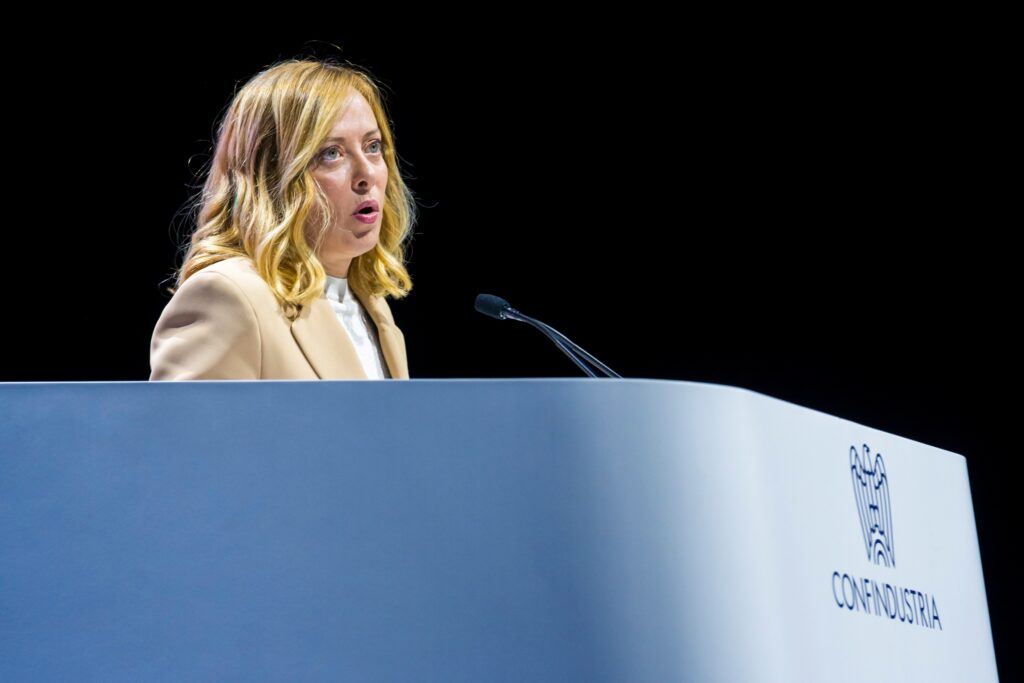
The package enjoyed the support of a potential holdout, Rome. “Italy will continue to promote economic pressure within the G7 and the European Union against the Russian Federation … The twentieth package of sanctions … is an important step towards further reducing the revenues that fuel the Russian war machine,” said Prime Minister Giorgia Meloni after hosting Volodymyr Zelenskyy in Rome last week.
Moscow did not take kindly to her zeal. During a prime-time rant on Rossiya-1, TV announcer Vladimir Solovyov spat slurs that sounded like a preface to his own autobiography: “Fascist scum.” “Certified idiot.” Rome bristled. “A diligent propagandist of the regime cannot give lessons in coherence or freedom,” Ms Meloni responded on X. Twelve hours later she doubled down: “These caricatures certainly won’t make us change course … Our compass remains the interests of Italy.”
A bigger stick
For Brussels the spat proved timely. Italian opposition parties condemned the Russian abuse. The episode stiffened support for sanctions that had earlier faced grumbling in Rome’s business circles. Unified outrage at Mr Solovyov’s language also helped Budapest conclude that resistance looked churlish.
A diligent propagandist of the regime cannot give lessons in coherence or freedom. — Giorgia Meloni, Italy’s prime minister
Thursday’s package therefore landed intact. Of the €90bn, a third will cover day-to-day spending via macro-financial assistance or the Ukraine Facility. Two-thirds will bankroll guns, drones and domestic production lines.
Brussels promises flexibility. Targeted derogations will apply “should Ukraine’s military needs require urgent delivery of a defence product not available” in Europe or trusted partners, the legal text says.
Money and conditions
Disbursements depend on reforms. Ukraine must file a financing strategy; fight graft; uphold the rule of law. The Commission gave Kyiv’s plan a thumbs-up on 1 April, and the Council endorsed that verdict on Thursday. The implementing decision frees €45bn for 2026: €8.35bn in macro help, the same again via the Facility, and €28.3bn for defence industry support. Further slices follow in 2027 if benchmarks are met.
Officials insist taxpayers face limited risk. Loan servicing will come from windfall profits on frozen Russian assets, or from eventual war reparations. Markets appear relaxed: EU bonds remain close to Bunds. Still, the Union’s borrowing programme now resembles a medium-sized member state’s debt issue. Some hawks fear moral hazard. Others note that €90bn over two years barely bridges Ukraine’s fiscal gap.
The sanctions side is clearer. Export bans shave perhaps €10bn from Russian earnings, on Commission calculations. That pales beside Moscow’s oil revenue but gnaws at spare-parts stockpiles. Banks placed on the blacklist lose access to SWIFT. Luxury-yacht brokers mutter, yet no capital city dissented.
The loan is to be repaid by reparations due by Russia to Ukraine. — Makis Keravnos, Cyprus’ finance minister
Whether money and embargoes shift battlelines is another matter. Fronts in Donbas budge slowly. But the latest EU action signals staying power. The Union has discovered that Russian insults concentrate minds wonderfully. Commissioners now prepare bond issues and national treasuries line up guarantees as Kyiv readies spending plans. Bankers expect the first €5bn note in late May. Defence firms from Gdańsk to Seville polish tenders.
Oil, gas, dollars
Now, what does the package entail? It strikes Russia’s cashflow, logistics and supply chains while padding legal armour for European firms. Brussels blacklists 36 upstream-to-downstream energy companies, two big Russian ports—Murmansk and Tuapse—and, for the first time, Karimun Oil Terminal in Indonesia. The shadow fleet tally rises to 632 tankers; 46 are newly barred from EU ports and services, 11 are delisted for coming back into line.
To keep more ships out, EU sellers must insert a ‘no-Russia’ clause in tanker sales and offer scrap terms for vessels leaving the illicit fleet. A coming “maritime services ban” will, once the Council fixes a start date, forbid EU insurers, brokers and shippers from moving any Russian crude or refined products. LNG faces new hurdles: EU yards may no longer maintain Russian LNG tankers or icebreakers, and operators may sever long-term contracts with Russian terminals.
Twenty more Russian banks—and four enablers in Kyrgyzstan, Laos and Azerbaijan—lose access to EU business, bringing the tally to 70. All dealings with Russian crypto exchanges and decentralised platforms are outlawed. Brussels also bans the rouble-backed stablecoin RUBx and Russia’s planned digital rouble. Payments agents that funnel cash around restrictions are cut off. Five third-country firms win delisting after promising to behave.
Trade, arms supplies, propaganda
New export bans cover goods from rubber to tractors worth €365m, plus explosives and specialist lubricants. Cyber-security services are barred. Imports of certain metals, chemicals and minerals (€530m) are stopped, with ammonia capped.
Arms supply lines are squeezed. Fifty-eight Russian arms makers—and third-country vendors in China, the UAE, Uzbekistan, Kazakhstan and Belarus—are listed. An “anti-circumvention tool” is activated against Kyrgyzstan for rerouting EU machine tools and telecoms kit to Russia; 60 more entities join the blacklist.
A further 120 designations freeze assets and block travel, targeting oligarchs, child abductors, propagandists and art looters. EU courts may now fine Russians who launch vexatious claims, and firms can seek damages for abusive judgments abroad. The Union also bans deals with companies profiting from Kremlin expropriations or theft of EU intellectual property.
Last, Brussels clamps down on propaganda mirror sites and bars EU universities from taking Russian state research money. The message is plain: the cost of war, and of dodging sanctions, continues to rise.
Meanwhile a 21st sanctions list lurks in drafts, targeting liquefied-natural-gas trans-shipments and shadow-fleet insurers. Success may again hinge on mood in Rome, Budapest, Bratislava or Sofia. But on Thursday, Brussels savoured a rare moment harmony. The loan has been locked, the blacklist lengthened, and the bloc has swatted away a bout of Kremlin bluster.