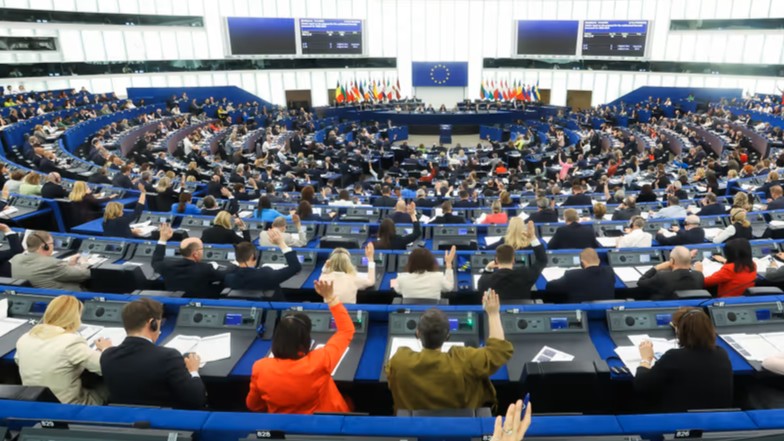
The EU is one step closer to deciding how much to spend in the coming years — and on what. The European Parliament has backed its negotiating position, with lawmakers calling for a broader budget focused on defence, competitiveness and innovation while preserving support for cohesion policy and agriculture.
The European Union is preparing the Multiannual Financial Framework (MFF) for 2028–2034, with proposed spending set at around 1.27 per cent of EU gross national income. MEPs on Tuesday backed an increase of €197.30 billion compared with the Commission’s proposal. Overall, Parliament is calling for a €2.01 trillion budget to finance the EU’s policy priorities and strategic objectives.
“We have adopted a strong position on the next budget, balancing new and traditional priorities with a moderate 10 per cent increase. We call on the European Council to step up, take our proposals forward, and agree on a strong, timely budget,” said co-rapporteur Siegfried Mureşan (EPP/ROU).
Old and new priorities
Several key EU programmes are expected to remain clearly ring-fenced, including agriculture, fisheries, cohesion policy, the European Social Fund, Erasmus+ and Horizon Europe. “These are not relics of the past, but the backbone of European solidarity and the shapers of our future,” said Carla Tavares (S&D/PRT).
MEPs also rejected proposals for a more fragmented, ‘à la carte’ allocation of EU funds. They warned that this could weaken cohesion, reduce transparency and increase competition between beneficiaries.
At the same time, Parliament supported higher spending in areas such as defence, innovation, infrastructure, healthcare, education, culture, and the green and digital transitions. “We look forward to constructive negotiations,” Tavares added, acknowledging tough talks ahead.
Support for new own resources
On external action, lawmakers supported increased funding but said the proposed levels are still insufficient. They called for greater support for EU enlargement, development cooperation, Ukraine, multilateral engagement and humanitarian aid.
On the revenue side, Parliament reaffirmed its backing for new own resources to help repay NextGenerationEU debt and finance the EU budget. It supported the Commission’s ‘basket approach’ and said new revenue streams should be introduced alongside the next MFF, potentially raising around €60 billion annually.
Options under discussion include a digital services tax, levies on online gambling, revenues from the carbon border adjustment mechanism, and a tax on crypto capital gains.
The next step now lies with the European Council. It must agree a common position before formal negotiations with Parliament can begin on the final 2028–2034 framework.