Canada edged closer to the European Union’s security arrangement on Wednesday. EU lawmakers overwhelmingly recommended the country’s accession to the bloc’s cheap defence loans programme (SAFE).
SAFE’s secretariat will open two fast-track calls for projects in which Canada can immediately bid. One covers secure battlefield communications. The other funds maritime-domain awareness, an area where Canadian patrol aircraft may operate alongside European frigates in the North Atlantic. Officials hint at a third window for Arctic climate-security sensors, though that requires extra cash from member states.
All this is now within the realm of the possible. On 6 May a joint sitting of the European Parliament’s Committee on Industry, Research and Energy (ITRE) and Security and Defence Committee (SEDE) endorsed Canada’s participation in the Security Action for Europe (SAFE) instrument. Members backed the draft consent report by 78 votes to 11, with five abstentions.
Hamlet makes up his mind
For representatives of a bloc engulfed in multiple grave crises, the lawmakers’ mood appeared light-hearted. MEP Borys Budka (EPP/POL), ITRE chair who presided over the session, chose the question “to be or not to be” to run the test vote prior to the real thing. Fortunately, the members voted in favour of their existence, allowing for further lawmaking.
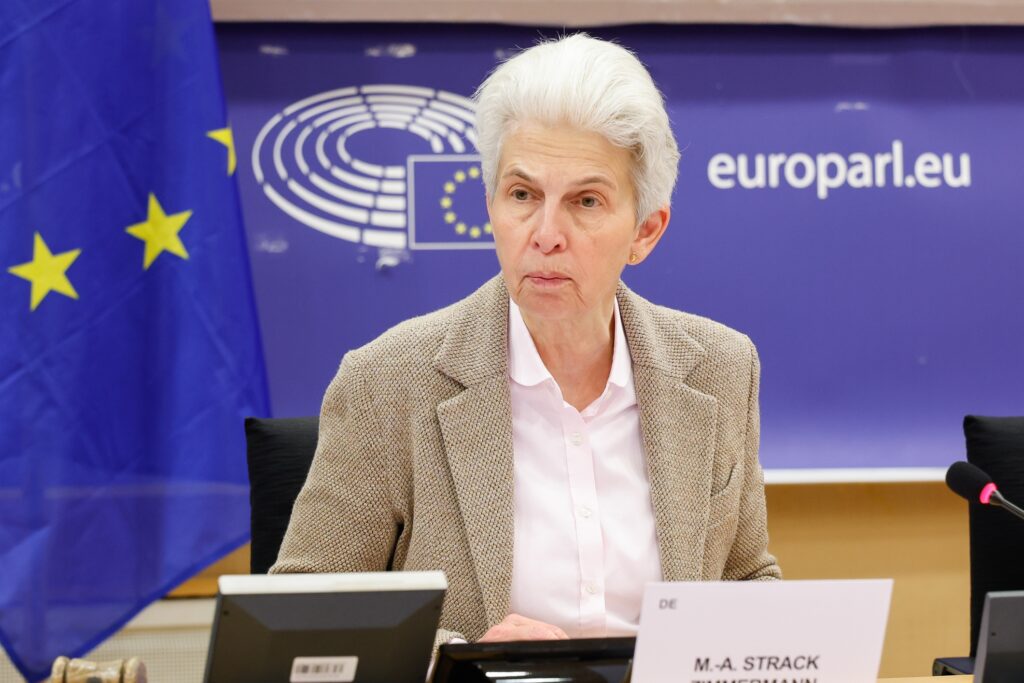
The Bard’s legacy notwithstanding, MEP Marie-Agnes Strack-Zimmermann (Renew/DEU) kept the tone brisk. “This is the first agreement that joins SAFE to a country outside Europe,” the SEDE chair said. “Canada chose to join SAFE. Canada chose to pay a financial contribution to do so. It is a partner that has made clear where it stands. We have a very simple vote to make today, but the times we live in are not. I’m pleased that I will lead a SEDE delegation to Canada later this month to discuss security and defence cooperation as well as SAFE,” she told colleagues before ballots opened.
“Congratulations, and thank you Canada,” she declared moments later to light applause.
The adopted text—formally the Draft Consent Report on the Accession of Canada to the Security Action for Europe (SAFE) Instrument—now advances to plenary. There the full Parliament will cast a consent vote, likely before the summer break. Assuming no surprises, Canada will become SAFE’s first non-European participant by early autumn. That, in Brussels terms, counts as warp speed.
A pathway to transatlantic security
SAFE pools money and know-how for joint capability projects, intelligence exchange and rapid crisis response. Ottawa already aligns closely with European security policy through NATO and a dense web of bilateral pacts.
Accession to SAFE deepens that bond. It also widens the EU’s options. Cyberattacks, drone swarms and disinformation ignore geography; so, increasingly, does European defence planning. Canada brings Arctic experience, a modernised navy and well-tested cyber defences.
Officials expect practical dividends. Joint research budgets will stretch further. Interoperability between Canadian and European forces will gain another set of common standards. Canadian firms, in turn, will enter EU procurement consortia without the labyrinthine waivers now required. The price tag—an annual contribution rumoured to be in the low-eight-figure range—buys Ottawa a seat in SAFE’s steering board and a share of classified threat feeds.
What awaits
Politically the timing suits both sides. SAFE’s architects seek proof that the scheme can attract partners and cash. Canada wants to anchor itself in Europe as Washington’s electoral calendar clouds future American commitments. The joint vote, therefore, signals mutual reassurance. As Ms Strack-Zimmermann put it, Europe and Canada face “times that are not” simple; collaboration seems the cheapest insurance.
The 6 May tally completes the committee phase. Under Rule 58 of Parliament’s procedures, inter-committee consent is binding: the file proceeds straight to plenary without amendments. Detractors have one last chance to object during the final vote, but few expect an upset. Most groups welcome outside money for European security, and Canadian troops have long fought—and bled—alongside Europeans from Kandahar to Baghdad.
After plenary approval the Council of the EU must ratify the agreement. That step is largely ceremonial; capitals authorised talks with Ottawa last year. Lawyers-linguists will then scrub the text in all 24 official languages. The decision enters into force 20 days after publication in the Official Journal. By then SEDE’s delegation will have returned from Ottawa, armed with photo-ops and draft work-plans for joint drills in 2027.
Broad horizons, narrow window
The deal is not all opportunity. SAFE’s budget is capped at €5.8bn for 2025–27; Canada’s slice could squeeze existing applicants. Eastern members worry that funds may drift west of the Atlantic while Ukraine still lacks drones and air-defence missiles. Oversight poses another test. European auditors insist that third-country partners meet strict export-control rules. Ottawa must show that dual-use kit co-developed under SAFE will not leak to untrusted buyers.
Canada chose to pay a financial contribution to (join SAFE). It is a partner that has made clear where it stands. — MEP Marie-Agnes Strack-Zimmermann (Renew/DEU)
Implementation speed also matters. Parliament moved quickly; national bureaucracies may not. Certification of classified-information facilities could take months. If red tape drags into 2027, enthusiasm may fade.
The magnet works
Advocates savour a clean committee win. SAFE’s drafters intended the scheme as a magnet for like-minded democracies. Canada’s accession suggests the magnet works. More may follow—Japan and Norway hover on the sidelines—yet that debate can wait.
The next milestone is Strasbourg, where MEPs will rubber-stamp the consent report and send it across the street to the Council. In Brussels process often obscures purpose; this file keeps both in clear view. Canada asked to pay, Europe agreed to share, and both bet that pooling security beats facing risks alone.