EU foreign ministers have reached a political agreement on sanctions targeting violent Israeli settlers after Hungary dropped its veto, clearing the way for the unanimous approval required for the measures. The deal also includes new sanctions against Hamas.
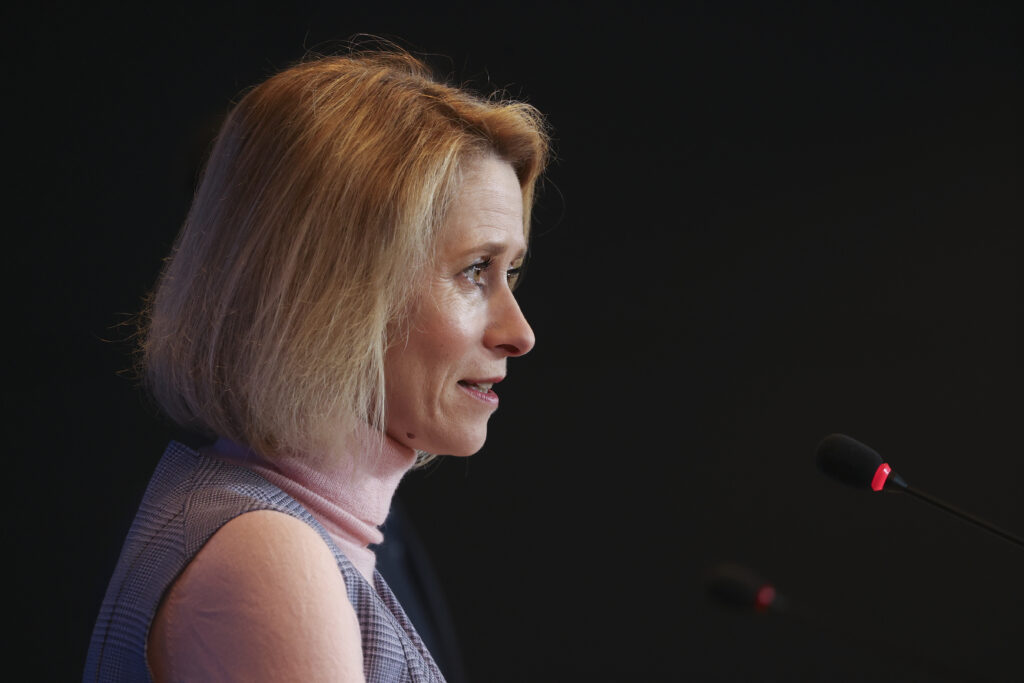
“Extremism and violence have consequences,” EU foreign policy chief Kaja Kallas wrote on X on Monday afternoon. “It was high time we move from deadlock to delivery,” she added, acknowledging the delay.
However, foreign ministers meeting at the Foreign Affairs Council in Brussels failed to secure the necessary majority to go a step further and approve measures targeting trade with Israeli settlements, including tariffs or restrictions on products originating from the occupied territories. Sweden and France have pushed for a ban on products and services linked to illegal settlements in the West Bank. As it stands, the sanctions only target individuals linked to violence against Palestinians.
Goal achieved
The Middle East dominated discussions at Monday’s Foreign Affairs Council, with ministers focusing on sanctions against violent Israeli settlers in the West Bank and possible trade restrictions on settlement goods.
Ahead of the meeting, Kallas said she expected ministers to reach a political agreement on sanctions against violent settlers. “I hope we can get there,” she said.
The breakthrough came after Hungary lifted its opposition, ending months of stalemate over the issue. “A situation that had been stalled for months has been resolved,” Italian Foreign Minister Antonio Tajani said.
Israeli Foreign Minister Gideon Sa’ar swiftly criticised the move, accusing the EU of acting on political grounds. “The European Union has chosen, arbitrarily and politically, to impose sanctions on Israeli citizens and entities because of their political views and without any basis,” he wrote on X.
Franco-Swedish proposal
Ministers also discussed a Franco-Swedish proposal to curb trade with settlements in the occupied territories, although any such measure would require a proposal from the European Commission.
“At the moment, after checking with the ambassadors on Friday, it seems we do not have the necessary majority to approve these measures,” Kallas said. She added that several other proposals tabled by member states also lacked the required support, whether by unanimity or qualified majority.
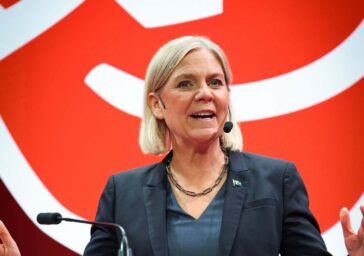
Swedish Foreign Minister Maria Malmer Stenergard said she was “fairly optimistic” that member states could agree on sanctions against “extremist settlers”, but argued that further steps were needed.
“We must also proceed with sanctions against the Israeli ministers who are promoting these settlements,” she later explained. “We have to do something, and we have to do it quickly. Otherwise, countries will get frustrated and move forward with national decisions. And this only weakens the European Union,” Stenergard concluded.
Ireland, building on a joint letter submitted with Slovenia and Spain weeks ago, reiterated its support for sanctions against violent settlers and their supporters, while also calling for the suspension of the trade pillar of the EU-Israel Association Agreement.
Spanish Foreign Minister José Manuel Albares, speaking at the EU Foreign Affairs Council, expressed his support for a trade ban to preserve the EU’s credibility in foreign relations and in compliance with European rights and values.
“There are various measures” the EU can adopt against Israel that “do not even require the suspension of the Association Agreement because it is simply a matter of complying with the opinions of the International Court of Justice,” Albares said. He pointed to sanctions against violent settlers and restrictions on trade in products from occupied territories as measures already justified under international law.
“The measures have been under discussion for too long,” he added, urging member states to proceed to a vote on proposals requiring only a qualified majority.
Germany rejects tariffs
German Minister of State for Europe Gunther Krichbaum said Berlin remained convinced that only a negotiated two-state solution could guarantee long-term regional stability.
Italy also signalled caution. “We are ready to examine the Franco-Swedish proposal, but it must be examined, it must be studied,” Tajani said. “I certainly don’t believe it will be a decision that will be taken today.”
Unlike sanctions, which require unanimity, trade measures can be adopted by a qualified majority, which is a level of support the proposal currently lacks.