Four years into the Russo-Ukrainian war, Europe’s factories are yet to pick up speed and scale. At the 12 May defence council meeting, EU ministers vowed faster joint arms procurement and unblocked funding; but a distinct sense of unease lingered.
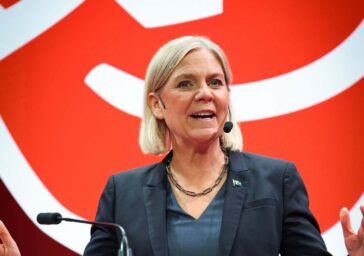
Kaja Kallas did not pretend all was well. The European Union’s top diplomat and security chief walked into the press room in Brussels’ Justus Lipsius building on Tuesday afternoon to present what the Defence Foreign Affairs Council had brought up. But the meeting soon took an unexpected turn. Pressed by reporters on why the EU is still so slow in response to Russian threat, she said: “I share your frustration because I have this same feeling.”
The High Representative was referring to Europe’s sluggish defence-industrial response to Russia’s war on Ukraine. The bluntness framed a council meeting in which ministers promised fresh tools, more cash and tighter coordination, yet left lingering doubts about speed and scale.
Production bottlenecks
The day had begun with the European Defence Agency (EDA) steering board, where ministers endorsed a new directorate for experimentation and innovation. “Defence innovation has to become a political priority,” Ms Kallas told them, arguing that Ukraine’s battlefield improvisation demands faster European cycles of design, testing and deployment.
Work will continue on joint procurement, still hampered by a thicket of national rules that baffle manufacturers. She warned that credible deterrence depends on visible output: “Showing weakness only invites aggression.”
Money is not the only problem. Member states have pledged tens of billions of euros for guns, drones and shells. Deliveries, however, lag. Ms Kallas pressed industry leaders—invited to the meeting—on production bottlenecks.
The answers sounded familiar: conflicting standards, varied tender procedures and an awkward export-licence maze. Ministers therefore asked the Commission to draft revisions to the EU defence-procurement directive, hoping standardisation will let factories shift to true serial production.
A faltering directive
Then the highlight arrived in the shape of an exchange on why European industry has not been firing an all cylinders. “After four years of war in Ukraine, you had many, many opportunities to talk to the industry and the member states. And you had an opportunity even today (meeting CEOs). So have you finally found the problem and are you in a position to solve it?” an AFP reporter asked a pointed question.
In a sharp departure from the usual Brussels way of doing things, Ms Kallas veered off script somewhat. “I share your frustration because I have this same feeling,” she said. “Somehow we haven‘t seen the industry ramping up as we would have expected.”
She went on to cite a specific example: “What was raised today and really needs to move faster is the procurement directive. The industry was saying you have different rules and standards everywhere and it’s hard to operate. Every member state is tweaking things a bit so everybody has different orders. You can’t really produce like that,” she said in a rare instance of apparent—if oblique—criticism of the Brussels machine she is part of. “So, yeah, I share your frustration.”
Burdens unevenly shared
The Council’s centrepiece was Ukraine. Mykhailo Fedorov, Ukrainian defence minister, and Radmila Shekerinska, NATO’s Deputy Secretary-General, joined by video-link. Ms Kallas announced that the first disbursement of the EU’s €90bn loan will reach Kyiv in June and will be spent on unmanned systems. “These funds will go directly to drones, which are the key capability in pushing back Russian forces at the moment,” she explained.
Yet even that sum cannot meet every demand. Bilateral aid must continue, she urged, and ministers debated how to unblock €6.6bn frozen in the European Peace Facility (EPF). “There was a strong support to find solutions to mobilise these funds,” she said, adding that her services will present compromise options.
What was raised today and really needs to move faster is the procurement directive. — Kaja Kallas, High Representative of the EU for Foreign Affairs and Security Policy
Calls for fairer burden-sharing resurfaced. A handful of member states provide the bulk of equipment; several others focus on humanitarian help. Ms Kallas did not name laggards but noted the imbalance: “The burden is not equally shared.” The EPF remains the logical channel, though capitals differ on whether it should reimburse past donations or finance fresh ones. A balancing act beckons.
Guarantees, not just guns
Ministers also sketched early thinking on post-war security guarantees for Kyiv. Brussels wants a beefed-up EU Satellite Centre to monitor any ceasefire, track Russia’s shadow fleet and police sanctions.
Ms Kallas stressed the need for firmness: “We need to see concessions from the Russian side… so it would be sustainable and lasting peace and they would refrain from attacking other countries.” She rejected the idea that Europe could relax once guns fall silent; without ironclad guarantees, any truce risks becoming merely a pause.
The Council asked officials to modernise two EU-led training centres for Ukrainian forces. Several member states have volunteered cash and instructors. Training, Ms Kallas argued, must evolve with battlefield needs, just as industry must adapt. She praised contributors, yet reminded others that every delay costs lives at the front.
A maritime flashpoint
Ministers then crossed continents to the Middle East. “The Strait of Hormuz is caught in grey zone between war and peace,” Ms Kallas said. Iran’s harassment of commercial traffic imperils energy flows to Europe and Asia alike.
The EU already runs Operation Aspides, a naval mission protecting shipping in the Red Sea. Its legal mandate stretches to Hormuz; what it lacks is hulls. “It only needs more vessels, more ships,” she insisted, welcoming pledges of extra frigates from several governments. Adjusting the operational plan should, in her view, be the fastest way to extend cover into the strait.
The Strait of Hormuz is caught in grey zone between war and peace. — Kaja Kallas
Some capitals favour a looser “coalition of the willing” convened by Britain and France. Ms Kallas proposed a hybrid approach: individual member states could fold their assets into Operation Aspides, letting Europe speak with one voice. “If we operate together under Aspides, that could be our contribution also to the coalition of the willing as Europe,” she argued, noting that small navies cannot spare ships for multiple banners. Acting jointly, she said, “we are a force.”
Lebanon’s frailty
Discussion moved north to Lebanon, where Europe already finances thousands of troops in UNIFIL and has transferred €100m to the Lebanese Armed Forces. Ms Kallas floated a new EU mission aimed at shoring up Beirut’s authority and clipping Hizbullah’s reach. “The stronger we make Lebanese army, the weaker we make Hezbollah,” she summed up. Timing is tight: UNIFIL’s current mandate expires later this year. Planning staff will prepare options before the summer recess.
Article 42.7—the EU’s mutual-defence clause—received only a passing mention. Ms Kallas confirmed that ambassadors have wargamed three cases: a joint invocation with NATO’s Article 5, an attack on a non-NATO EU member and a below-threshold hybrid assault.
A potential clash between two allied NATO members, she said, remains “hypothetical” and would merely embolden adversaries if publicly dissected now. Ministers will return to the topic at an informal gathering in Cyprus.
Industry’s unfinished homework
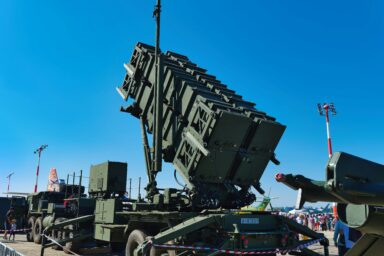
The session closed where it began: Europe’s factories. Executives showed fresh capacity charts, yet ammunition and air-defence output still trail battlefield demand. Ministers urged quicker standard setting and longer-term framework contracts. Ms Kallas captured the mood: “We need faster arms production, also cheaper and rapid delivery to close those capability gaps.”
We need to see concessions from the Russian side… so (…) they would refrain from attacking other countries. — Kaja Kallas
That leaves the old question of outside help. Journalists asked whether third countries—especially those that profit from trade with Ukraine—should do more. Ms Kallas agreed, saying the EU now presses partners to fund energy-grid repairs and reconstruction if they cannot supply weapons. Every extra euro, she said, lets Europe concentrate on lethal aid.
By day’s end ministers had ticked many boxes: a stronger EDA, a path to free EPF cash, tentative blueprints for Hormuz and Lebanon. What they lacked was time. Russia’s output of shells dwarfs Europe’s; Iranian drones prowl the Gulf in real time. Unless Europe turns promises into pallets swiftly, the shared frustration may soon give way to something harsher.