What began as a Finnish farmer’s experiment with Facebook groups now moves €200 million worth of local food a year. Digital platforms are quietly transforming short food supply chains across Europe and beyond, cutting out middlemen and connecting producers directly with consumers at scale. But three very different models from Spain, Ireland and Finland reveal that the technology is often the easy part.
Digitalisation makes life easier for both consumers and producers. But how much easier depends on the state of the local food ecosystem, consumer habits, and how willing producers are to work together.
More than just a virtual store
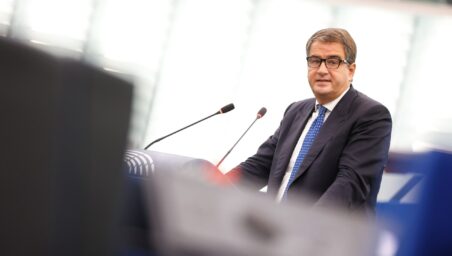
Alejandro Wonenburger, co-founder of the e-commerce platform Plant on Demand, explained how his tool differs from standard ERP (enterprise resource planning) or OMS (order management systems) software. He built it specifically for short food supply chains and the reality of small producers.
The platform’s modules cover products, recipes, traceability, orders, purchases, accounts, and invoicing. Producers can manage multiple sales channels, from consumers and restaurants to local markets and small retail, from a single interface. The goal is to centralise activity and cut the time farmers spend answering questions across email, telephone, WhatsApp, and other online stores.
Open Food Network: a cooperative model
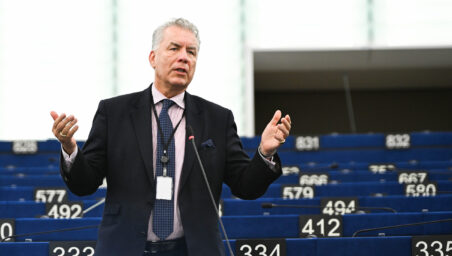
Yvonne Voland introduced the Open Food Network, an e-commerce platform she described as ‘designed and developed by local food producers’. It originated in Australia around 2012 and has since gone global, with around 2,500 community food enterprises across 15–20 countries now using it. The open-source platform is locally led and adapted to the context of each country.
The platform launched in Ireland in late 2020, when the COVID-19 pandemic was pushing food initiatives to move online. It is now used by small producers, community markets, and food hubs. Voland highlighted the platform’s governance model: Open Food Network is not-for-profit, cooperatively run, and keeps entry costs low for farmers.
Voland also used the Irish example to highlight the limits of digitalisation. Short food supply chains in Ireland are at an earlier stage of development and face deeper structural problems: resistance to digital technologies, poor local food infrastructure, limited consumer awareness, and deeply ingrained supermarket-shopping habits.
REKO: the low-tech alternative
Thomas Snellman, a small farmer from Finland, presented REKO, which he describes as a ‘pre-ordered online farmer’s market’. He developed the model in 2013 after visiting a community-supported agriculture scheme in France and adapting it to Finnish conditions. Consumers order online in advance, and producers from the region gather at a single delivery point for a few hours.
100 per cent of the consumer base go to the producer
— Thomas Snellman, farmer and founder, REKO
Unlike more sophisticated platforms, REKO uses Facebook groups to manage commerce and communication. Snellman said this let the model avoid building new infrastructure from scratch. “100 per cent of the consumer base go to the producer,” he said.
The model has spread to several other countries‚ and Snellman estimates there are now 800 REKO circles worldwide‚ with a combined turnover of €200m to €300m․ The system works, he said, because it keeps producers and consumers in direct contact: the farmers come to the delivery point themselves, giving customers a chance to meet the person who grew their food.
Short food supply chains are going digital, but all three models make one thing clear: the platforms are ready before the ecosystems are. Wider adoption will require not just affordable tools, but the infrastructure, habits, and trust that make those tools worth using. The hard part, as Ireland shows, is the ecosystem beneath the platform: consumer habits, local infrastructure, and the trust that takes years to build.