For the first time, the EU is bending its own fiscal rules to make room for guns. The European Commission’s 2026 Spring Package marks a historic shift in how Europe manages its finances and its priorities. And the consequences reach further than anyone expected.
Europe’s annual fiscal reckoning has never looked quite like this. The 2026 Spring Package, published on 3 June, arrives as the Middle East war that broke out in February continues to rattle energy markets and defence budgets across the continent. For the first time, the EU is not just urging member states to spend more on security. It is officially rewriting the rules to let them do so without fiscal penalty. The message is clear: Europe is shifting its priorities from deficit control to defence readiness and economic resilience.
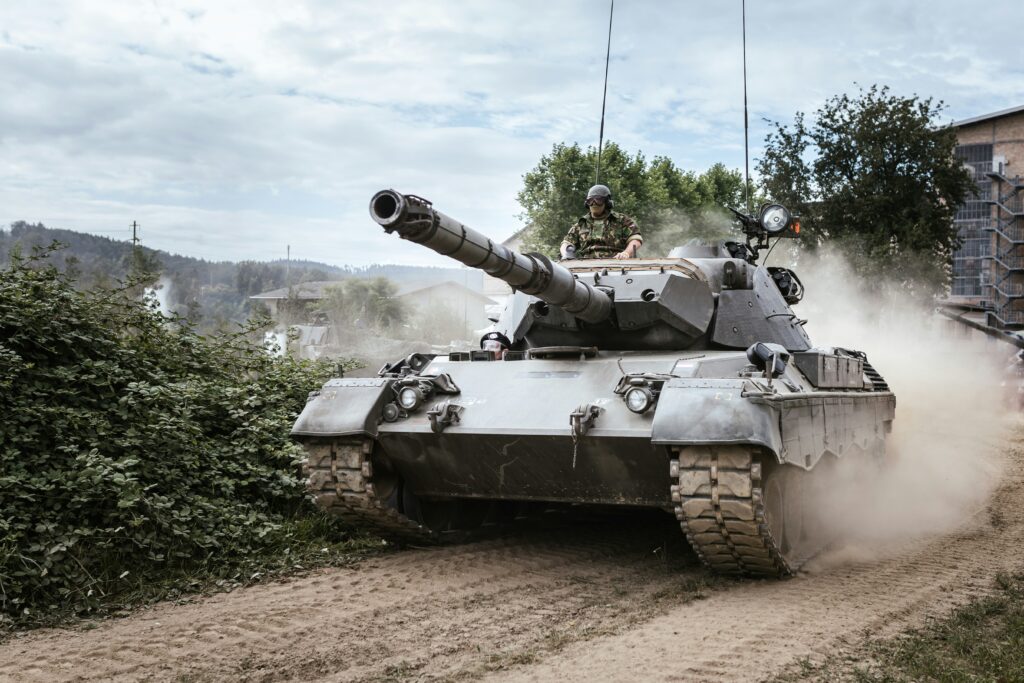
The mechanism driving this shift is the national escape clause (NEC) for defence spending. Under the reformed economic governance framework, member states can temporarily deviate from recommended expenditure paths to fund military modernisation, up to 1.5 per cent of GDP, through 2028. To date, 18 member states have requested the clause’s activation, and the Council has already granted it to 17.
For Germany and Estonia, the Commission went further still. Despite their deficits exceeding 3 per cent of GDP, it decided not to propose opening an excessive deficit procedure (EDP). Both countries’ excess deficits are fully explained by the surge in defence investment since 2021. In Brussels’ new fiscal logic, what you spend on matters as much as how much you spend. The Commission is also proposing to extend the clause to cover energy investments, offering member states that have already hit the defence ceiling additional fiscal room, subject to a debt sustainability assessment.
Bulgaria left behind
Not every country gets that reprieve. Bulgaria also requested the escape clause, and its 2025 deficit remained within limits when defence spending was factored in. This year, however, the excess over 3 per cent of GDP can no longer be explained by defence investment alone. The Commission is therefore proposing to open an EDP for Sofia, making it the sole member state in this package to face formal deficit proceedings. The Bulgaria-Germany contrast captures the new EU approach in miniature: defence spending is not just a security choice, it has become a fiscal argument.
Greece—the country that once brought the eurozone to the edge of collapse—has quietly exited the watchlist.
Malta, by contrast, earns the package’s good-news headline. The Commission is recommending that the Council abrogate its EDP decision for Valletta after the island state brought its deficit below 3 per cent of GDP ahead of schedule. Nine other countries, including France, Italy, Hungary, and Romania, remain under EDP but are assessed as having taken effective action, keeping their procedures in abeyance.
Romania nonetheless remains the Union’s most fragile fiscal case, the only member state still classified with excessive macroeconomic imbalances. Italy, Hungary, and Slovakia continue to show standard imbalances. Against that backdrop, Greece stands out as the package’s most striking rehabilitation. For the first time in over a decade, the Commission concludes that Greece, alongside the Netherlands and Sweden, no longer experiences macroeconomic imbalances. The country that once brought the eurozone to the edge of collapse has quietly exited the watchlist.
Housing as economic risk
The most structurally novel element of this year’s package has nothing to do with defence. For the first time ever, every country report now includes a dedicated annex on housing. The Commission has officially recognised the housing crisis not merely as a social problem but as a direct threat to economic competitiveness and labour mobility. Where workers cannot afford to live, economies cannot grow.
The country-specific guidance is blunt about the causes: slow permitting processes, inadequate construction rates, and housing markets that have priced out workers in major cities across the Union. The Commission is pushing forward with the Affordable Housing Act and a pan-European investment platform aimed at scaling up supply. Unaffordable housing, Brussels is now saying plainly, is a macroeconomic risk, not a domestic political inconvenience.
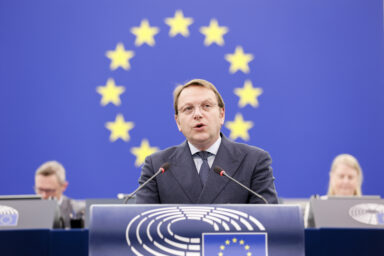
The price of failing to act is simply too high: a diminished Europe, shaped by global events rather than shaping them.
— Valdis Dombrovskis, Commissioner for Economy and Productivity
Human capital receives similarly upgraded attention. Executive Vice-President Roxana Mînzatu describes the shift as a political turning point. “This Spring Package marks an important political shift in the European Semester: human capital a key component of Europe’s economic strategy,” she said. “For the first time, we are translating the EU-wide recommendation on human capital into concrete, country-specific guidance for Member States.” The package warns of declining basic literacy and numeracy among young Europeans and calls on member states to address teacher shortages and low higher education attainment.
Rule of law under scrutiny
The Spring Package has long been primarily an economic instrument. This year, it is also a political one. Slovakia receives sharp criticism for dismantling specialised anti-corruption bodies, including the Special Prosecution Office and the National Criminal Agency, and for attempts to weaken the Whistleblower Protection Office. The Commission warns that these moves increase the risk of impunity for high-level corruption.
Hungary faces a parallel diagnosis: systemic weaknesses in public procurement, the use of private equity funds by government-connected individuals to obscure the ownership of public money, and persistent restrictions on access to information. When the Semester flags institutional decay alongside fiscal deficits, it signals that Brussels now sees governance failures as economic risks too.
Executive Vice-President Stéphane Séjourné put the package’s ambition simply: “Europe’s competitiveness starts with reform. By modernising our economies and removing long-standing barriers, member states can create the fiscal space needed to invest in the industries, technologies and skills of the future.” Commissioner Dombrovskis was blunter still. The price of failing to act, he warned, is “a diminished Europe, shaped by global events rather than shaping them”.
The 2026 Spring Package is a bet that Europe can rearm, build homes, educate its workforce, and keep its institutions clean all at once. Whether it can deliver on all four is the question the autumn will answer.