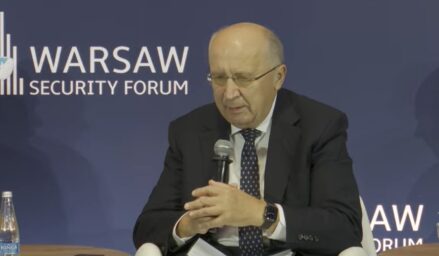
A Siemens chairman is advising Brussels on AI rules his own company tried to weaken. The European Commission has appointed Jim Hagemann Snabe to the newly created, unpaid role of Special Envoy for Industrial AI. The backlash was instant.
The Commission appointed Snabe on 3 June. He will advise Commission President Ursula von der Leyen and Executive Vice-President Henna Virkkunen and prepare a report with recommendations on industrial AI. His mandate runs until March 2027. Snabe’s remit spans AI infrastructure, cloud computing and the application of AI across industrial sectors.
The Commission says it carried out a thorough assessment before the appointment to ensure no conflicts of interest. For the duration of his mandate, Snabe will suspend his membership of the Google Cloud Advisory Board and the board of American tech company C3.ai. He will, however, retain his position as chairman of Siemens.
Siemens connection
That last point is what critics find troubling. Siemens has been one of the most active industry lobbyists pushing to roll back key provisions of the EU’s AI Act. Brando Benifei, the European Parliament’s rapporteur for the AI Act, said at a press briefing on Friday that Siemens had lobbied directly against his proposal during the legislative process. He argued that appointing its chairman to advise on the very policy area the company sought to shape sends the wrong political signal to citizens and lawmakers alike.
It is hard to imagine a more obvious conflict of interest.
— Bram Vranken, researcher, Corporate Europe Observatory
Bram Vranken, a researcher at the business transparency non-profit Corporate Europe Observatory, was equally blunt. “It is hard to imagine a more obvious conflict of interest,” he said.
When pressed on what specific safeguards are in place, Commission spokesperson Balazs Ujvari declined to give details, citing personal data protection. He insisted that Snabe’s role would focus solely on innovation and would not touch the regulatory side of AI policy. “The AI Act will firmly stay in place,” said Thomas Regnier, the Commission’s spokesperson for digital affairs, on Friday.
Unanswered questions
The Commission did not explain how Snabe was selected or why the envoy position was created. It also did not clarify whether his mandate ends in March 2027 or whether his status changes at that point.
The appointment echoes a previous controversy. In 2024, von der Leyen appointed Markus Pieper, a lawmaker from her own European People’s Party, as the EU’s envoy for small and medium enterprises. He resigned months later following concerns over the selection process.