Seventeen member states have agreed to build shared test corridors for self-driving vehicles under common rules. It is the first serious attempt to break down the legal walls that have kept the technology trapped within national borders. If it works, the way Europeans travel may never be the same.
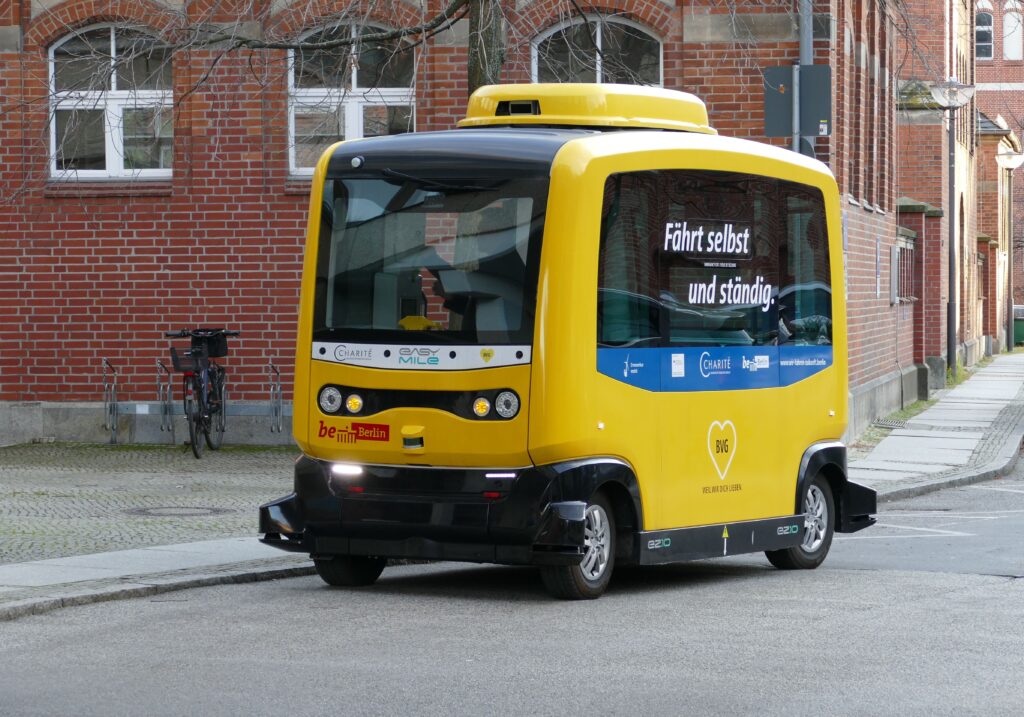
Estonia is already the third European country to allow self-driving vehicles on public roads. Luxembourg has launched the first autonomous ride-hailing pilot on the continent. Yet a vehicle approved in one member state may face entirely different legal requirements the moment it crosses a border.
Apostolos Tzitzikostas, the European Commissioner for Sustainable Transport and Tourism, presented the initiative as a key step under the bloc’s automotive action plan. Europe has the factories, the engineers, and the research. What it lacks is a shared environment where the technology can actually operate at scale.
Built to stay home
For a technology built around connectivity and cross-border mobility, this is a serious barrier. The proposed solution is a network of test corridors bringing together national governments and industry to trial autonomous vehicles under real conditions. Regulators will assess safety and interoperability alongside them. The goal is to agree on common rules before fragmentation becomes permanent.
For several member states, autonomous driving is as much an industrial opportunity as a transport one. Greece argued the initiative would help Europe regain technological sovereignty and stay competitive globally.
Autonomous mobility will shape the future of transport, and Europe must lead, not follow.
— Konstantinos Kyranakis, Deputy Minister for Infrastructure and Transport, Greece
The Czech Republic has already introduced legislation permitting level-three autonomous driving and is preparing for level four. At level three, the car drives itself but a human must be ready to intervene. At level four, the system operates without human input in defined conditions. Prague argues that a predictable regulatory environment is essential if Europe wants to preserve its position in the automotive sector. Germany goes further, pushing for cross-border testing to evolve into full deployment of autonomous vehicles in regular traffic.
Every country for itself
Croatia was among the first member states to regulate autonomous driving in national legislation. Others are still drafting their rules. The result is a patchwork of different frameworks, approval procedures, and road environments across the bloc. Estonia has gone the furthest in calling for a response. It wants the EU to set common rules not just for vehicle approval, but for autonomous driving services as a whole.
The Commission has allocated €20 million through the Connecting Europe Facility’s 2026 work programme to help build the technical infrastructure for cross-border testing. But the money is a drop in the ocean. And a declaration of intent is not yet a harmonised regulatory framework. What matters is whether the test corridors will produce common rules broad enough to apply beyond individual pilot routes.
The real test starts now
The Council took note of the Commission’s presentation, backed by the participating governments. Taking note, however, is not the same as acting.
Member states must now ensure their legislation, approval procedures, and operational rules do not block innovation or create new barriers at borders. Croatia called for an agile EU legal framework that can keep pace with rapid developments in AI and autonomous systems. The risk is real: rules too rigid will not survive the pace of technological change, but rules too loose will produce the same fragmentation the test corridors are meant to solve.
Europe’s driverless car programme is ultimately a test of something bigger. The bloc has the industrial base and the technology. What remains unclear is whether its member states can agree on a common road for that technology to travel, and use the Single Market to turn a collection of national pilots into something that actually works for everyone.