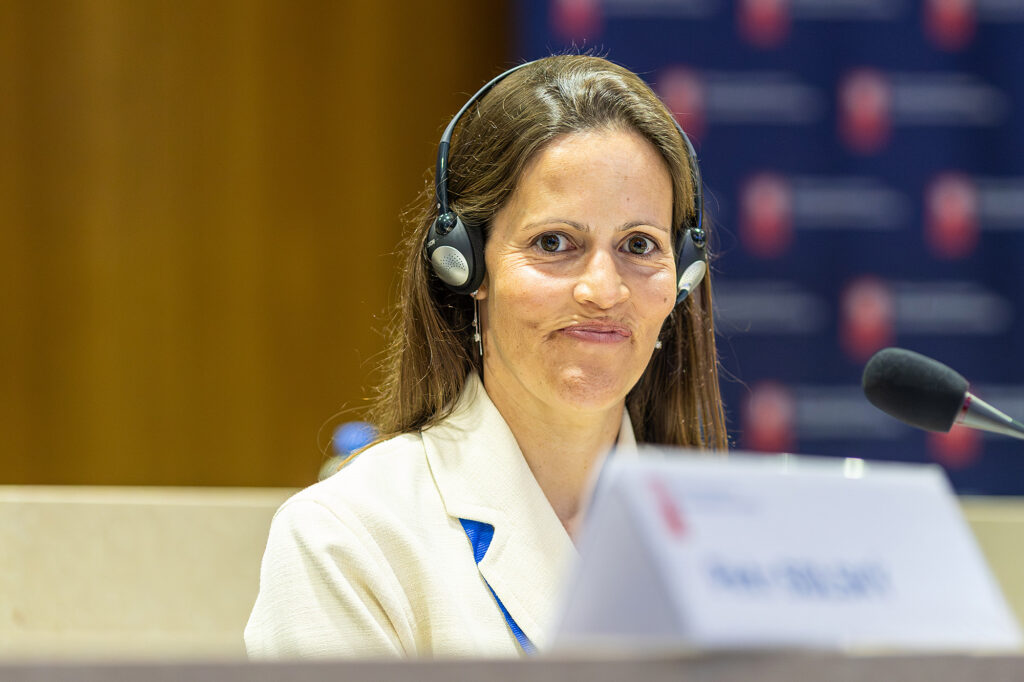
Europe is no longer debating whether industrial policy belongs in the EU economy. Instead, the debate is shifting towards how far governments should go in supporting strategic industries, what safeguards should remain in place, and how EU state aid policy, which competition law expert Caroline Buts from the Vrije Universiteit Brussel describes as undergoing one of its most significant transformations in decades, can adapt to these new priorities.
Driven by successive crises, growing geopolitical tensions and mounting concerns about Europe’s competitiveness, state aid rules are increasingly viewed not only as a tool to correct market failures but also to steer investment towards strategic objectives, ranging from defence readiness and industrial resilience to innovation and decarbonisation.
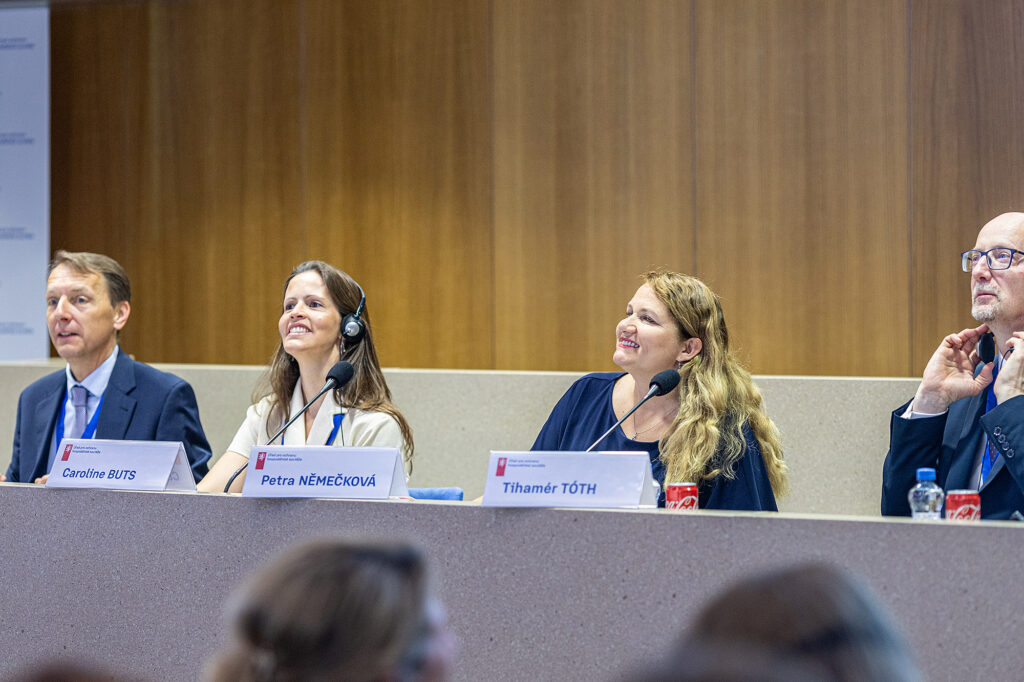
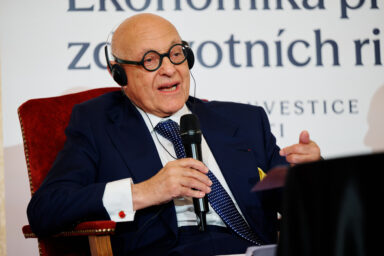
The challenge, Buts argued at a recent conference organised by the Office for the Protection of Competition of the Czech Republic, is ensuring that this approach does not come at the expense of the EU’s single market. More flexibility can help governments act faster, but it can also deepen inequalities between member states and undermine the level playing field that lies at the heart of the European project.
State aid has always been in motion
For years, discussions about European industrial policy often revolved around a perceived tension between state aid control and the EU’s economic ambitions. Buts argues that this framing has become increasingly outdated. “There is no real tension,” she suggested, arguing that the challenge today is not whether state aid rules should support industrial policy, but how they should evolve to remain fit for purpose.
While EU state aid rules date back to the 1950s, Buts, who is also a co-founder of the Brussels Centre for Competition Policy, stressed that they have never been static. The European Commission has repeatedly updated and clarified the framework over the decades. What is different today is the scale and frequency of crises that have accelerated those changes.
“It seems that we’re going from crisis framework to crisis framework. And it also seems that some of the logics are being kept and some documents are here to stay.”
— Caroline Buts of Vrije Universiteit Brussel and the Brussels Centre for Competition Policy
From the post-9/11 crisis framework to measures adopted during the financial crisis, the COVID-19 pandemic, the energy crisis and Russia’s war against Ukraine, temporary emergency measures have become an increasingly prominent feature of the EU’s state aid toolbox. Some of the principles introduced during these crises are now finding their way into more permanent policy frameworks.
At the same time, influential reports by former Italian prime ministers Mario Draghi and Enrico Letta have pushed competitiveness and industrial policy to the top of the European agenda.
Both reports, Buts argued, served as a wake-up call for Europe. While Draghi places particular emphasis on industrial policy and investment, Letta focuses more strongly on preserving the single market. Together, however, they reflect a growing consensus that Europe must become more proactive in supporting strategic sectors.
Defence: a strategic sector, not a special exemption
Defence featured prominently in Buts’ analysis of how state aid policy is evolving. The sector occupies a unique position because it is linked not only to competitiveness and industrial development, but also to security, military readiness and the resilience of European supply chains. At the same time, defence companies cannot simply be treated as an entirely separate category.
Many defence firms also operate in civilian markets, meaning that normal competition and state aid considerations continue to apply.
For Buts, strengthening Europe’s defence industrial base requires a much broader policy discussion than state aid alone. Procurement rules, permitting procedures and supply chain policies can often be just as important as direct financial support.
In particular, she highlighted the importance of “smart procurement” as a tool for helping European industry scale up production and strengthen strategic autonomy.
Flexibility must not come at the expense of fairness
One of the central themes of Buts’ speech was the need to strike the right balance between simplification and safeguards.
Recent reforms to the General Block Exemption Regulation (GBER) have significantly reduced administrative burdens and made it easier for member states to grant certain types of aid without prior Commission approval. While she welcomed these efforts, Buts questioned whether some useful mechanisms may have been lost in the process.
She pointed in particular to the reduced emphasis on ex-post evaluations of aid schemes. Although such evaluations can be resource-intensive, they provide valuable evidence about whether public support actually achieves its objectives.
Evaluations help policymakers understand which aid measures generate genuinely additional investment and which merely subsidise projects that would have happened anyway. They also allow member states to learn from one another and improve future schemes.
This issue becomes increasingly important as Europe adopts a more active industrial policy. During the COVID-19 pandemic, member states used state aid very differently. Some governments spent significantly more than others relative to the size of their economies, reflecting both political choices and differing fiscal capacities. The result was a not-so-level playing field across the single market.
Buts also pointed to major differences in the types of support used. While some countries relied heavily on direct grants, others preferred loans and guarantees. These choices have important implications for competition, public finances and the long-term effectiveness of state support.
Existing rules already offer tools for defence
Despite frequent calls for greater flexibility, Buts argued that the existing state aid framework already provides substantial opportunities to support the defence sector.
Research and development aid, risk finance measures and start-up support under the GBER can all be particularly relevant. This is becoming increasingly important as defence innovation is no longer driven exclusively by large traditional contractors.
Alongside established defence companies, Europe is seeing the emergence of start-ups and firms from adjacent sectors entering the market with technologies such as drones, artificial intelligence and advanced communications systems.
For larger projects, member states can seek Commission approval through traditional notification procedures.
Buts also pointed to the growing importance of Important Projects of Common European Interest (IPCEIs). While no defence-specific IPCEI has yet been approved, ongoing artificial intelligence initiatives could have significant implications for the sector.
Article 346 is not a blank cheque
One of the clearest warnings in Buts’ presentation concerned Article 346 of the Treaty on the Functioning of the European Union, which allows member states to take measures necessary for the protection of essential security interests connected to arms production and trade. The provision, she stressed, is not a general exemption from state aid rules.
Article 346 applies only to genuinely defence-specific activities and cannot be used to subsidise broader commercial operations — for example dual-use products.
She pointed to past Commission recovery decisions involving Hellenic Defence Systems and Hellenic Shipyards, where support granted under the guise of security interests was found to have benefited activities extending beyond military production.
From market failures to strategic missions
The broader evolution of EU state aid policy can perhaps be summarised in one phrase used by Buts: Europe is moving from remedying market failures to pursuing strategic missions.
The objective is no longer merely to prevent distortions of competition, but also to direct investment towards priorities such as defence readiness, technological leadership, resilience and the green transition.
Yet even as Europe embraces a more interventionist industrial policy, Buts argued that the fundamental principles of state aid control remain as relevant as ever. The challenge for policymakers is not whether to modernise the rules, but how to do so without undermining the level playing field that those rules were designed to protect.