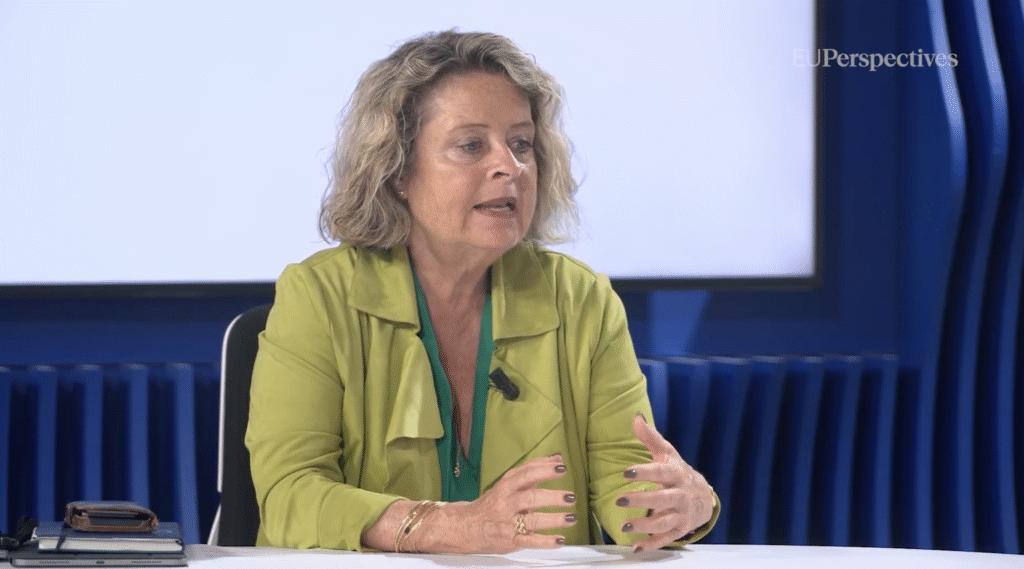
The vice-chair of the European Parliament’s health committee has put forward a forceful case for more European unity in the field to an EU Perspectives podcast.
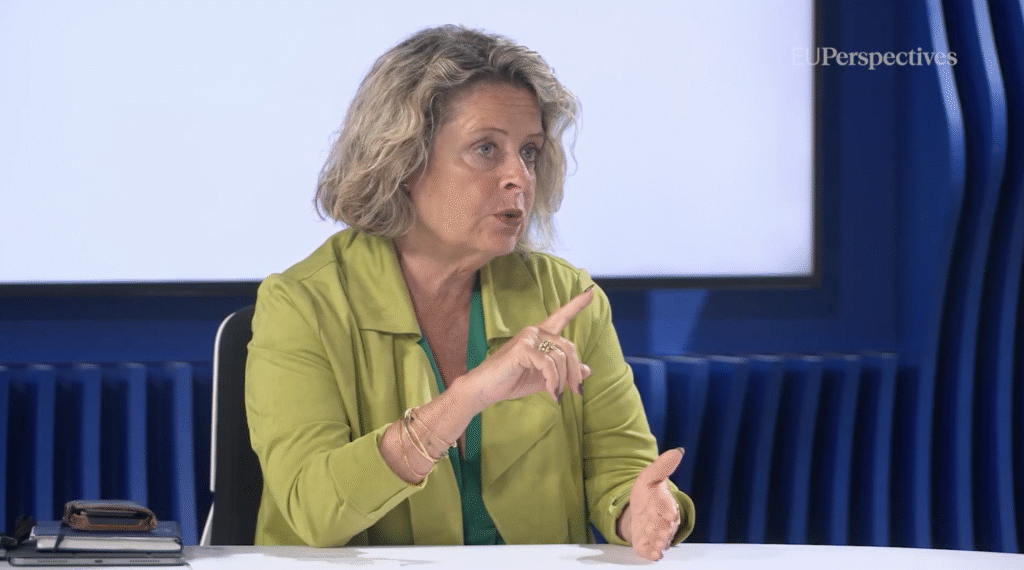
While the EU treats health preparedness as a shared task, it has yet to build the stockpiles and rules to match the rhetoric. In an exchange with EU Perspectives’ Jennifer Baker and European Policy Centre analyst Michele Migliori on 8 June in Brussels, MEP Stine Bosse (Renew/DNK), senior SANT committee member spoke in no uncertain terms about what needs to be done.
Much of the conversation revolved around finance under the next long-term EU budget, stockpiling, and regulation. Ms Bosse said the bloc needed to “invest a lot more together” and to do so across crisis preparedness, biotechnology, and pharmaceuticals. She argued that Europe is better prepared than before Covid-19, but not well enough prepared.
More than crisis management
Ms Bosse drew a line between emergency response and wider resilience. “If you think about preparedness, not only in the sort of crisis challenges, but also in terms of what do we foresee, how does the future look like for us Europeans regarding our health?” she said. She added that Europe faces “so much pressure on our health care systems from within, but also from the outside, especially from the US”.
Her argument was not confined to pandemics. She said Europe must work on “risk and damage control” and on “biotech and the whole sort of environment around our pharmaceutical sector”. She described this as an area where Europe “really, really needs to get our act together.”
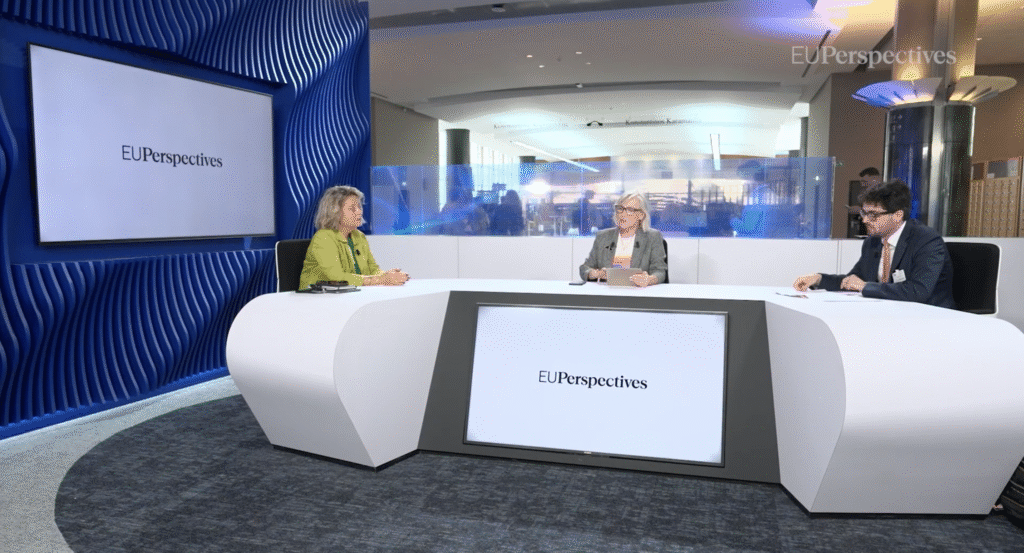
Ms Baker pushed the discussion towards the old question of competence. Health, she said, had traditionally been a member state responsibility. The crisis, in her framing, had shown that Europe can be “stronger and healthier together.” Ms Bosse agreed, and pointed to joint procurement as evidence of a change in mood. She said the Critical Medicines Act showed that Europe is “much more aware that we need to do much more together” and that, in procurement, “we stand much stronger when we stand side by side.”
She supported her claim by mentioning Europe’s response to recent outbreaks. Referring to Ebola in Congo, she said Europe reacted “fast and with decided procedures”. She praised the existence of agencies and officials in the EU who monitor such threats. She also warned that the US withdrawal from the WHO had “taken away US aid”, which, she said, raised risks for Europe.
What the budget should buy
The exchange then turned to the next EU budget. Ms Baker asked what health should look like in the multiannual financial framework. Ms Bosse answered with a formula she attributed to Piotr Serafin, the budget commissioner: “What we can do better and cheaper together, we must.”
She used that line to argue for a broader view of health spending. The budget, she said, should not only cover direct preparedness for crises. It should also support rare diseases, rare cancers, centres of excellence, and faster treatment access across Europe.
Her language was practical rather than grand. “My push would be also for the MFF to contain a lot more for health care,” she said. But she also drew a line: EU money should not replace national health systems. It should support areas where Europe can act more efficiently together.
That logic ran through her response on stockpiling and procurement as well. She presented common action as a way to buy more resilience without duplicating national effort. The point, in her telling, was not centralisation for its own sake. It was a search for scale.
The US challenge
Ms Baker then widened the frame to competitiveness. She asked who Europe is competing with. Ms Bosse gave a blunt answer: “The sad thing about this is the fact that many of the new ideas are actually born in Europe.” The Union, she said, is strong on innovation and research universities. The problem comes later. “We need the people who actually develop this to stay here, to want to build their businesses here,” she said. She added that Europe faces “fierce competition from the US.”
We need the people who actually develop this to stay here, to want to build their businesses here.
— MEP Stine Bosse (Renew/DNK)
Ms Bosse also warned against US policy moves. She called the “most favoured nation” legislation introduced by the US administration “a pure attack on our industry and also on our society model that we have universal health care”. She extended the comparison beyond health. Europe, she said, is building up in digital and defence. In pharmaceuticals, however, “We are losing. We are strong, but we are falling back.” The repeated warning was clear: Europe still has assets, but it risks squandering them.
Her conclusion on this point was political. “We cannot let go of our position,” she said. “We should develop our position, otherwise we will look back and say what were they thinking of? We had it and we let go of it.”
Regulation as an industrial tool
The discussion then shifted to regulation. Ms Baker asked whether approval processes slow Europe down, and whether the biotech proposal goes far enough. Ms Bosse said the Commission had been “fast” and had “done a good job.” But she argued for more.
Her main proposal was a “28th regime” for biotech, focused on rare diseases and rare cancer. She asked why small innovative firms should get an EMA approval and then still have to work through 27 national systems. That, she said, “is slowing down processes dramatically.”
What we can do better and cheaper together, we must.
— Stine Bosse
She proposed a model in which EMA approval would apply across all member states. Countries that did not want to join could opt in. She described that as a way to speed access while preserving flexibility, calling for more cross-border trials. She said Europe needs them to get “back on the track towards both US and China”. She linked this to the European Competitiveness Fund, and to the idea that health should have a place inside wider EU industrial policy.
That included the European Health Data Space and the European Reference Networks, which she said already exist but need further development. Europe, she argued, has an advantage because universal health systems generate more health data.
War and antimicrobial resistance
The final part of the exchange focused on antimicrobial resistance. Ms Bosse said the issue belongs inside the competitiveness debate because it is also a security question. In the European Competitiveness Fund, she said, the largest window is defence. But she added that antimicrobial resistance is “a huge problem connected to war.”
She called AMR “a slow pandemic” and said Europe has to deal with it. The point linked back to the whole conversation: preparedness is not just about emergency rooms and emergency budgets. It is about the systems that decide how quickly Europe can respond, produce, procure, and regulate when pressure rises.
What emerged from the exchange was a distinctly Brussels view of health policy. It is about finance, but also industrial strategy. It is about stockpiles, but also data. And it is about regulation, not as red tape, but as one of the levers that decides whether Europe keeps or loses ground.