EU is heading into its final budget year with almost nothing in reserve. The European Commission has presented its 2027 proposal, the last under the current spending framework, with modest increases for farmers and regions but no room for surprises. MEPs across the political spectrum are worried.
The proposal, worth around €200 billion, lands as negotiations over the EU’s next long-term budget are already under way. Lawmakers are fighting over how to fund the bloc’s priorities after 2027, even as the Commission warns there is little room left to respond to the crises of today.
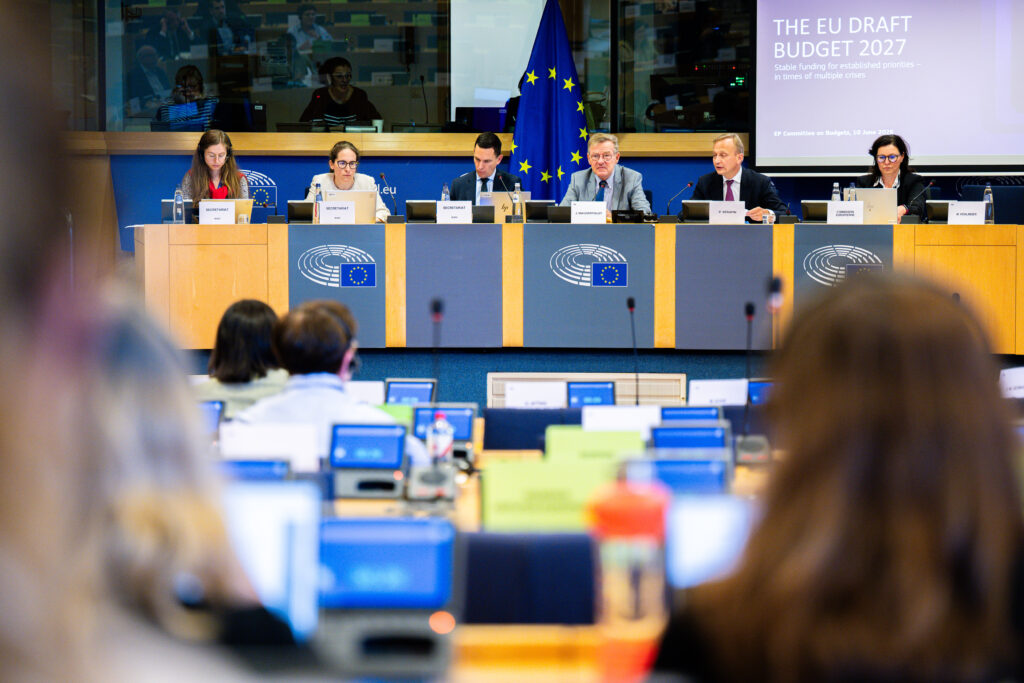
Budget Commissioner Piotr Serafin presented the proposal to the Committee on Budgets on Wednesday. The Commission is proposing increases in politically sensitive areas: cohesion funding would rise by €5.4bn, rural development by €2.2bn. The agricultural reserve will provide a further €300m to help farmers cope with rising fertiliser costs linked to the Middle East conflict. The Commission has already deployed another €200m.
The increases come at a sensitive moment. Agriculture and regional funding have become major battlegrounds in the MFF negotiations, and many MEPs fear both could lose out under the Commission’s proposed overhaul of EU spending after 2027.
Approaching the limits
Serafin was candid about the constraints. “The other side of the coin, better to be upfront about it,” he told lawmakers. “There is little left for anything unforeseen or for launching policy initiatives.” That concern echoed across the political spectrum.
Parliament’s rapporteur on the 2027 budget, Nils Ušakovs (S&D/LVA), argued that the proposed increases mask a more worrying reality. “In real terms, the budget will be stable or even decrease. Is that what we want to show to our citizens? What happens if there are unexpected events?” he asked.
Mr Ušakovs said the EU had already exhausted most of the tools available under the current budget framework to respond to successive crises. The bloc’s final budget year leaves little room for manoeuvre before a new seven-year spending plan takes effect. He also raised concerns about falling funding for competitiveness, the defining priority of Commission President Ursula von der Leyen’s second term.
There is little left for anything unforeseen or for launching policy initiatives.
—Piotr Serafin, Budget Commissioner
Pressure on the budget has increased further because repayments linked to the EU’s pandemic recovery fund are proving more expensive than initially expected. NextGenerationEU repayment costs look set to exceed earlier forecasts by roughly €4.2bn in 2027. That leaves even less for new priorities.
The squeeze comes as the EU faces mounting demands to continue support for Ukraine, strengthen defence capabilities and boost competitiveness, while maintaining traditional spending on farmers and regions.
Drifting along
Tamás Deutsch (PfE/HUN) was equally blunt. “The practice continues where the EU budget is nothing more than drifting along, always hoping for some change in two or three years,” he said. “We have problems now, you are proposing solutions in the next MFF. We should address problems now, not kick the can down the road.”
From the ECR benches, Beata Szydło (ECR/POL) questioned the long-term sustainability of the EU’s finances. “How do we stop the debt that has been growing?” she asked, warning about a downward spiral if spending keeps rising without a clear financing plan. Growing reluctance among MEPs over repaying NextGenerationEU debts adds to that concern.
Familiar fault lines
The fault lines visible on Wednesday already mirror those emerging in the MFF talks. MEPs from across the political spectrum want the EU to do more on competitiveness, agriculture, regional development, education, and security, yet many simultaneously worry the budget has no room left to absorb new shocks.
Renew Europe’s Malik Azmani (Renew/NLD) welcomed the focus on competitiveness but argued other priorities should not be overlooked, including Erasmus and the rule of law. Rasmus Andresen (Greens/EFA/DEU) urged the Commission to take Parliament’s position seriously as negotiations move forward. The Council and Parliament will continue negotiations after the summer, with both institutions expected to push for amendments before adopting the final budget later this year.