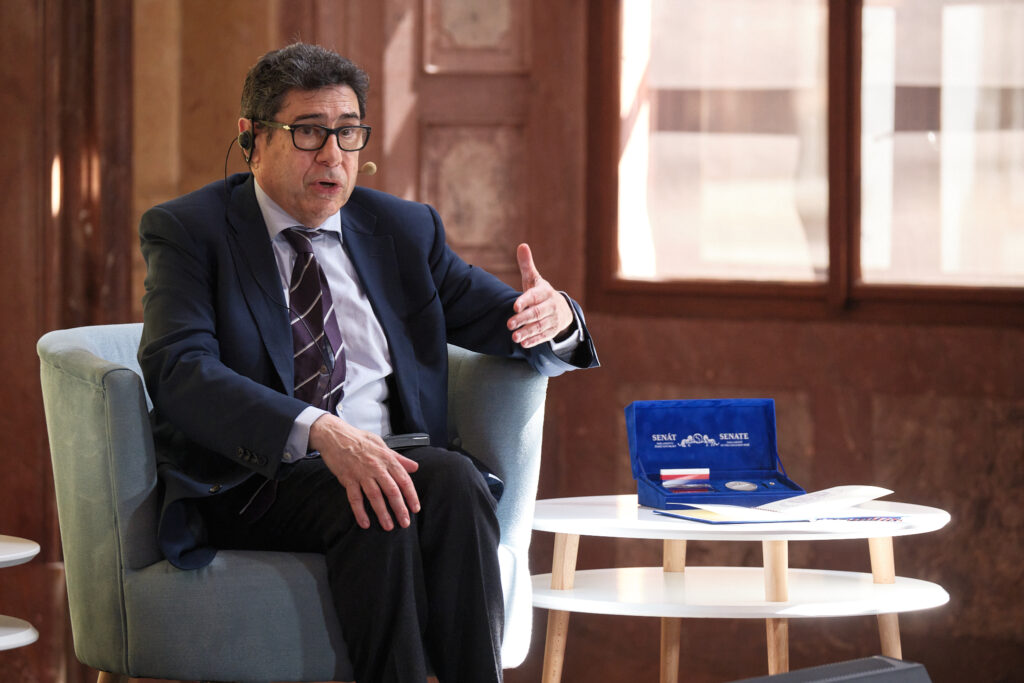
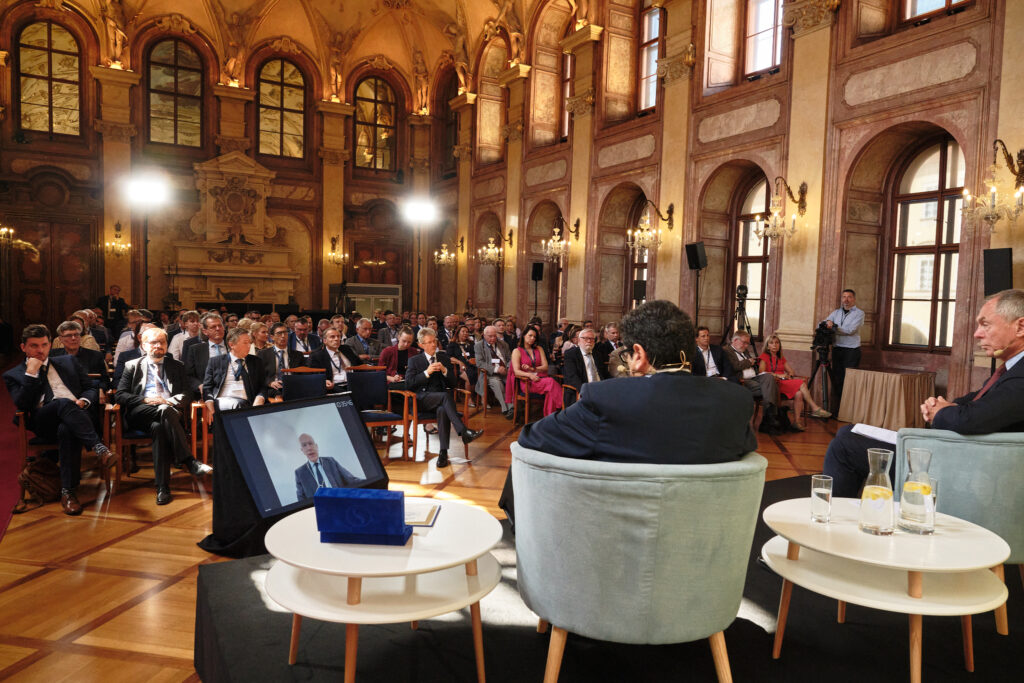
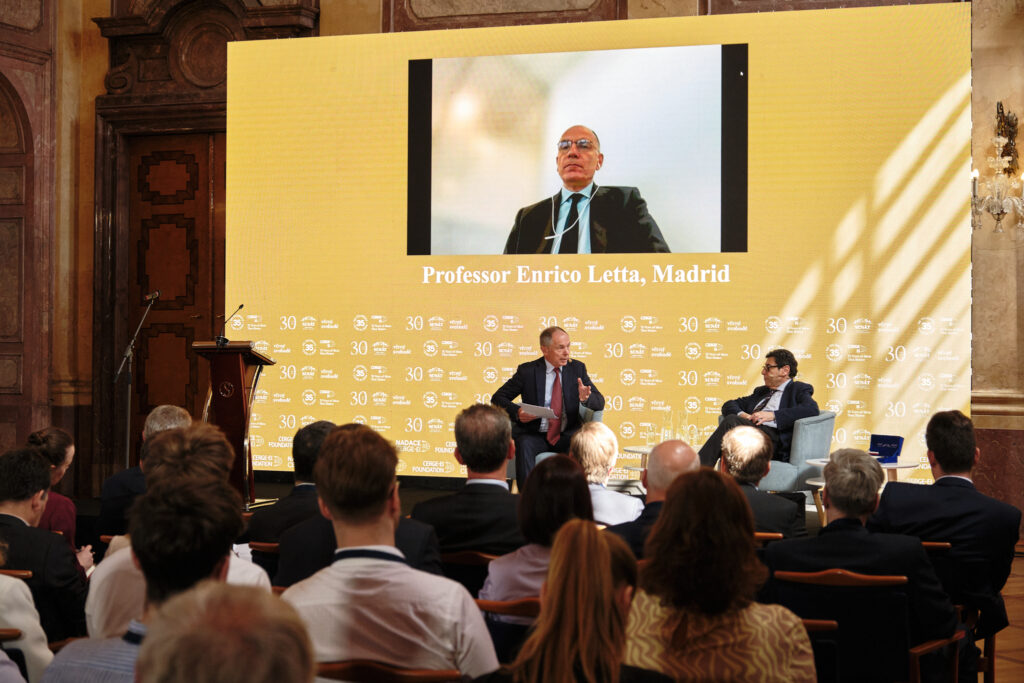
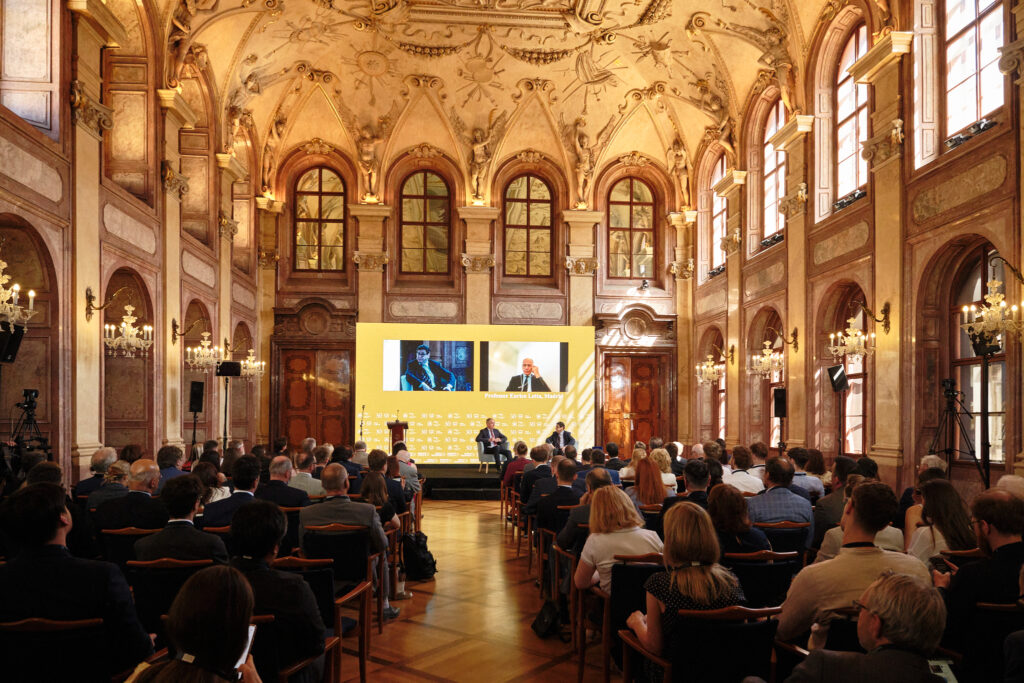
Europe will not remain competitive in the long term without higher-quality education, stronger support for top-level research, and a greater willingness to invest public funds in innovation. That was the key message of a debate organized by the Center for Economic Research and Graduate Education (CERGE-EI) in the Czech Senate, featuring Nobel Prize-winning economist Philippe Aghion, former Italian Prime Minister Enrico Letta, and CERGE-EI co-founder Jan Švejnar.
What truly determines the competitiveness of economies today? This question was at the center of the discussion on innovation and economic growth, which took place on the occasion of the 35th anniversary of CERGE-EI. According to Philippe Aghion, one of the most influential economists in this field, cheap labor and industrial production are no longer the primary sources of prosperity. Human capital, that is, education, knowledge, and the ability to innovate, has taken their place.
“The main input into innovation is education,” Aghion said.
If Europe wants to succeed in the age of artificial intelligence and technological change, it must invest heavily in high-quality education, science, and research. This applies not only to universities but also to primary and secondary schools, which teach people how to adapt to a rapidly changing economy.
Jan Švejnar pointed out that education is one of the areas where his country, the Czech Republic, is falling behind.
“Human capital is our ace,” he said, noting that the country lacks an abundance of natural resources and does not have a large domestic market. Its future therefore depends primarily on its ability to educate talented people. According to Švejnar, the Czech Republic has still failed to build a world-class university and has long underinvested in excellence in education and research.
Stop Funding Mediocrity
A strong message also came from economist Gérard Roland, who works at both CERGE-EI and the University of California, Berkeley. In his view, Europe will not be able to compete with the United States and China if it continues to spread its limited resources across too many average institutions. “We must focus relentlessly on excellence,” Roland said.
Stronger European funding for research is necessary, he argued, but it should not replace national support. Instead, the two levels must complement one another. As an example, he pointed to the European Research Council (ERC).
According to Aghion, the ERC is one of Europe’s best instruments for financing top-level science. European funding should complement national funding rather than compete with it.
Roland also stressed the importance of private funding, which is common at American universities. He referred to Berkeley’s experience, where most resources come not from the state but from private donations, foundations, and partnerships.
“It is a complement to public funding, not a substitute,” he emphasized.
An Opportunity for Europe: Scientists in the U.S. Are Beginning to Hesitate
The discussion also touched on geopolitical change and how this global shift could benefit Europe. Aghion noted that, due to an increasingly uncertain environment in the United States, some researchers are beginning to look more seriously at Europe.
According to him, Europe has an opportunity to attract top talent — provided that it offers stable funding, high-quality institutions, and openness toward foreign scientists. “It is very important to welcome foreign researchers,” Roland added.
Research Must Be Focused on Results, Not Grants
Former Czech National Bank Governor Miroslav Singer raised an important question during the discussion: how to ensure that research success is based not on the ability to secure grants but on actual results. He pointed out that some public programs support research spending itself without a clear impact on innovation or productivity.
Aghion agreed that Europe must be much stricter in evaluating outcomes. Drawing on experience from France, he noted that some programs functioned more as hidden subsidies for companies, whereas targeted programs focused on excellence delivered better results.
“We should not repeat programs that do not work,” he said. According to Aghion, ex post evaluation, that is, the systematic assessment of whether publicly funded research has actually produced results, is therefore essential.
Competition Instead of Federalization
During the debate, Aghion rejected the idea of a centralized federal Europe. “I do not believe in a federal Europe. I believe in competition among us that will push us forward,” he said.
In his view, European countries should both cooperate and compete, much like leading American universities, which compete for talent while simultaneously collaborating in research.
According to the economists, if Europe wants to remain competitive with the United States and China, regulation and industrial policy alone will not be decisive. The key question is whether Europe can create an environment that supports education, attracts talent, and consistently invests in the very best.