Europe’s ‘fifth freedom’ is to make knowledge move as freely as goods, services, capital, and people. It is still an aspiration — but the European Research Area Act may help.
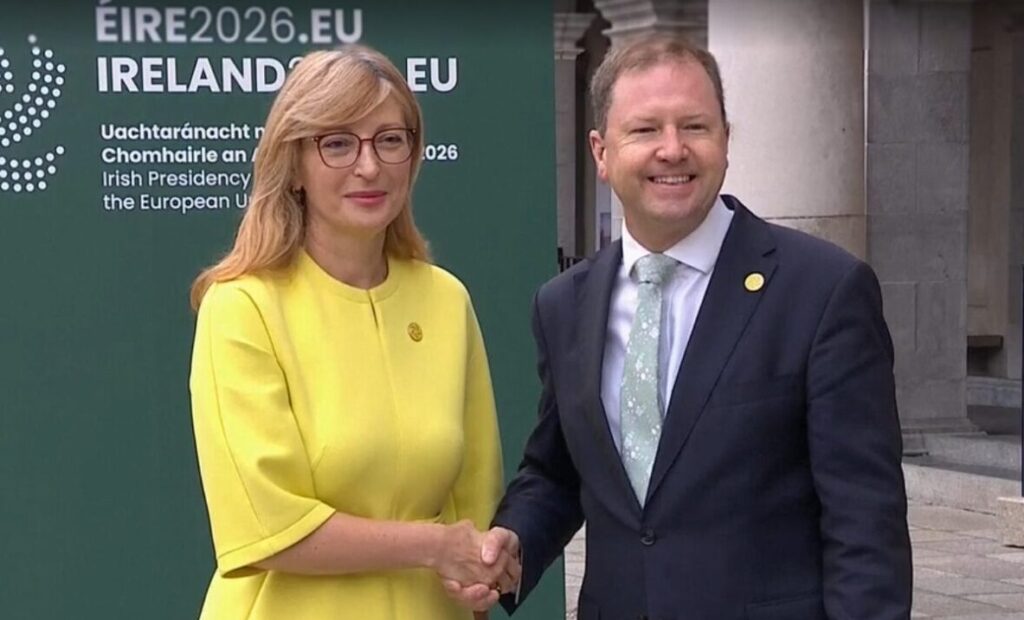
What should a ‘genuine single market for knowledge’ look like, and how to improve the performace of innovation? That is what Ekaterina Zaharieva, European research an innovation commissioner, and James Lawless, Ireland’s minister for education and science, debated in Dublin on 21 July. The session was part of an informal Competitiveness Council meeting hosted by the Irish presidency.
“Europe cannot compete unless knowledge can move as freely as good services, capital and people,” said Ms Zaharieva. She added: “Europe cannot lead unless we turn more of our excellent research into successful innovation.” Those two sentences captured the day’s argument. Europe has no shortage of ideas. It still struggles to move them.
Science and its enemies
The barriers, Ms Zaharieva said, are mundane but damaging mobility, access to cross-border research infrastructure, funding, cooperation, and sustainable careers. The European Research Area Act, due this autumn, is designed to remove them. It should strengthen research and innovation investment, as well as improve coordination between European and national priorities. Protection of the values that make Europe attractive to global talent is another purpose of the legislation.
Ms Zaharieva was direct about those values. “Everyone in this room knows that science without scientific freedom simply does not exist,” she said, unwittingly evoking Dean Acheson’s idea that one can see things “clearer than the truth”. (Science undoubtedly did exist in the Soviet Union, for instance.)
She also said: “Past and recent history has taught us that when politicians attempt to decide what scientific truth is, they will end up with something that is neither scientific, neither true.” Scientific freedom and gender equality, she argued, are not soft additions to the agenda. They are preconditions for attracting the world’s best researchers.
Mr Lawless framed the same agenda in more political terms. He said Europe must reduce barriers and extend the single market’s freedoms to research, innovation, knowledge, and researchers. Ireland’s presidency, he said, gave the country an opportunity to turn those ambitions into legislation. The timing, he argued, made the work more urgent, not less.
Turning science into business
The afternoon session turned to a familiar European worry. Too many good ideas die in the laboratory. Too many spin-offs fail to scale. Too many innovators leave Europe to find financing elsewhere. “We are determined to change this,” said Ms Zaharieva.
The Commission’s answer is a set of linked measures. The upcoming European Innovation Act will use public procurement—which Ms Zaharieva said represents around 15 per cent of Europe’s GDP—to create markets for innovative solutions. “A new European blueprint for academic IP licensing and spin-offs will make negotiations simpler, faster and fairer, while ensuring that innovators are properly rewarded,” she said. A new charter on access to research and technology infrastructures will help startups and smaller firms test, validate, and scale new technologies.
Everyone in this room knows that science without scientific freedom simply does not exist. — Ekaterina Zaharieva, European research and innovation commissioner
Financing remains the chronic weakness. Ms Zaharieva said she had met Ireland’s startup community the previous day, and had heard the same message in Lisbon the week before. Everywhere she went, founders named access to capital as their main obstacle to scaling. “We are building the financial ecosystem that allows European companies not only to start here, but also to stay and grow from Europe,” she said.
An honest broker
The Scale-up Europe Fund will bring together around €5bn, largely from private investors. The European Innovation Council Fund already stands at around €7bn. The Commission also adopted the 2027 European Research Council work programme, worth €2.8bn, to support talented researchers with sufficient resources.
Ireland’s presidency will also steer debate on the CHIPS Act, the Digital Omnibus, and the AI Development Act, Europe’s core tech-sovereignty agenda. A journalist asked whether Ireland, given its exposure to US tech giants and to the whims of the American president, could be trusted to put EU interests first.
Ms Zaharieva was unequivocal. She said her long experience in politics (as minister for regional development, justice, and foreign affairs, as well as commissioner) had given her a very positive view of Ireland. “I have no doubts at all that there will be an honest broker,” she said. The political case for the fifth freedom is, in the end, straightforward. Europe wants to be more than a place that invents things. It wants to be a place that keeps them, funds them, and builds businesses around them. The Dublin meeting, if nothing else, translated that ambition into clear language.