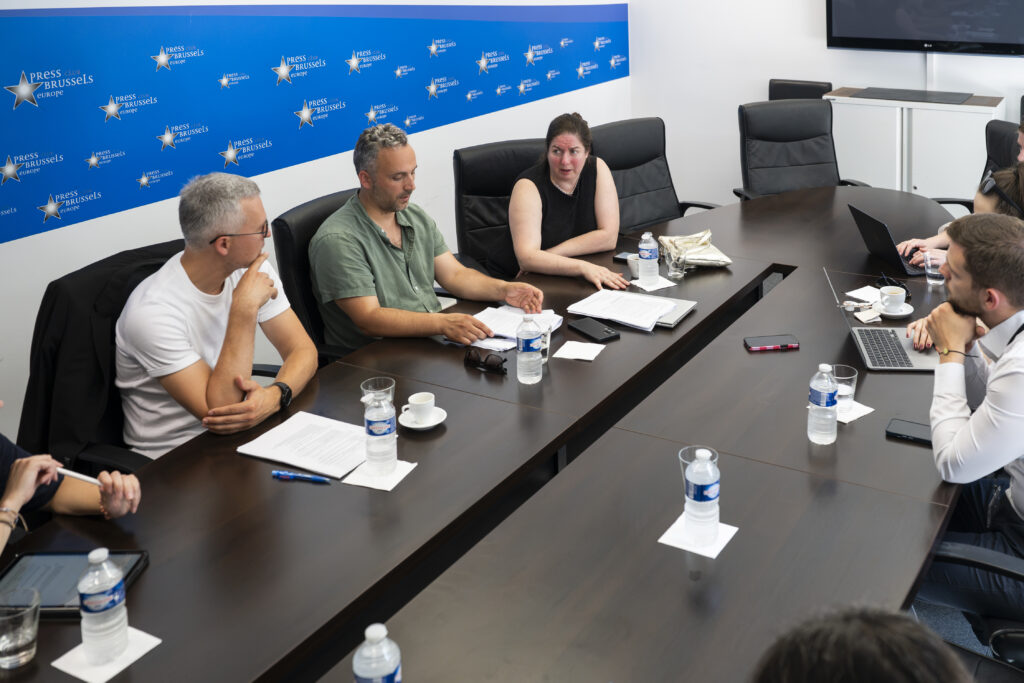
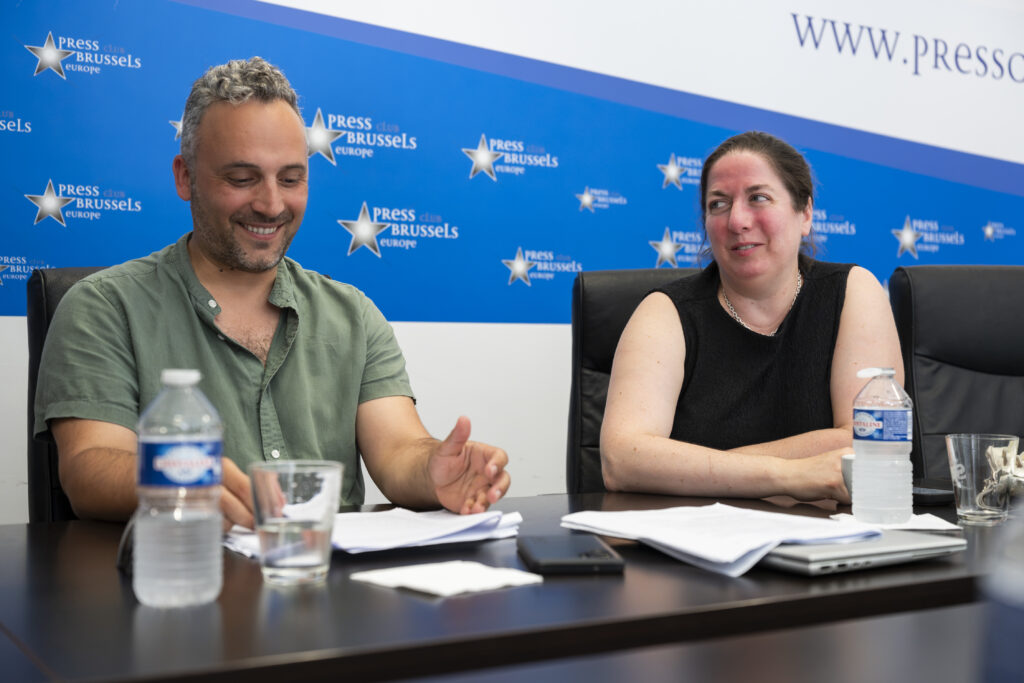
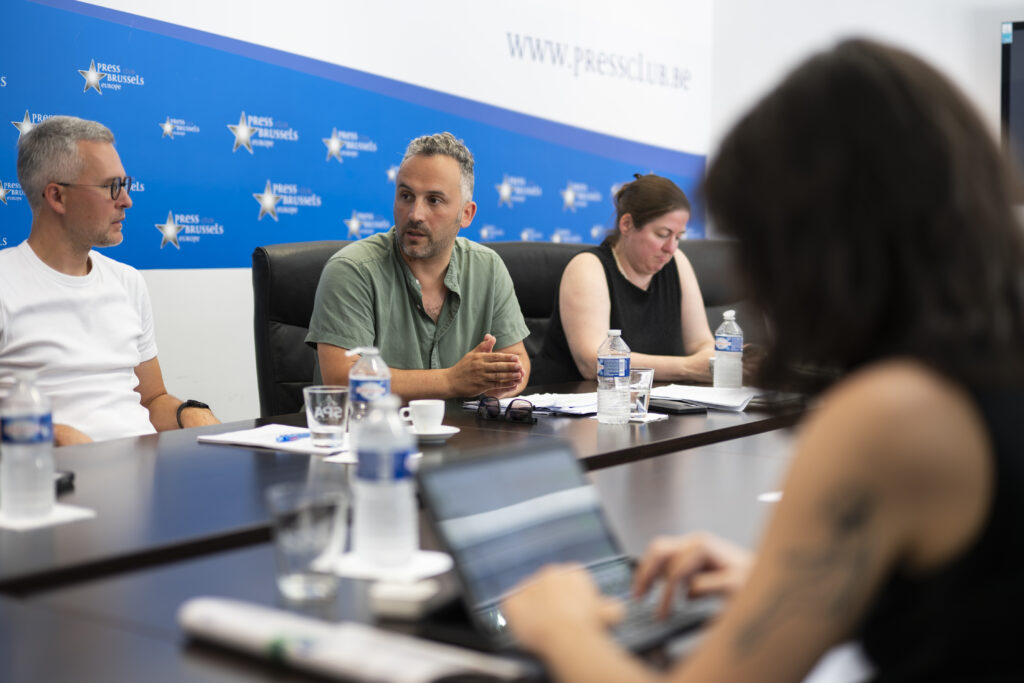
Even as Brussels races to make it easier to start businesses across borders, questions remain over whether the Commission’s proposed EU Inc. framework is tackling the right problem. During an EU Perspectives roundtable with Member of the European Parliament Ondřej Krutílek and BusinessEurope’s Pedro Oliveira, Bruegel Senior Fellow Rebecca Christie argued that while the proposal could simplify company creation, it falls short of the broader ambition that originally inspired it.
The idea of a “28th regime” has circulated in Brussels for over a decade as part of efforts to deepen the Capital Markets Union, now rebranded as the Savings and Investment Union (SIU). The idea was that if member states could not fully harmonise company law, they could at least offer businesses an optional European framework alongside national systems.
“The 28th regime has been talked about in the context of Capital Markets Union since 2015,” Christie said. The aim was to make it easier for money to move across borders and help Europe’s most innovative companies attract investment and scale up across the bloc.
“My recommendation for this proposal would actually be to take it out of the Savings and Investment Union discourse, or at least put it on the side of it.”
— Rebecca Christie, Senior Fellow at Bruegel
But somewhere along the way, she argued, that focus shifted.
“If you’re trying to solve the problem of how can a small business start up, get a VAT number, start invoicing customers across Europe and save money on the notary, this is not a bad plan,” she said. “If your idea is how can we get startups and scaleups that attract money from all over the world and become the next Spotify and the next SpaceX, I don’t know that this does that.”
For Christie, that disconnect is the proposal’s biggest weakness. Rather than serving as a flagship initiative for Europe’s Savings and Investment Union, EU Inc. has become primarily a simplification exercise for entrepreneurs.
“It was a bit of a bummer,” she remarked, referring to expectations that the proposal would address cross-border investment rather than company incorporation.
Keep it simple
Despite her criticism, Christie repeatedly stressed that she supports moving ahead with the proposal. The mistake, she argued, would be to burden it with additional political ambitions during the legislative negotiations.
“My recommendation for this proposal would actually be to take it out of the Savings and Investment Union discourse, or at least put it on the side of it,” she said. “We should still go forward with it.”
For that to happen, simplicity should remain the guiding principle.
Christie warned against restricting EU Inc. only to innovative companies or high-growth startups, arguing that such limitations would make the framework less attractive before it has even been implemented. “If you want people to use this thing, they have to be able to use the thing,” she said.
Instead, she argued that the regime should remain open to all companies wanting to establish themselves under the European framework.
Her position found support among the other panelists. Krutílek (ECR/CZE) agreed that limiting the regime would undermine its purpose, while Oliveira warned that forcing companies to switch legal structures once they become successful would effectively “punish success“.
Solving today’s problems, not tomorrow’s
While Christie supports broader discussions on tax simplification and social security rules for freelancers, she does not believe those debates should determine the future of EU Inc.
For entrepreneurs, she argued, the immediate challenge is much simpler: being able to establish a company quickly and begin operating across borders without navigating 27 different administrative systems.
“The Parliament is famous for adding complexity. If the Parliament can say, ‘Look, this is important, we’re going to keep it simple,’ I think it puts much more pressure on member states to go ahead.”
— Rebecca Christie, Senior Fellow at Bruegel
“If I want to move to Italy and open a business as a Belgian citizen,” she said by way of example. “I have to get an Italian tax number, an Italian bank account and do all these things. I’m pretty sure it will take me more than 24 hours and €100.”
Parliament should resist adding complexity
As negotiations move to the European Parliament and Council, Christie said lawmakers should focus on preserving the proposal’s simplicity rather than expanding its scope.
She welcomed the Commission’s recommendation to establish specialised judicial chambers for EU Inc. disputes, although she acknowledged that political agreement on such reforms may take longer.
More broadly, however, she argued that Parliament has an opportunity to send a political signal by resisting its instinct to add new conditions and reporting requirements.

“The Parliament is famous for adding complexity,” Christie said. “If the Parliament can say, ‘Look, this is important, we’re going to keep it simple,’ I think it puts much more pressure on member states to go ahead.”
Krutílek echoed that message, describing EU Inc. as “the first pro-market proposal” to reach Brussels in roughly two decades and urging legislators not to overcomplicate it. Oliveira similarly warned against using the proposal to solve broader policy disputes, arguing that doing so would ultimately make it unattractive for businesses.
For Christie, EU Inc. may not become the instrument that finally unlocks Europe’s investment gap, but that should not prevent policymakers from delivering a proposal that makes it easier to start and grow businesses across the Single Market.
“What are our goals?” she concluded. “Start a company, keep the cost down, have it work.”