Sweden’s centre-left opposition holds a three-seat lead after one of the country’s closest elections. Former prime minister Magdalena Andersson could return to power, but traditionally right-leaning overseas votes could still narrow or overturn her advantage.
With 94% of districts counted, the four opposition parties have a projected 176 seats in the 349-seat Riksdag, Sweden’s parliament. Current Prime Minister Ulf Kristersson’s right-wing bloc holds 173, according to SVT’s latest results.
The count covers 6,282 of Sweden’s 6,626 electoral districts. Late and overseas ballots will be counted on Wednesday. Swedes living abroad have traditionally leaned towards the right, leaving both sides reluctant to declare victory or concede defeat.
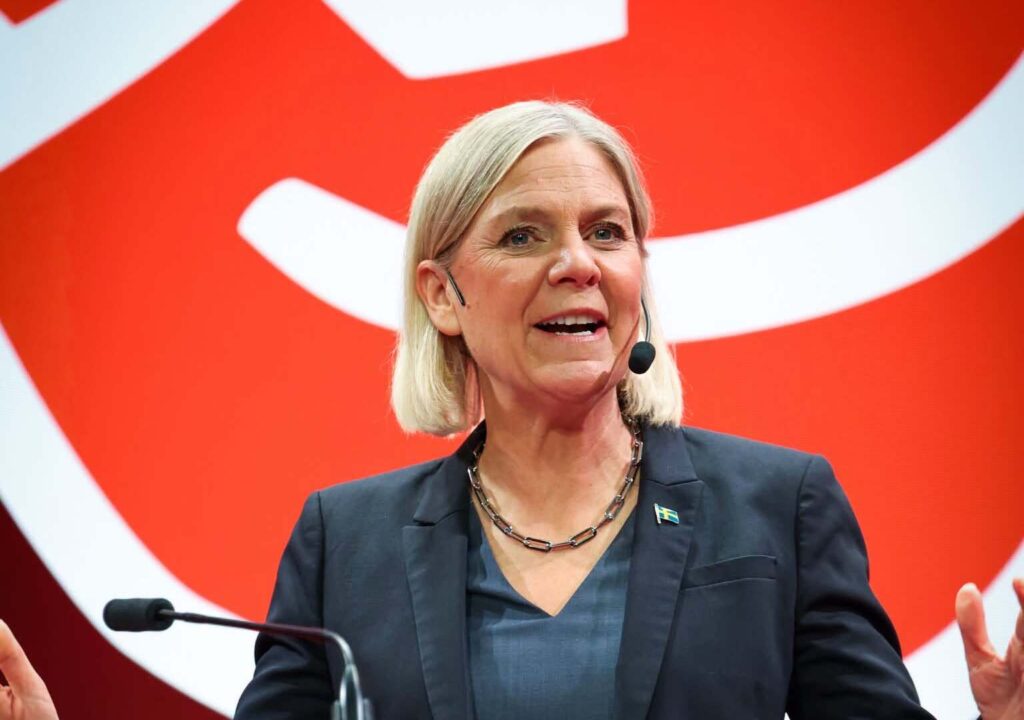
“We have to wait for the final election result,” Ms Andersson told supporters. “But right now we are leading. If it stands, then Sweden will have a new government.”
Both Social Democrats and far-right lose ground
The Social Democrats remain Sweden’s largest party with 28.1% and a projected 100 seats. However, they recorded their worst result since 1911 and lost seven seats compared with the previous election.
Ms Andersson could nevertheless return as prime minister because the other opposition parties made gains. The Left Party got 8.2% and 29 seats, the Centre Party took 7.1% and 25 seats, while the Greens secured 6.1% and 22 seats. Together, the four parties have 176 seats, one more than the 175 required for a majority.
Ms Andersson served as prime minister for ten months before the right won the 2022 election. Mr Kristersson has since led a centre-right minority government formed by the Moderates, Christian Democrats and Liberals. It has depended on parliamentary support from the far-right Sweden Democrats, which influenced policy without holding cabinet positions.
The Sweden Democrats had hoped to enter government for the first time if the right retained power. Instead, their support fell three percentage points to 17.6%. They lost 11 seats, leaving them with 62, and slipped from second to third place. Mr Kristersson’s Moderates gained two seats and overtook them with 19.9% and 70 lawmakers.
Victory would not guarantee an easy government
A centre-left victory would interrupt four years in which Sweden moved sharply to the right on immigration and criminal justice. However, it would probably not restore the country’s previous liberal asylum policies. The Social Democrats support maintaining much of the tougher approach introduced by the outgoing government.
Right now we are leading. If it stands, then Sweden will have a new government.
— Magdalena Andersson, Social Democrats leader
Forming a government could prove difficult. The Centre Party refuses to govern with the Left, while the Left has demanded cabinet positions in return for its support. The parties also disagree over taxing wealthy people and whether Sweden should relax its restrictive migration policies. “The most likely outcome is a government led by the Social Democrats,” political scientist Niklas Bohlin told Reuters. “Exactly what that government will look like is far less certain.”
Mr Kristersson has not conceded and said he would examine other possible parliamentary combinations after the final count. Sweden’s foreign policy is less likely to change because the main parties broadly support Ukraine and NATO membership. Wednesday’s ballots should clarify which bloc gets the first opportunity to govern, but coalition negotiations could continue for weeks or months.