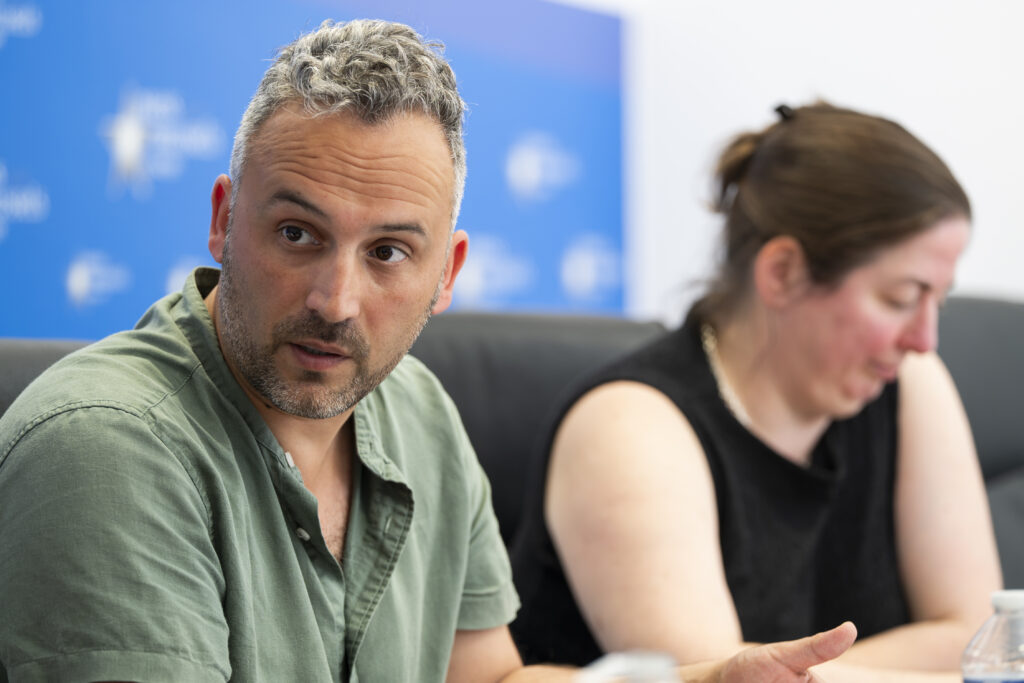
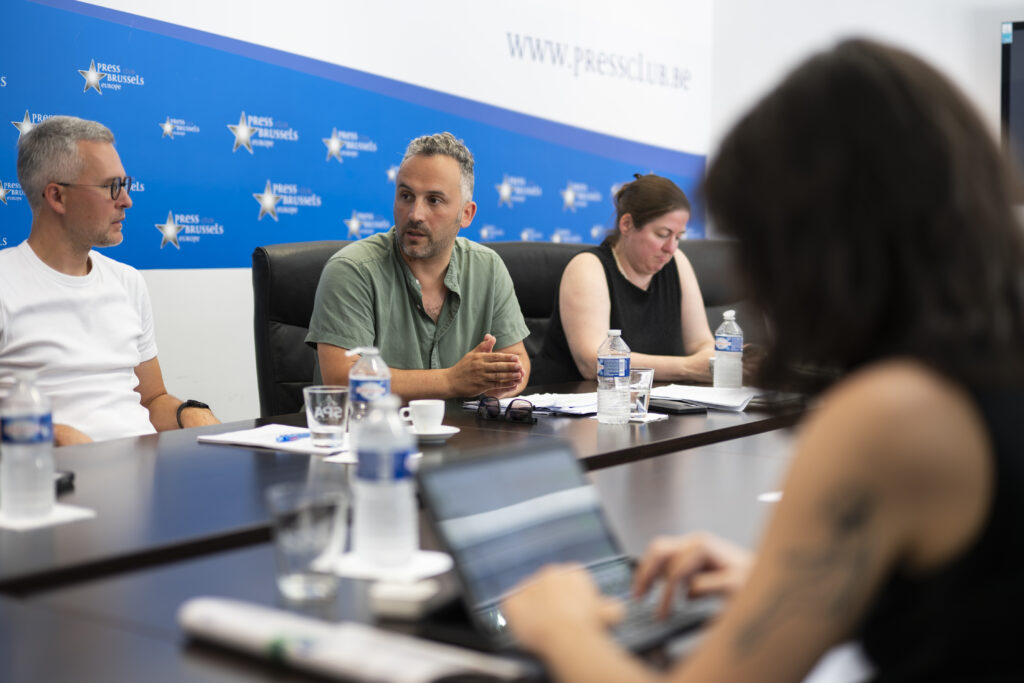
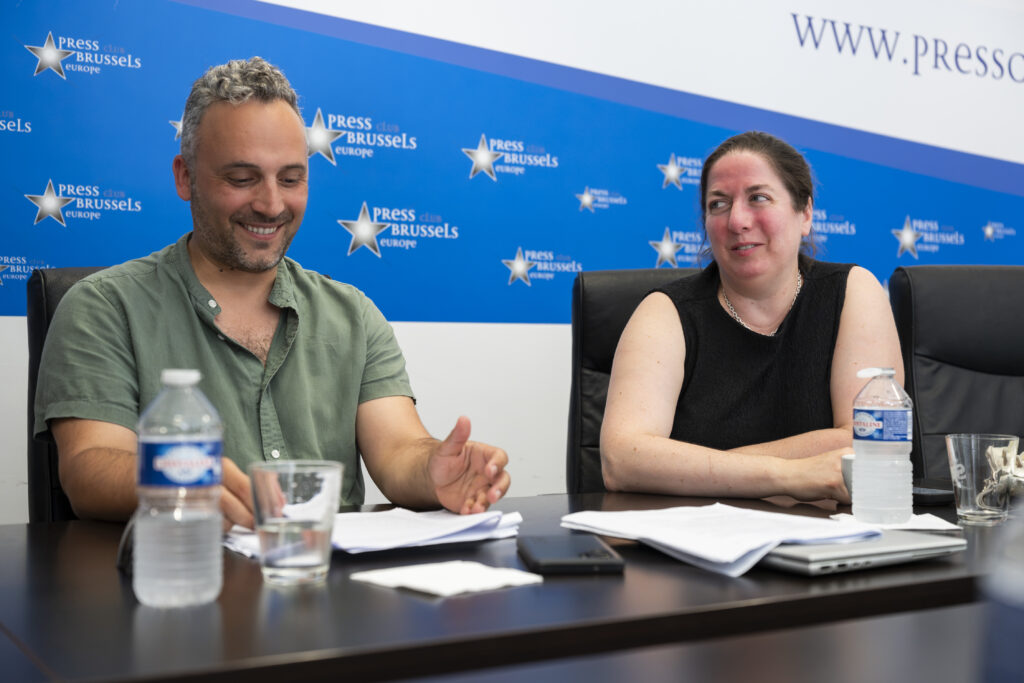
The European Commission wants a common European company status called EU Inc. It will not fix every flaw in the Single Market. At an EU Perspectives roundtable, speaking alongside Member of the European Parliament Ondřej Krutílek and Bruegel’s Rebecca Christie, BusinessEurope’s representative Pedro Oliveira insisted that is exactly the point.
For decades, businesses have argued that operating across Europe’s Single Market remains more complicated than it should be. Firms often have to deal with 27 different sets of national company rules. EU Inc. would let them choose one common European set instead. The framework will not eliminate every barrier. But it could become an important step towards a more integrated market, provided lawmakers resist the temptation to overload it with unrelated political debates.
That was the message from Pedro Oliveira, Director for Legal Affairs at BusinessEurope. He was joined by Member of the European Parliament Ondřej Krutílek (ECR/CZE) and Bruegel Senior Fellow Rebecca Christie.
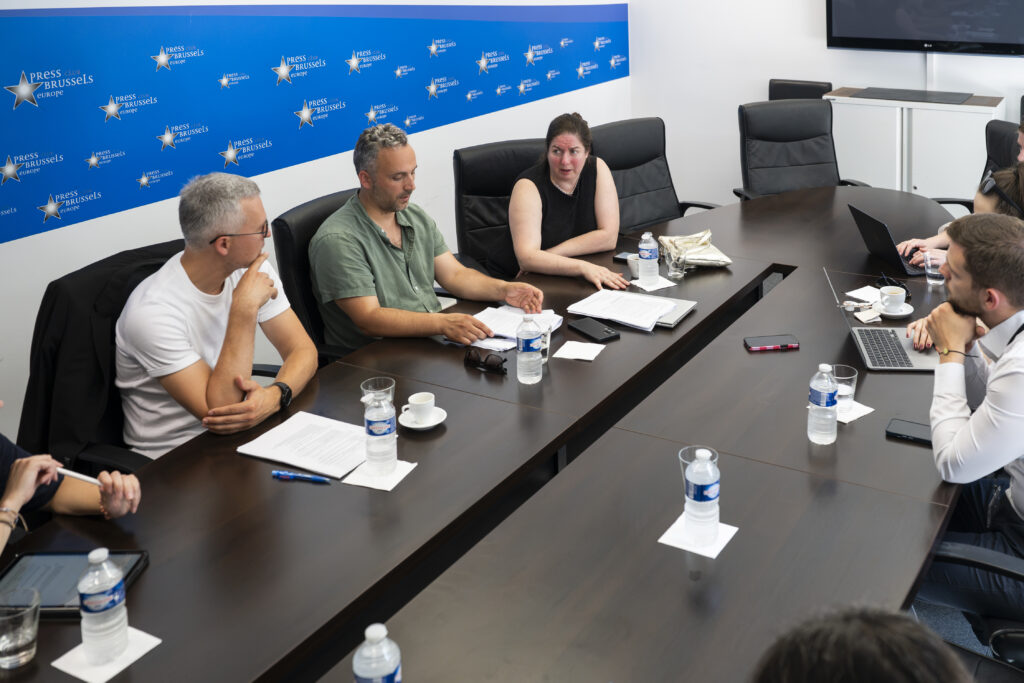
BusinessEurope has long advocated for a so-called “28th regime.” This would be an optional European legal framework. Companies can choose it instead of relying solely on national company law. “We have been supporting a 28th regime for 40 years,” Oliveira said.
A practical step, not a cure-all
Previous attempts included the European Company Statute (Societas Europaea). They showed there is demand for a common company form, but also how hard it is to design one that businesses actually use. EU Inc., he argued, is another opportunity, one better suited to startups and growing companies.
“Maybe your product will change, will evolve. Then what happens if you’re obliged to change from a 28th regime to something else?”
— Pedro Oliveira, Director for Legal Affairs, BusinessEurope
“It is not going to solve all the problems,” he acknowledged. Instead, he sees the proposal as a practical measure. It removes some unnecessary barriers without pretending to complete the Single Market overnight. “We would be selling dreams that are not materialisable.”
An important signal for the Single Market
BusinessEurope broadly supports the Commission’s proposal. But Oliveira stressed that its political importance extends beyond company law. “We think the Commission struck the right chords,” he said. By creating a voluntary European company form that can be established digitally and recognised across member states, EU Inc. sends what he described as an important “pro-internal market” signal. It is a view shared by MEP Ondřej Krutílek, who called the proposal “the first pro-market proposal” to reach Brussels in roughly two decades.
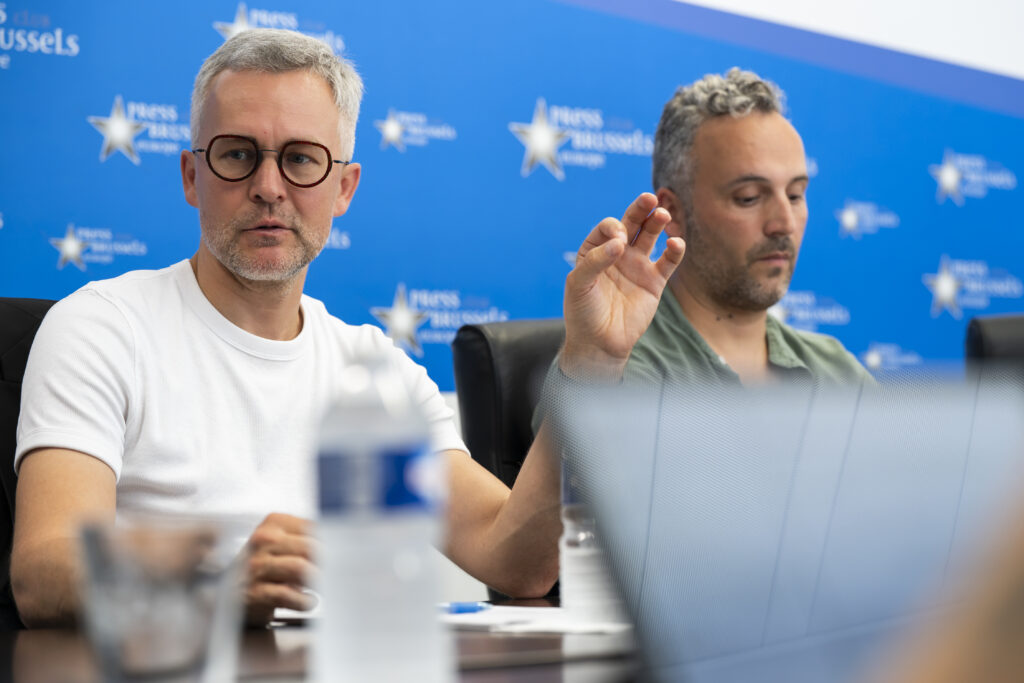
Oliveira nevertheless warned that the proposal’s greatest risk now lies in the legislative process itself. “We just hope that it will not be dismantled by both the Council and the Parliament,” he said. “That would be a very bad signal.” Rather than trying to transform EU Inc. into a comprehensive competitiveness package, lawmakers should focus on preserving its original purpose.
Don’t punish success
Another point that emerged during the roundtable is whether EU Inc. should be reserved for innovative startups or other narrowly defined categories of companies. BusinessEurope opposes that approach. Startups and scale-ups are the proposal’s primary target, Oliveira acknowledged. But he argued that limiting eligibility would create unnecessary uncertainty for entrepreneurs.
“Maybe your product will change, will evolve,” he said. “Then what happens if you’re obliged to change from a 28th regime to something else?” Such a system, he argued, would effectively punish companies for becoming successful.
Bruegel’s Rebecca Christie reached a similar conclusion, arguing that restricting access would undermine the proposal’s attractiveness from the outset. “If you want people to use this thing, they have to be able to use the thing,” she said.
Focus on company law, not every other debate
Throughout the discussion, Oliveira repeatedly returned to one central warning. EU Inc. should not become the vehicle for resolving broader political disputes that already exist elsewhere in European legislation. Trade unions have, for example, criticised the proposal for not harmonising labour law or taxation and have warned about potential social dumping.
Oliveira rejected those concerns, arguing that existing national labour law protections would continue to apply to companies established under the new regime. “If the existing safeguards for all companies are not sufficient for trade unions, then they should fight it in the right places, not in the EU Inc.,” he said.
The same principle applies to taxation. While BusinessEurope supports the Commission’s limited proposals on tax administration, Oliveira argued that wider tax harmonisation would quickly derail the negotiations. “We need to be pragmatic and work with what we have.”
The same reasoning also explains BusinessEurope’s support for the Commission’s proposed blacklist of prohibited national practices, which would prevent member states from imposing additional administrative requirements on EU Inc. companies.
As an example, Oliveira pointed to national rules requiring companies to appoint local representatives before establishing branches abroad. “You know how much that costs in Italy?” he asked. “It can cost up to €50,000 a year.” Such requirements, he argued, no longer reflect the realities of an increasingly digital Single Market.
Keep the ambition realistic
Oliveira also dismissed frequent comparisons between EU Inc. and Delaware, often cited as the preferred legal home for many American companies. “We need to stop making this comparison,” he said. The objective is not to recreate the American system inside Europe, but to build a European framework that encourages entrepreneurship while respecting the Union’s own legal traditions. “What we need is instruments that create the same effects,” he said, pointing to investment, company growth and prosperity without copying the United States.
We should not use EU Inc. to solve problems that are general problems around the EU Inc. Otherwise you make it totally useless and totally unattractive to entrepreneurs.
— Pedro Oliveira, Director for Legal Affairs, BusinessEurope
As negotiations continue in Parliament and the Council, BusinessEurope’s message remains deliberately modest. EU Inc. will not complete the Single Market, eliminate bureaucracy or resolve Europe’s competitiveness challenges on its own. But if lawmakers resist the temptation to attach every unresolved policy debate to the proposal, Oliveira believes it can become something equally valuable: a practical first step.
“We should not use EU Inc. to solve problems that are general problems around the EU Inc.,” he concluded. “Otherwise you make it totally useless and totally unattractive to entrepreneurs.”