In a sector-wide setback, the Franco-German defence giant KNDS postponed its IPO. The news arrives days after Berlin and Paris agreed to take equal 40 per cent ownership stakes in the company.
Europe’s defence industry has spent the past two years riding a wave of rearmament enthusiasm. Investors piled into defence stocks. Governments pledged record spending. Initial public offerings looked like a natural next step. Then came a wobble—and KNDS, the Franco-German maker of tanks and armoured vehicles, blinked.
On 2 July, KNDS announced it was postponing its planned stock market listing in Frankfurt and Paris, citing turbulent conditions in European defence markets. The company said it had “completed substantially all required preparation phases for its proposed listing,” but that shareholders had signalled “their intention to resume the initial public offering process upon the return of more favourable market conditions”.
A compact, then a pause
The timing, the company added, remained open-ended. “KNDS and its shareholders will continue to monitor the capital markets conditions closely and stand ready to resume the IPO process as soon as market conditions allow,” the statement reads.
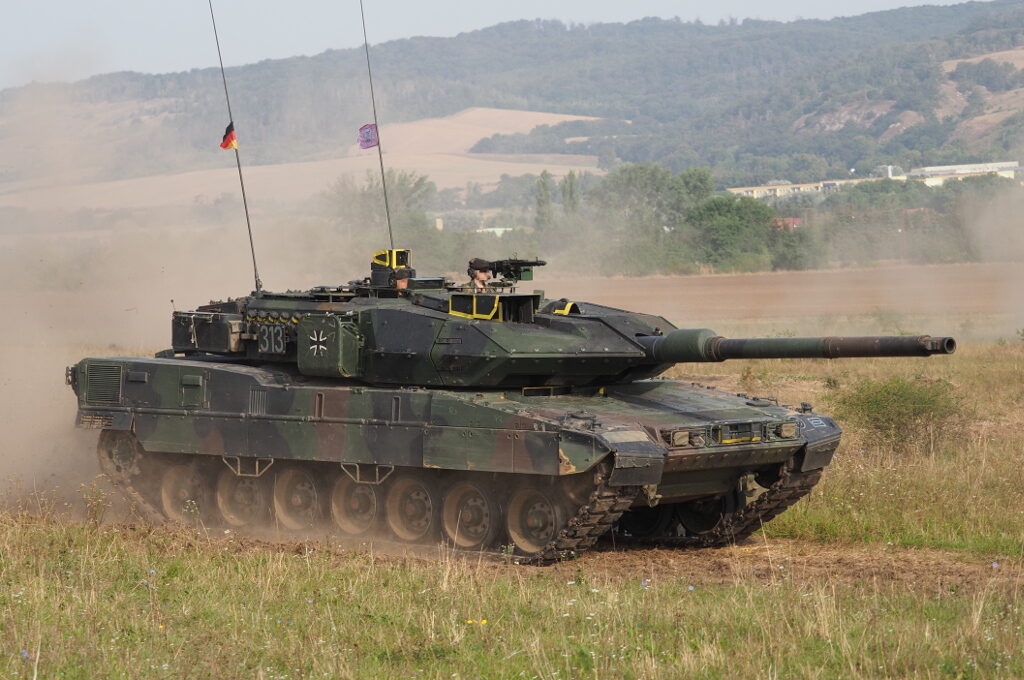
The decision is a setback for one of Europe’s most strategically significant defence companies. KNDS produces the Leopard 2 main battle tank, among other armoured vehicles, and sits at the heart of the continent’s land-defence industrial base. A listing had been expected as early as June, with analysts estimating the company’s value at between €15bn and €18bn.
The postponement came just weeks after France and Germany finalised a framework agreement designed to put both governments on equal footing as KNDS shareholders. Under the arrangement, Germany sought to acquire a 40 per cent stake from family shareholders, matching France’s expected holding after Paris reduced its own stake from 50 per cent.
Berlin was explicit about its rationale. “A stake by Germany in KNDS will secure long-term influence over a company that is strategically important for European security and defence capabilities,” the German government said. Both governments described the pact as “a decisive step towards strengthening their common sovereignty in land defence”.
A sector under pressure
That political groundwork now sits waiting for markets to catch up. The Franco-German framework remains intact. The preparation for the listing is, by KNDS’s own account, largely complete. What is missing is a stable enough market to absorb a multi-billion-euro offering without spooking investors.
The immediate trigger for KNDS’s caution was a sharp deterioration in European defence stocks in late June. The proximate cause was Germany’s decision to cancel the F126 frigate programme, a contract worth more than €18bn that had been mired in delays and cost overruns under its original supplier, Dutch group Damen Schelde Naval Shipbuilding. Berlin instead opted for eight smaller Meko A-200 frigates from Thyssenkrupp’s marine unit TKMS at an expected €11.6bn. “Great news, definitely for us,” TKMS chief executive Oliver Burkhard said on LinkedIn.
KNDS and its shareholders will continue to monitor the capital markets conditions closely and stand ready to resume the IPO process as soon as market conditions allow. — KNDS statement
For Rheinmetall, Europe’s largest ammunition maker, which had been tipped to win the F126 contract through its NVL division, the news was anything but. Shares fell by as much as 20 per cent, hitting a 15-month low and wiping more than €11bn from its market value.
Timing is everything
The turbulence was not confined to Germany. Capital Alpha Partners, a forecasting firm, described the prior week as a “rough” one for European defence stocks broadly. Italy’s reported defence spending restraint added further pressure on local suppliers, including Leonardo and Fincantieri. Across the Atlantic, the US House Appropriations Defence Subcommittee cut the Army’s XM-30 armoured vehicle programme—a contract Rheinmetall’s American division had been pursuing—compounding the gloom.
The KNDS postponement is a reminder that even the most strategically compelling listings depend on market timing. The comparison with another IPO is instructive: the stock listing of CSG, a Czech arms and ammo producer, on Euronext Amsterdam earlier this year secured the company a market value in excess of €33bn. The result made a KNDS IPO look highly attractive. That window has narrowed quickly.
The underlying demand for European defence capacity has not diminished. Governments across the continent continue to raise spending targets, and KNDS sits squarely in the path of that investment. But the events of June demonstrated that defence stocks are not immune to the same budget reversals and procurement decisions that move markets elsewhere. For KNDS, the question is not whether to list, but when the moment is right to try again.