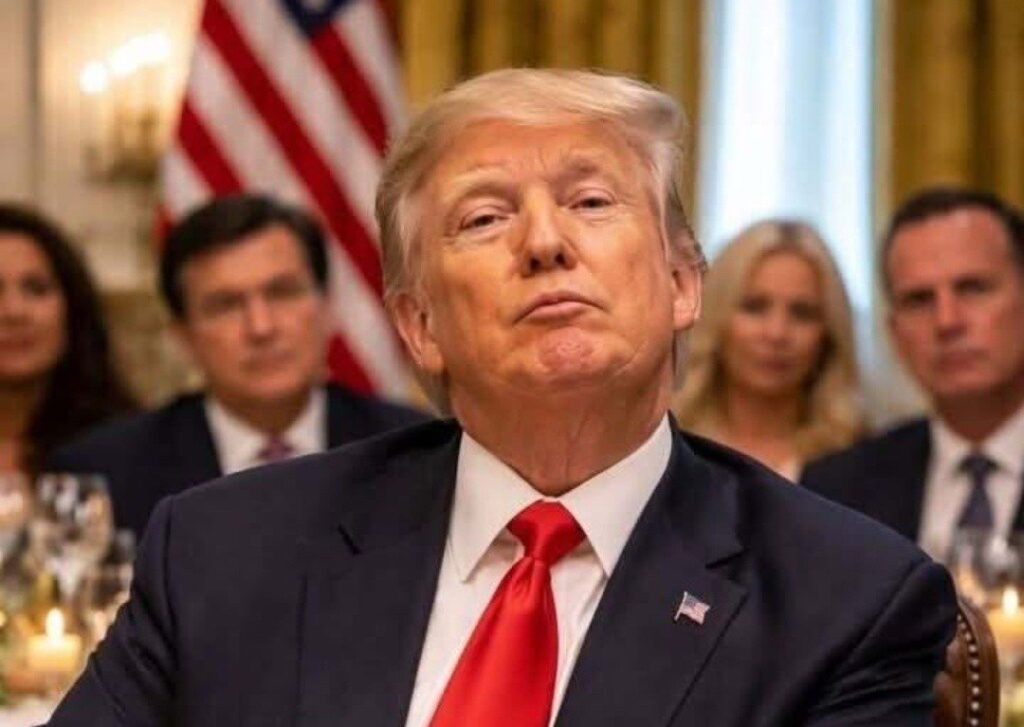
The Alliance’s annual gathering in Ankara opened on Tuesday with a blunt reminder of who sets the agenda. Unlike on football fields, Europeans were clearly on the back foot.
US President Donald Trump had barely landed in Turkey on 7 July before he reopened one of the most destabilising disputes in the transatlantic relationship. Taking questions ahead of a bilateral meeting with Turkish President Recep Tayyip Erdoğan, Mr Trump declared: “Greenland […] should be controlled by the United States, not by Denmark. Because Greenland doesn’t help Denmark. Denmark doesn’t spend money to really help Greenland.” He went further, warning that European nations had better be careful with immigration and energy. “If they’re not careful with those two things, you’re not going to have a Europe anymore,” he added.
The reaction from European capitals was swift. British Chancellor Rachel Reeves, attending the summit in place of the outgoing Prime Minister Sir Keir Starmer, told reporters: “The future of Greenland is up to the people of Greenland and of Denmark, and not up to the US President. I’ve been very clear about that ever since it was first suggested.”
Relationships and grievances
From a European Union perspective, the exchange encapsulated the summit’s central anxiety: an American president who treats a NATO ally’s territory as a negotiating chip, and a European bloc still scrambling to build the institutional and military architecture needed to defend itself without Washington’s goodwill.
Mr Trump’s Greenland gambit was not the only signal he would send. He told reporters he had been “very disappointed with NATO,” and suggested he might not have attended at all were it not for his host. “I felt I had to attend because of the fact that he’s gone all out,” Mr Trump said of Mr Erdoğan, with whom he declared a “very special relationship.” He announced the lifting of CAATSA sanctions on Turkey, imposed in 2020 over Ankara’s purchase of Russian S-400 air defence systems, and said the US would consider selling F-35 stealth fighters to Turkey. It is a move that Israeli Prime Minister Benjamin Netanyahu had publicly urged Washington to avoid.
For the EU, the F-35 question is not merely bilateral. Turkey’s re-entry into the programme, if it proceeds, would reintroduce Ankara as a production partner in a supply chain that stretches across European industry. It would also deepen the fault lines between NATO’s formal structures and the EU’s emerging defence procurement architecture, built around the Security Action for Europe regulation and the European Defence Industry Programme, neither of which accommodates Turkey.
Mr Trump, freshly embarrassed by a FIFA intervention row, also used the occasion to reopen his feud with Italian Prime Minister Giorgia Meloni, once his closest European ally. “She just wasn’t there for us, and I wasn’t happy about that,” he said, referring to Italy’s refusal to join the Iran war. The remark landed awkwardly in a summit already dominated by European anxiety about American reliability.
Zelenskyy presses, Estonia signs
Against that backdrop, Ukrainian President Volodymyr Zelenskyy arrived in Ankara with an agenda of his own. Addressing the summit’s defence industry forum after a series of deadly Russian strikes on Kyiv, he renewed his call for NATO membership and pressed allies on air defence. “The one thing we still need to do here in Europe is build a strong defence against Russia’s ballistic missiles,” he said. “This is a big challenge — it’s true. This is Russia’s last major advantage.”
Do you really believe it would be right to leave outside of NATO a country with (Ukraine’s) level of defensive capability? — Volodymyr Zelenskyy, Ukraine’s president
Mr Zelenskyy also made the case for Ukraine’s inclusion in the alliance on capability grounds. “I have a question for you,” he told the forum. “Do you really believe it would be right to leave outside of NATO a country and a people with this level of defensive capability?” His forces, he said, were intercepting Russian drones and cruise missiles at a 90 per cent success rate, destroying thousands per week. The gap, he argued, was in ballistic missile defence. The solution, the president said, lay in Patriot production licences, which he urged European allies to support.
On the summit’s sidelines, Mr Zelenskyy signed a defence cooperation agreement with Estonian Prime Minister Kristen Michal under the Drone Deal framework. Estonia, which shares a border with Russia, has been among Ukraine’s most consistent supporters. The agreement was the first of what Mr Zelenskyy said would be nearly twenty bilateral meetings in Ankara, alongside new drone deals and other agreements with partners.
Gaps in the ledger
The summit’s opening day was also a showcase of procurement ambition. NATO Secretary General Mark Rutte presided over a series of signing ceremonies before Mr Trump had even arrived. Allies committed to more than $40bn in anti-drone capabilities over five years. Sweden’s Saab began formal negotiations on the sale of up to ten GlobalEye airborne early-warning aircraft, with deliveries possible by 2030 at roughly $400m to $450m per aircraft.
Lockheed Martin and Rheinmetall signed a memorandum of understanding to jointly produce ATACMS missiles in Germany. It marks the first time for a manufacturer outside f the US to produce the short-range ballistic missile. Norway, Finland, Germany, and Denmark signed a letter of intent for up to five Northrop Grumman MQ-4C Triton surveillance drones.
Greenland should be controlled by the United States, not by Denmark. — Donald Trump, US president
“Allies and industry from both sides of the Atlantic will reveal new major projects and sign contracts worth literally billions of dollars,” Mr Rutte said. “These are billions that are invested in our security, boosting our economies and supporting hundreds of thousands of new jobs.”
Do not blame Canada
He also warned, in terms that resonated with the EU’s own Readiness 2030 framework, that Russia was “pouring almost half of its national budget into its war machine” while China, North Korea, and Iran were increasingly working in concert. “I assure you they do not have our best interests in mind,” he said.
Canada announced a nine-country Defence, Security and Resilience Bank (DSRB), designed to pool member-state resources and borrow on international markets, keeping military debt off national balance sheets. The UK declined to join, citing Treasury opposition to off-balance-sheet borrowing. Britain, the Netherlands, Finland, and Poland did announce “significant progress” on their own Multilateral Defence Mechanism, aimed at channelling private capital into rearmament, with a target to establish it by 2027.
The future of Greenland is up to the people of Greenland and of Denmark, and not up to the US President. — Rachel Reeves, British Chancellor of the Exchequer
For the EU, the day’s events reinforced both the urgency and the difficulty of building a genuinely autonomous European defence capacity. The bloc’s legislative tools, SAFE, EDIP, and the Defence Readiness Omnibus, are designed to channel spending toward EU-linked industry and harmonise procurement rules.
Open questions
But the summit illustrated how much of the real action still happens outside those frameworks. It is in bilateral drone deals, minilateral missile-production agreements, and the personal diplomacy of a US president who measures loyalty in terms of willingness to join his wars.
Mr Rutte, asked about Mr Trump’s frustration with European allies over Iran, said: “I think the president had a point that there are individual cases where he is rightly disappointed.” It was a highly careful formulation by a man who walks an impossible tightrope.
From Brussels, the larger point is harder to finesse. Europe is spending more, legislating faster, and signing more contracts than at any point since the Cold War. Whether that is fast enough, and whether it adds up to genuine strategic autonomy, remained, at the end of day one in Ankara, a question wide open.