Europe’s June heatwave killed at least 3,500 people. The European Commission now promises a new climate resilience framework to stop it happening again.
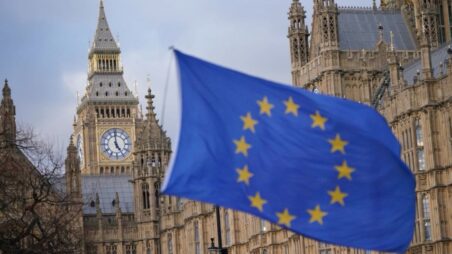
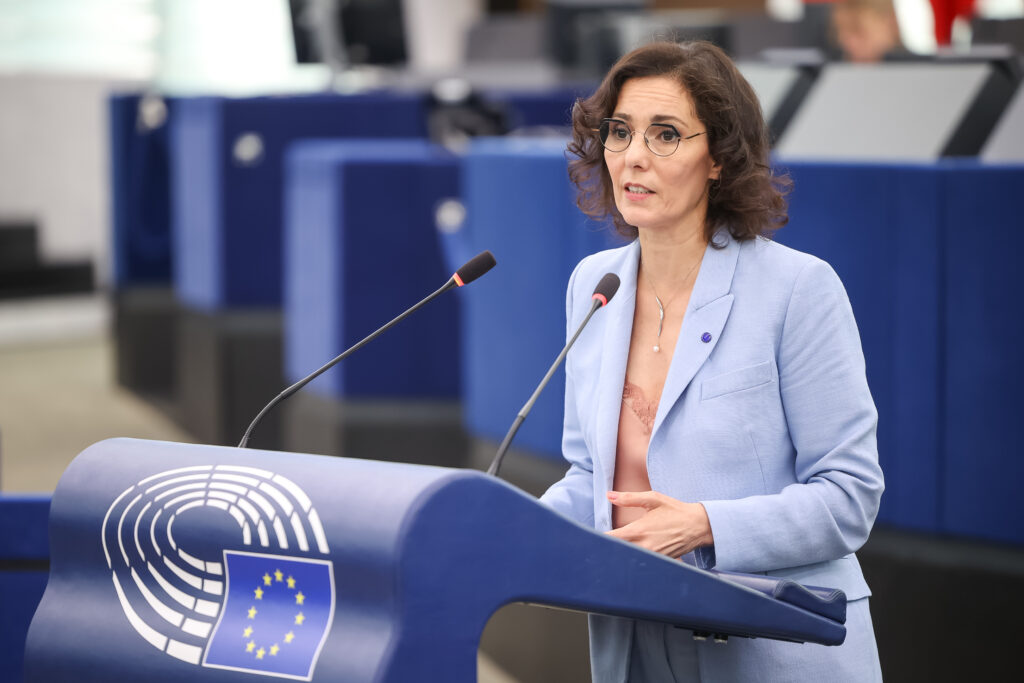
The European Commission expects to adopt an integrated climate resilience framework “later this year”. Commissioner for Preparedness and Crisis Management Hadja Lahbib confirmed the timing on Wednesday. She spoke in a European Parliament plenary debate on heatwaves and wildfires in Strasbourg.
Thomas Byrne, Ireland’s Minister of State for European Affairs, spoke for the Council presidency and put the victims first. It is important “to remember those who have died and those who have suffered because of the unprecedented heatwave”, he said. He called the disaster “a reminder of the urgent need to tackle the causes and consequences of the climate crisis”. The suffering reached beyond southern Europe, Mr Byrne stressed. Heatwaves are an example of where the EU “can show solidarity and action”.
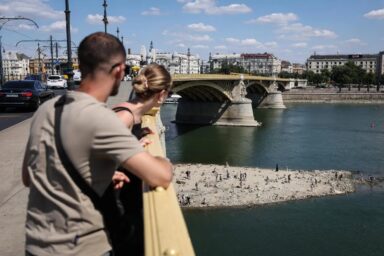
“At least 3,500 fatalities could be attributed to the June heatwave,” Ms Lahbib told MEPs. On 3 July, France alone reported more than 2,000 excess deaths from the last week of June. Those figures are preliminary, she warned. And another major heatwave is already approaching.
A public health emergency
The human cost dominated the debate. The June heatwave overwhelmed hospitals, shut schools and workplaces, and cut labour productivity. It buckled rail tracks and ravaged crops, Ms Lahbib listed.
“Extreme heatwaves are a public health emergency,” said Marta Temido (S&D/PRT). The World Health Organization’s (WHO) Europe director said the same a day earlier, she noted. “High temperatures have an impact on morbidity and mortality.”
Cutting emissions has a cost, Ms Temido acknowledged. But global warming “can be measured in deaths and casualties”, so Europe needs a long-term approach. Thousands have died since June, she said. The EU supports member states on forest fires, “but there needs to be more”.
The WHO’s European office warns that “more deadly weeks may still lie ahead”. The next heatwave “is already building over the Atlantic”, WHO Regional Director for Europe Hans Henri P. Kluge said on 7 July. Forecasts put Portugal and southern Spain at 43 degrees Celsius in the coming days. A day earlier, Dr Kluge convened an emergency call on extreme heat with representatives of 41 countries and the European Commission.
The call exposed a glaring gap. Not even half of the countries in the WHO European Region have a national heat-health action plan. Such plans link weather warnings to hospital surge planning and outreach to people most at risk. Health systems still fail to reach care home residents, homeless people and socially isolated older adults consistently, Dr Kluge warned.
Heat kills, but never triggers EU help
Yet the EU’s main crisis tool has stayed silent on heat. Member states have never activated the Union Civil Protection Mechanism (UCPM) for a heatwave, Ms Lahbib acknowledged. The mechanism lets countries request European help in disasters. Wildfires, by contrast, triggered a record 19 requests for assistance last year.
That gap may narrow. A proposed regulation couples a reformed UCPM with EU support for health emergency preparedness and response. Mr Byrne called it an “essential step” to upgrade preparedness for climate-related risks and to secure financing. The Irish Council presidency wants member states to agree a common position by December.
One framework to link the strands
The Commission wants the autumn framework to shift the EU from reacting to preventing. It describes the plan as an integrated climate resilience framework covering both individual member states and the EU as a whole. Member states want it to tie mitigation, adaptation and preparedness together. “We look forward to the Commission’s ideas on how to link these different strands in its upcoming European Union Framework for Climate Resilience,” Mr Byrne said.
There is no credible strategy against heatwaves and wildfires if at the same time we weaken climate policies or dismantle the Green Deal.
— Romana Jerković, MEP (S&D/HRV)
“There is no credible strategy against heatwaves and wildfires if at the same time we weaken climate policies or dismantle the Green Deal,” said Romana Jerković (S&D/HRV). Heatwaves and wildfires “are no longer exceptional events”, she added. “They are Europe’s reality.”
Fastest warming continent, slowest habits
Europe is the fastest warming continent, both institutions repeated. Average global temperatures are nearing 1.5 degrees Celsius above pre-industrial levels, Mr Byrne noted. The European Environment Agency (EEA) sees uneven progress in national adaptation policies. It also finds gaps between plans and their implementation. Mr Byrne echoed that finding. “It’s increasingly clear that the cost of [in]action against climate change exceeds the cost of timely climate measures,” he said.
The framework will land in autumn, once temperatures drop. Ms Lahbib hopes Parliament’s commitment survives the season. She wants the same engagement “in the autumn when the temperature will go down”. Whether the plan turns heatwaves from a counted toll into a prevented one will be the test of next June.