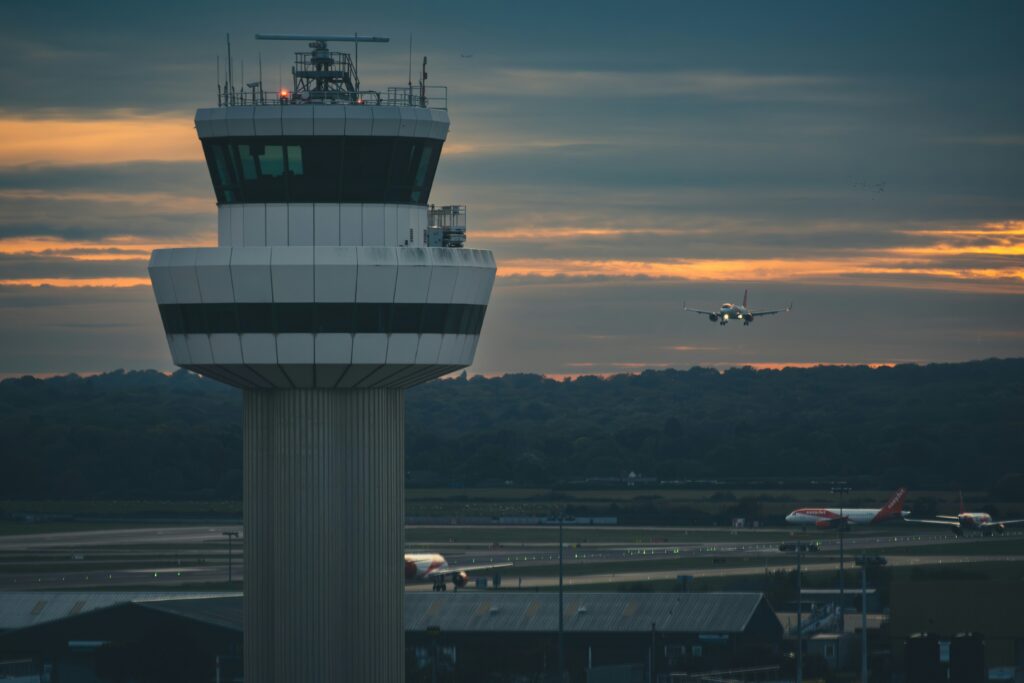
Ryanair has accused Brussels of talking about competitiveness without delivering it, pointing to a French Senate report on air traffic control failures. It says these failures cost European airlines €800m in 2025 alone.
Ryanair’s chief executive, Michael O’Leary, sent an open letter to Commission President Ursula von der Leyen on 9 July, enclosing a French Senate report on the country’s air navigation service, DSNA. The airline says the document backs up a complaint carriers have made for years about the state of French air traffic control (ATC).
The letter repeats two demands Ryanair has made before. First, air traffic controllers should be fully staffed for the first wave of morning flights. Second, overflights should be protected during national strikes, so a walkout by French controllers does not disrupt aircraft merely passing through French airspace. Ryanair says these two changes would eliminate most of Europe’s air traffic control delays.
What the report actually says
The French Senate report, published on 24 June by the finance committee’s rapporteur, Vincent Capo-Canellas, reaches what he calls a “painful but undeniable conclusion”: French air traffic control performance is “the worst in Europe”, according to FlightGlobal. Unless something changes, the report warns, France risks becoming a significant bottleneck for air traffic across the whole continent.
The reason is a widening productivity gap. French controllers handled 0.81 flights per hour in 2024. Germany, Spain, Italy and the United Kingdom all cleared more than one flight per controller per hour. The gap is growing, not closing. Between 2017 and 2024, French productivity rose by just four per cent. The European average improved by 11 per cent. French productivity actually fell over the last two years of that period.
Eurocontrol’s figures underpin much of the report. The organisation expects the consequences to compound if nothing changes. Airlines lost €800m to French delays in 2025. That figure could grow to €1.3bn by 2030 and €1.7bn by 2035. France is the only major European air navigation provider facing a deterioration on this scale, according to Eurocontrol. The country would need to expand capacity by 34 per cent within four years just to keep pace with demand.
Much of the blame falls on ageing infrastructure and thin staffing, not traffic volumes. The Senate report points to 4-Flight, France’s flagship modernisation programme. It is now running 13 years behind schedule. Nearly a third of French controllers are due to retire between 2029 and 2035. Current recruitment plans will struggle to absorb that wave, the report says.
Why Brussels cannot simply order a fix
O’Leary’s letter is not the first of its kind. Ryanair has written to von der Leyen in similar terms before, including calls for her resignation, after earlier rounds of French air traffic control strikes.
At a minimum, this requires the Commission to mandate that Europe’s ATC providers are fully staffed for the first wave of morning flights or face real and penal fines.
— Michael O’Leary, Chief Executive, Ryanair
In his statement accompanying the letter, O’Leary set out what the airline wants Brussels to do: “For many years now, Europe’s airlines have called for effective reform of Europe’s failing ATC services. At a minimum, this requires the Commission to mandate that Europe’s ATC providers are fully staffed for the first wave of morning flights or face real and penal fines. We also have called for protection of overflights during national ATC strikes.”
Part of the problem, though, is one Brussels cannot simply legislate away: air traffic control remains a national competence under EU law, leaving the Commission with limited power to mandate staffing levels or strike protocols in any member state.
The letter also revives Ryanair’s older complaint about the EU Emissions Trading System, which currently applies only to flights within the EU and the European Economic Area. The Commission has said it is examining whether to extend the scheme to flights to and from Europe, though it has not committed to a timeline, leaving airlines to argue their case on two fronts at once, with no clear resolution to either in sight.