Lawmakers wanted Anthropic to explain how its models and their export ban affect European users. The AI company dispatched a man with technical background who had worked there for three months.
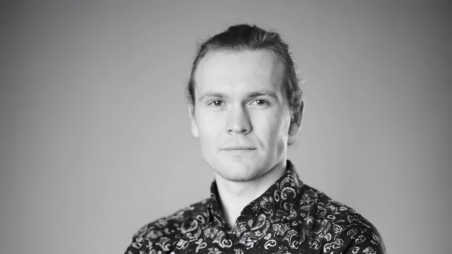
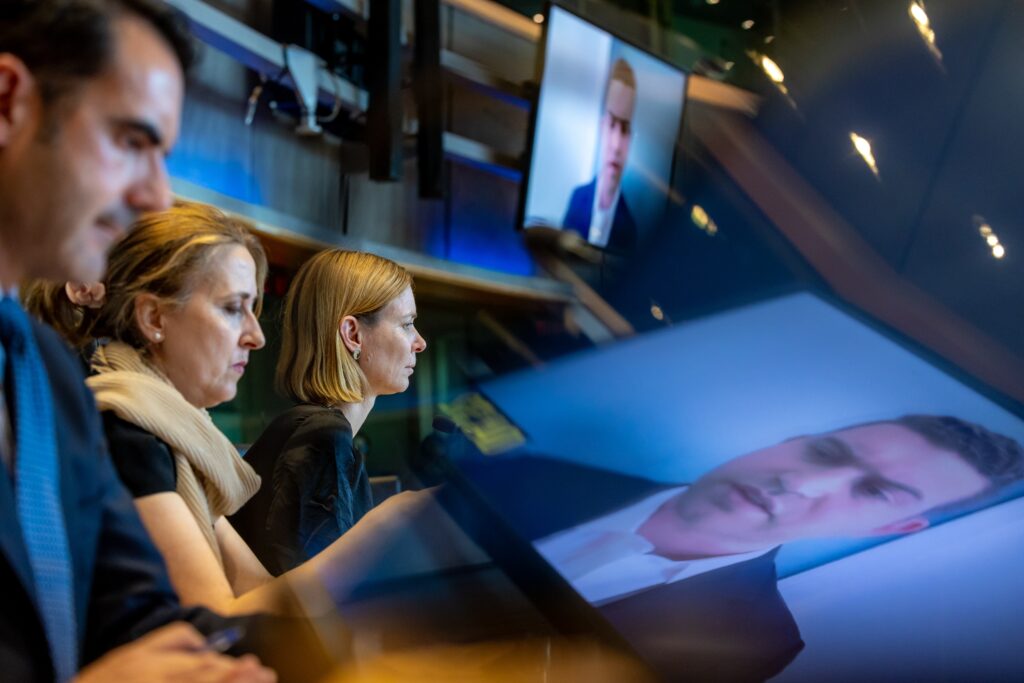
Donny Greenberg, listed on Anthropic’s staff as a ‘Member of Technical Staff’, appeared before the IMCO Committee via video link on 14 July. A Meta, IBM, and Google veteran, he joined the company in April, when Anthropic acquired his start-up, Runhouse. His background is technical. The questions MEPs wanted answered—on policy, strategy, or digital sovereignty—were not.
The choice of representative sent a message, and it did not go down well. IMCO Committee chair Anna Cavazzini (Greens-EFA/DEU) and MEP Reinier Van Lanschot (Greens-EFA/NLD) both said they would have preferred someone better placed to address the big questions. As MEP Kim van Sparrentak (Greens-EFA/NLD) drily noted, “Anthropic should probably have known that.”
Disappointment, mistrust
Most MEPs had concerns that went well beyond technical specifications. “I find it a bit disappointing that in this exchange we cannot touch upon that policy side, because that is actually where I think a large part of the essence of what we need to address together lies,” said Mr Van Lanschot.
In the US, Anthropic is a public benefit corporation, which means it has to weigh the public interests alongside the interests of shareholders, said Mr Greenberg in his opening gambit. “Our purpose is to ensure that the world makes a transition through transformative AI safely, he said.
“This is why we publish our research on where these systems are becoming dangerous, and why we hold ourselves to a responsible scaling policy that ties deployment to demonstrated safety. We were among the first signatories of the general-purpose AI code of practice, and have championed the adoption of regulation at both state and federal level in the United States,” Mr Greenberg argued.
Mr Greenberg was keen to emphasise the work of Project Glasswing, a coalition set up by Anthropic to allow trusted secure cybersecurity teams to access latest AI models before their release to the public. “We gave model access grants and support to the organisations that build and maintain the critical foundations that much of the world’s software systems depend on, so that defenders could find vulnerabilities, shore up their defences, and innovate to discover new ways to use the models for defence of cybersecurity,” he said.
Trump intervenes
The European Union Agency for Cybersecurity, or ENISA was the first EU agency to join the project in June alongside more than 150 other organisations in more than 15 countries. MEP Brando Benifei (S&D/ITA), the parliament’s rapporteur on the AI Act, pointed out that Anthropic dragged its heels on allowing any European member to join Project Glasswing saying it tells Europe everything it needs to know.
“In April, Anthropic gave 50 organisations early access to [Project Glasswing] but not one was European. In June, the US administration suspended access that had just been offered to Enisa. It was only restored after Brussels lobbied Washington. That sequence tells Europe what it needs to know. We need to have more digital sovereignty,” said Mr Benifei.
We have important safeguards and ways of checking that the mitigation measures put in place by the different companies are satisfactory from the safety point of view. — Lucilla Sioli, Director of the EU AI Office
On 12 June the US government issued an export control order on Anthropic’s newest AI models, Fable 5 and Mythos 5, restricting access by foreign nationals. The company then suspended access for every user. Mr Greenberg pointed out that as soon as the company restored access controls on 1 July, as soon as the administration lifted the restrictions on 30 June. He said the controversy has made the company “acutely aware that the technology we’re creating is bringing with it additional geopolitical complexity.”
MEP Dirk Gotink (EPP/NLD) wanted to know “what changed in the meantime in terms of the actual programme itself” and how Anthropic plans “to roll out newer models without this kind of circus, where we see a president stopping it, and the rest of the world then being very very concerned that in fact they’re only giving advantages and security advantages to American companies, as opposed to trying to protect everyone at the same time.”
Two weeks to go
Mr Greenberg responded: “We collaborated closely with partners inside the United States government to review and test our safeguards on the model and to assure many stakeholders, public and private, of the robustness of our safeguards. But to be clear, that was only on our Fable class of models, with the Mythos class models, which are the ones of note for dual use cyber capabilities, there wasn’t specific change before and after. To the question about how we are evolving rollouts in the future to avoid this, we are absolutely working tirelessly to avoid these types of complex staged rollouts in the future.”
(Anthropic is) acutely aware that the technology we’re creating is bringing with it additional geopolitical complexity. — Donny Greenberg, Anthropic
Regarding Glasswing, he said the programme is about balancing risk. “The risk of granting a new organisation access to the model, including the risks of compromise or misuse that go along with that, against the risks of not granting access to the model to that organisation and not giving them as much uplift as we could,” explained Mr Greenberg.
The European Commission had a representative at the meeting, Lucilla Sioli, director of the EU AI Office. She emphasised the EU’s legal possibilities. “Bear in mind that very soon, on 2 August, the enforcement powers of the AI Office under the AI Act will apply, and that will help in making sure that these models, at least when they are deployed in the European Union, are safe,” she said.
“We have important safeguards and ways of checking that the mitigation measures put in place by the different companies are satisfactory from the safety point of view,” Ms Sioli stressed.