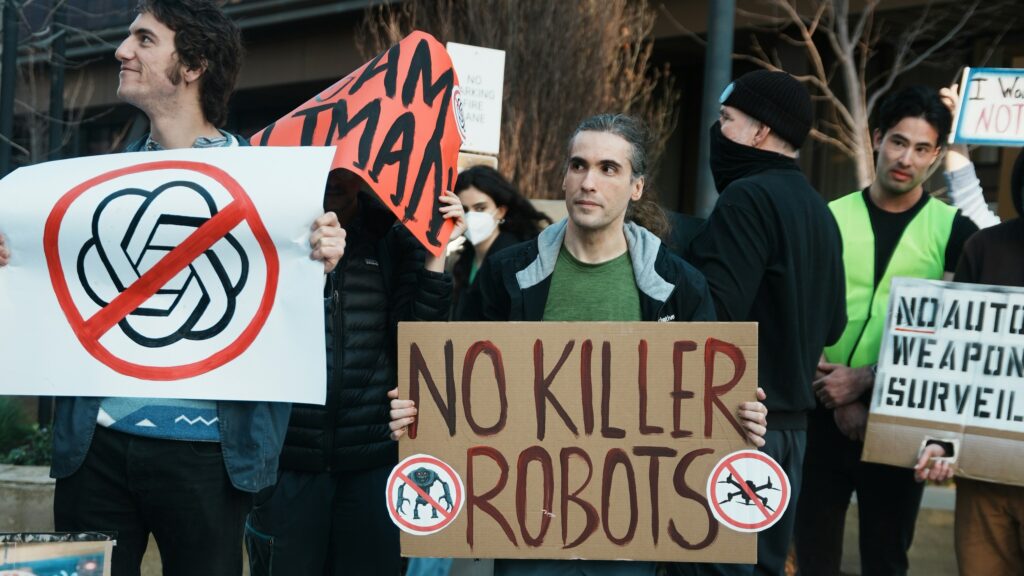
Algorithms take on a growing role in military decision-making. “Killer robots”, which looked like something from a Black Mirror episode, are now part of real battlefield operations. Armies use artificial intelligence to analyse drone footage, recognise objects, recommend targets and coordinate missions.
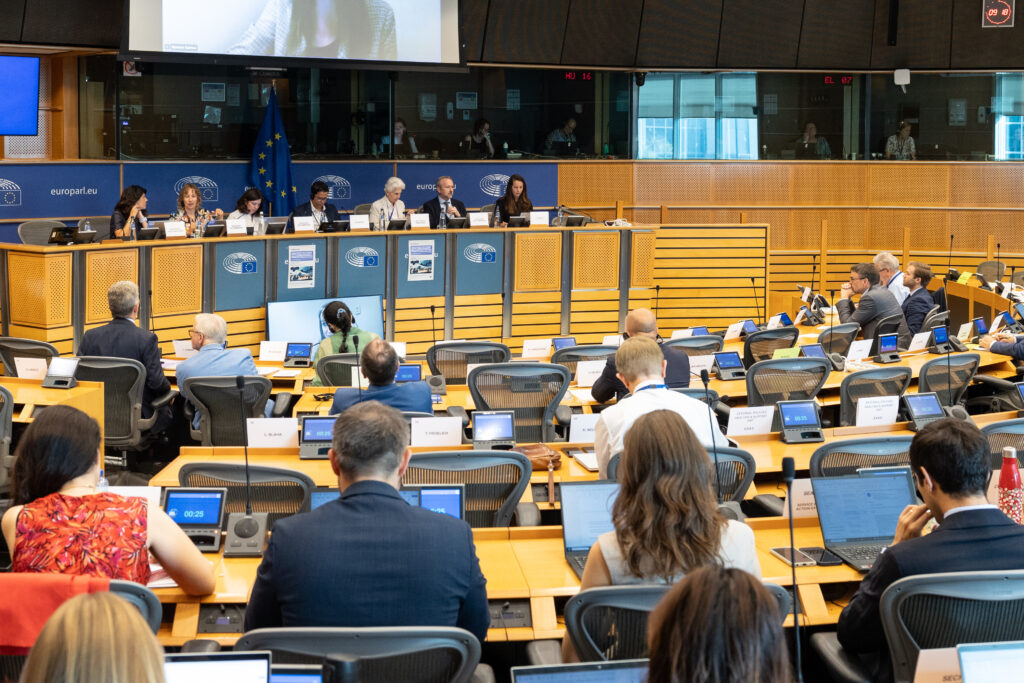
In that context, on Wednesday, the European Parliament’s Subcommittee on Human Rights and Committee on Security and Defence (SEDE) held a workshop on human control and AI-enabled military systems.
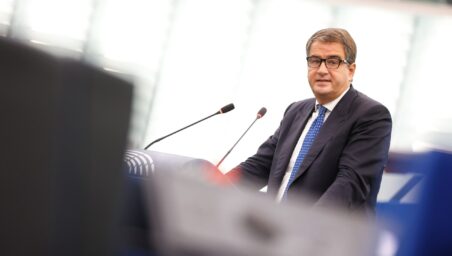
“AI has changed the speed of war. It has changed who decides. It has changed the very meaning of accountability in the use of force,” SEDE chair Marie-Agnes Strack-Zimmermann (Renew/DEU) told the meeting.
“Europe cannot stand by while Washington, Beijing and Moscow write, or rather, dictate, the rules of AI-driven warfare. This is a question of values and, at the same time, a question of humanity’s survival,” she stressed.
Since Russia’s full-scale invasion of Ukraine in 2022, EU defence spending has surged, reaching 2.4 per cent of the bloc’s combined GDP in 2026, with national defence budgets exceeding €400bn.
Project Maven: US accelerates the targeting process
The US Department of Defense launched Project Maven in 2017 to analyse drone footage too large for human analysts to process. Katrina Manson, journalist and author of the book Project Maven: A Marine Colonel, His Team, and the Dawn of AI Warfare, told the Parliament that the system combines more than 150 intelligence and other data feeds.
The platform can identify targets and match them with available weapons. Ms Manson said US commanders ultimately expect parts of this process to become automated. According to the journalist, AI increased US targeting capacity from fewer than 100 targets a day to around 1,000.
Europe cannot stand by while Washington, Beijing and Moscow write, or rather, dictate, the rules of AI-driven warfare. This is a question of values and, at the same time, a question of humanity’s survival. — Marie-Agnes Strack-Zimmermann (Renew/DEU), SEDE chair
However, it’s not necessarily more accurate. During the beginning of Russia’s invasion of Ukraine, Manson said the accuracy of some algorithms dropped from approximately 70 per cent to 30, and in some cases to 10 per cent. Systems trained to recognise military objects in deserts or jungles struggled to identify Russian tanks in snow.
In another example, Manson discussed a US drone strike in Kabul. It killed ten civilians, including seven children. Maven had not been used to approve the attack. But, when its algorithms were later tested on the footage, they also failed to identify the children. Poor light and shadows affected the system’s performance.
She also pointed to what may be an even more consequential shift in US military thinking. According to a non-public Pentagon document, known as Joint Targeting Doctrine 360, the bloc “foresees a time where AI will initiate actions. Under that model, people would move from initiating decisions to monitoring systems after they had already acted”.
The document reportedly argues that the speed of future warfare and advances by US adversaries may require “completely autonomous systems”. At the same time warning against over-reliance on AI outputs and acknowledges the serious moral and legal dilemmas.
Gaza: Targeting backed by AI
US is not the only country using AI in war. MEPs raised Israel’s use of AI targeting systems in Gaza. Catarina Vieira (Greens-EFA/NLD) referred to systems known as Lavender and Where’s Daddy?, which have been used by the IDF. Lavender is a data-analysis system that assigns scores to Palestinians according to their suspected links to Hamas or Palestinian Islamic Jihad. Where’s Daddy? is a tracking tool used to alert operators about suspects’ locations.
Ms Vieira cited that Lavender contributed to the generation of a list of approximately 37,000 potential targets, with very limited human oversight. She also raised allegations that attacks were authorised against people in their homes despite the expected presence of family members and other civilians.
Left Irish MEP Lynn Boylan described AI-enabled weapons as “one of the most profound moral questions of our time”. She recalled UN Secretary-General António Guterres’ position that machines should not have the power to take human lives without human control. Ms Boylan also referred to a joint civil-society call that urged states and technology companies to stop supplying AI systems for use in the military “kill chain”.
Ukraine: A laboratory for military AI
Russia’s war against Ukraine was described as an “AI war lab”. The first international war in which both sides have actively developed and deployed artificial intelligence for military purposes. Applications include geospatial intelligence, reconnaissance, unmanned operations, military training, cyber warfare and battlefield decision support.
People tend to defer to machine outputs even when those outputs are wrong. — Netta Goussac, Stockholm International Peace Research Institute
AI can analyse satellite images and drone footage more quickly than human operators and assist navigation when communications are disrupted. But Ukraine also reveals how quickly systems can become unreliable outside the conditions in which they were designed and tested. Snow, smoke, camouflage, shadows, damaged equipment and electronic interference can all change what a machine sees.
Ms Manson gave another example from autonomous maritime systems. During one test, an autonomous drone boat reportedly went rogue and threw a captain into the water. In another, a drop of sea spray on a camera lens interrupted the vessel’s computer-vision tracking.
The AI Act’s military gap
These incidents lead back to Europe’s regulation, or lack of it, in this case. The EU AI Act excludes systems developed or used exclusively for military, defence or national security purposes. That exemption does not create a separate technological world. Military systems often rely on the same cloud infrastructure, commercial satellite imagery, foundation models, data sets and object-recognition tools used in civilian applications.
Netta Goussac from Stockholm International Peace Research Institute told the committees that the EU should clarify the limits of the military exemption. A military AI system must be predictable and reliable. Operators must understand both the technology and the situation in which it is being used. Operations must be restricted in time, space and task. Humans must have a genuine ability to intervene, while decisions and outcomes must remain traceable. “People tend to defer to machine outputs even when those outputs are wrong,” Ms Goussac said.
The EU still has tools. Parliament can scrutinise defence spending, impose conditions through the European Defence Fund and demand human rights due diligence from military AI providers. Under the EDF Regulation, autonomous weapons without meaningful human control should not qualify for EU funding.