Athens joins the growing list of Putin collaborators. Worried about the fate of Arctic gas tankers, the Greek government blocked the EU’s 21st round of sanctions against Russia.
The episode is a study in how the EU’s unanimity rule turns narrow commercial interests into geopolitical leverage. Athens’ ambassador to the EU told fellow national envoys that the planned sanctions would “ruin” Dynagas. The company owned by Greek tycoon George Prokopiou specialises in transporting Russian liquefied natural gas from the Arctic. Sources confirmed to FT that the ambassador had cited Dynagas as the reason Greece could not support the measures.
The sanctions in question would ban the transport of Russian LNG to third countries. Dynagas operates 27 gas tankers. Eleven of them—a third of the global fleet of Arc7 vessels, built to navigate the icy waters near Russia’s Yamal LNG plant—completed 144 voyages carrying more than 10m tonnes of Russian LNG since the start of 2025.
One man, two fleets
Mr Prokopiou also owns Dynacom, an oil-tanker business that earned at least $915m from trading Russian crude oil over the past three years. That is by far more than any other Greek shipping company. Dynacom was among the first to send tankers through the Strait of Hormuz during the early weeks of the US-Israel conflict with Iran.
Greece argued that Dynagas could not redeploy its Arc7 vessels elsewhere. Each ship costs around $300m and ranks among the most technically complex vessels afloat. Athens warned that a ban would force Dynagas to sell them to non-western buyers. That outcome, Greek officials implied, would serve no one’s strategic interests.
The remaining Arc7 tankers are operated by Seapeak, owned by New York-headquartered investment firm Stonepeak, Japan’s Mitsui OSK Lines, and Russia’s Sovcomflot. Greece’s veto has held up the entire 21st sanctions package for more than a week, leaving measures targeting additional banks, cryptocurrency networks, and military-industrial companies in limbo.
The collateral damage has been immediate. The package includes a mechanism to lower the price cap on Russian crude — the threshold above which companies cannot legally purchase or transport it. Ambassadors were forced on Wednesday evening to agree an emergency one-week extension of the existing cap of $44.10 a barrel. Without that extension, rising global prices driven by the Iran conflict would have allowed Moscow to earn billions in additional revenue.
A week lost, billions at stake
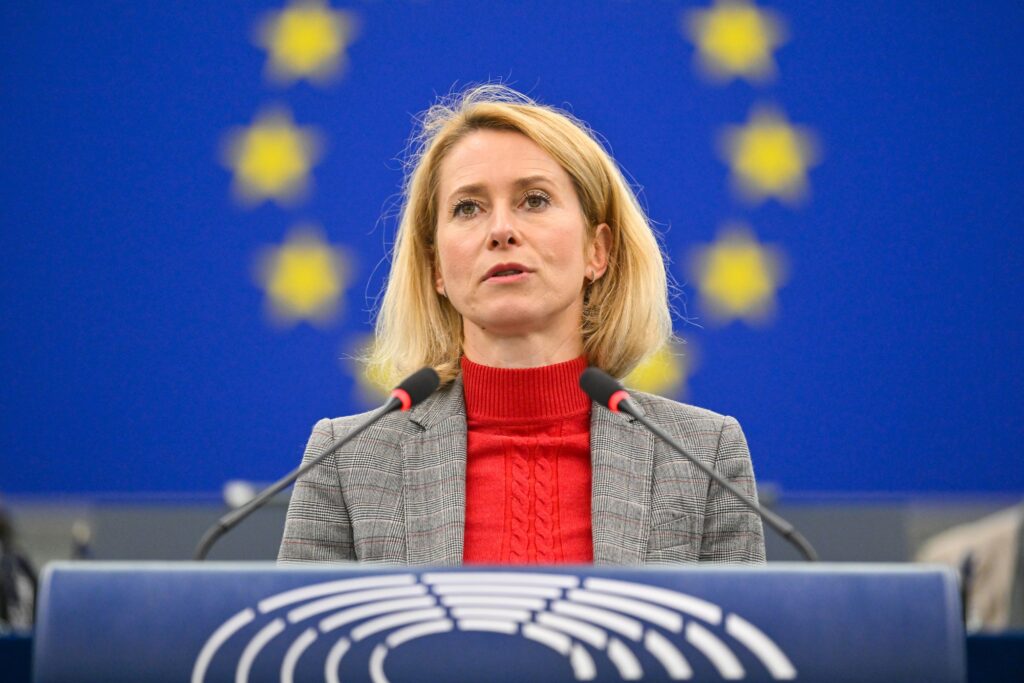
EU foreign-policy chief Kaja Kallas did not conceal her frustration. “Of course, member states have various reasons [to oppose it],” she said on Monday. “Our aim is to have an agreement. If we don’t have an agreement, then we start to work on plan B,” Ms Kallas added, in reference to the oil price cap.
Other EU diplomats were blunter. They argued that every member state has seen its companies lose business as a result of the sanctions. Absorbing such losses is the price of inflicting economic pain on Moscow. Greece, they implied, was refusing to pay its share.
The Greek veto is not an isolated incident. It fits a pattern of member states exploiting the unanimity rule to shield domestic industries from the consequences of EU policy. Hungary blocked the 6th sanctions package in 2022 until Patriarch Kirill’s name was removed, protecting Budapest’s dependence on cheap Russian pipeline oil.
A pattern, not an exception
Belgium quietly lobbied to keep Russian diamonds out of eight consecutive packages, shielding Antwerp’s trade worth €37bn annually and supporting around 6,000 jobs. Only the use of a G7 tracing system finally enabled a ban in January 2024.
If we don’t have an agreement, then we start to work on plan B. — Kaja Kallas, top EU diplomat
Cyprus missed the EU deadline for establishing a sanctions-enforcement unit, leaving shell companies linked to Russian oligarchs operating with minimal scrutiny for years. A replacement unit is now expected only in 2027.
Bulgaria, meanwhile, vetoed the blacklisting of Patriarch Kirill and oil billionaire Vagit Alekperov in the very same 21st package, citing “religious and cultural ties”. Both names were dropped to secure the rest of the deal.
The price of unanimity
In each case, the pattern is the same. A concentrated domestic lobby (shippers, diamond traders, lawyers, clergy) faces losses that are visible and immediate. The benefit of the sanction, by contrast, is diffuse and distant. The unanimity rule transforms that asymmetry into a veto.
Earlier in 2026, Greece and Malta had already blocked a proposed full ban on maritime services for Russian oil tankers, warning of “serious losses” to their shipping registries. The proposal collapsed; the EU is now waiting to revisit it. The Arctic LNG fight is the same battle in a different port.
The broader damage is real. In every case where a member state has extracted a carve-out or a delay, the overall pressure on Moscow has weakened. Compromise, by design, means less. Four years into the war in Ukraine, the EU’s sanctions architecture remains hostage to the commercial calculations of its most exposed members. Athens has just made that problem vivid again.