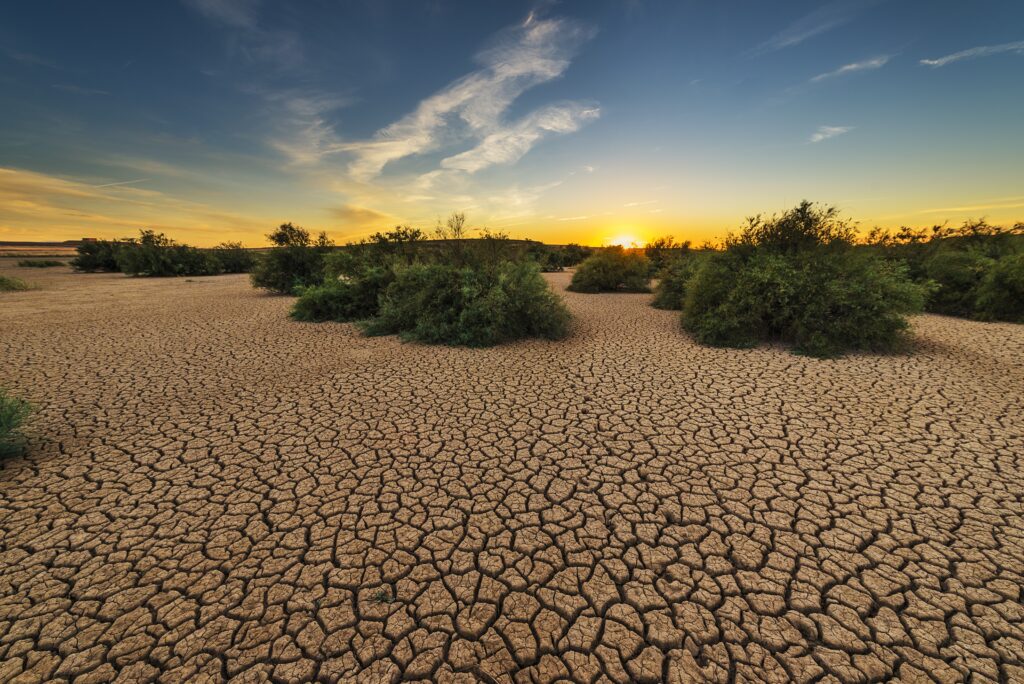
When summer arrives in Europe, it usually lifts spirits. In 2026, it is lifting energy bills, freight costs, and corporate profit warnings.
Successive heat waves may wipe out roughly €180bn-€208bn of the European Union’s economic output, according to a Triodos Bank stress analysis published in early August. That almost equals one per cent of the bloc’s annual gross domestic product.
The clearest corporate signal came from earnings calls. Terms tied to extreme heat, drought, and wildfires appeared on a record share of recent calls (one in ten) for European companies with more than $1bn in market value, according to AlphaSense. The shock is no longer a niche concern. It has reached retailers, manufacturers, transport groups, and care providers.
Winners, losers, and the undecided
Some firms are gaining. The finance director of Groupe SEB said it had sold 30 per cent more fans in Europe in June than a year earlier. June was the biggest-ever month for sun protection sales in the history of Beiersdorf, its chief executive told the FT. Fluidra’s chief sustainability officer called its pools “a climate refuge (…) that’s a long-term opportunity for the company.”
The gains look narrow. For workers, the hit comes through lost productivity. Allianz Research finds that every degree above 30°C lowers hourly labour productivity by about 3 per cent and lifts energy demand by approximately 1.2 per cent. On the hottest days, outdoor and non-air-conditioned indoor work loses up to 20 per cent of effective labour time.
Country exposure is uneven. France faces the largest single-year GDP hit at 1.4 percentage points, while Italy, Spain, and Germany each lose between 0.6 and 1.0 percentage points. Only about one in five EU homes has air conditioning. Most buildings were designed to retain heat, not expel it.
Consumers are bearing the strain directly. Extra cooling demand pushed wholesale power prices in France and Germany to evening peaks above €500 per megawatt-hour, adding approximately €700m to household electricity bills in a single week in late June. High temperatures also forced nuclear and hydro plants to curtail output, tightening supply further.
Reaching every household
Food prices are following. COCERAL slashed its harvest forecast: total EU and UK grain output now stands at 286.6m tonnes, down 23.4m tonnes year on year. Maize export quotations are already approximately 16 per cent higher than a year ago. Analysts warn that “climate-flation” could push euro-area food inflation above three per cent in 2027.
Sophie Boissard, boss of nursing home provider Clariane, said it would “prioritise and accelerate” €10m of investment into air conditioning, especially in northern Europe. It had seen a 15 per cent increase in short stays as families sought heat-safe places for relatives. Adaptation is becoming a cost centre, not a choice.
Industry faces supply-chain disruption too. Low water on the Rhine forced barges to sail only 20 per cent full, lifting freight rates from €45 to €60-70 per tonne. Thyssenkrupp reported slightly reduced blast-furnace runs, while BASF activated low-water contingency logistics.
One summer, or a new era?
Power generation is also under stress. Catherine MacGregor, boss of French utility Engie, said: “2026, to me, is a tipping point. The climate (. . .) is becoming less predictable, more extreme.” Stephan Timmermann, boss of pump manufacturer KSB, agreed: “I fear this hot summer will not be a one-off (but) probably a new era.”
Not everyone shares that view. Stephen Heapy, chief executive of Jet2, said: “I’m sure the hot weather will pass, certainly in the UK, and we’ll get back to our normal summer, which is a lot cooler.” Ryanair boss Michael O’Leary was blunter: “I don’t see that changing. Look, one summer is not going to make any huge difference,” he told Financial Times.
I fear this hot summer will not be a one-off (but) probably a new era. — Stephan Timmermann, KSB
That divide matters. Firms that treat the heat as a one-off will underinvest in adaptation. Those that accept it as the new baseline — like Clariane, KSB, and Beijer Ref, whose biggest demand growth now comes from central Europe, the UK, and France — will spend on cooling, water storage, and logistics resilience. The adaptation market is already forming.
The macroeconomic picture is troubling. Heat raises prices for energy and food while slowing growth — a stagflationary mix awkward for the European Central Bank. Allianz projects fixed-capital formation could fall approximately 8 per cent in the most-exposed economies. Europe’s consumers are paying more for electricity, food, and sun cream. Its companies face weaker productivity and more fragile supply chains. The heat of 2026 has become a measurable macroeconomic variable; one capable, if unmanaged, of erasing a full year of EU growth.