Tehran has drawn its first European target: Bulgaria. Iran’s foreign ministry spokesperson warned on Monday that any country supporting attacks against it, through bases or aircraft, could face retaliation.
Bulgaria’s sin, according to Tehran: letting aircraft refuel on its territory before flying off to support attacks on Iran. Esmail Baghaei, Iran’s Foreign Ministry spokesperson, made the accusation on Monday. “No country should be concerned about Iran unless it puts its capabilities at the disposal of the aggressor parties to carry out illegal acts,” he said, according to the Middle East Monitor.
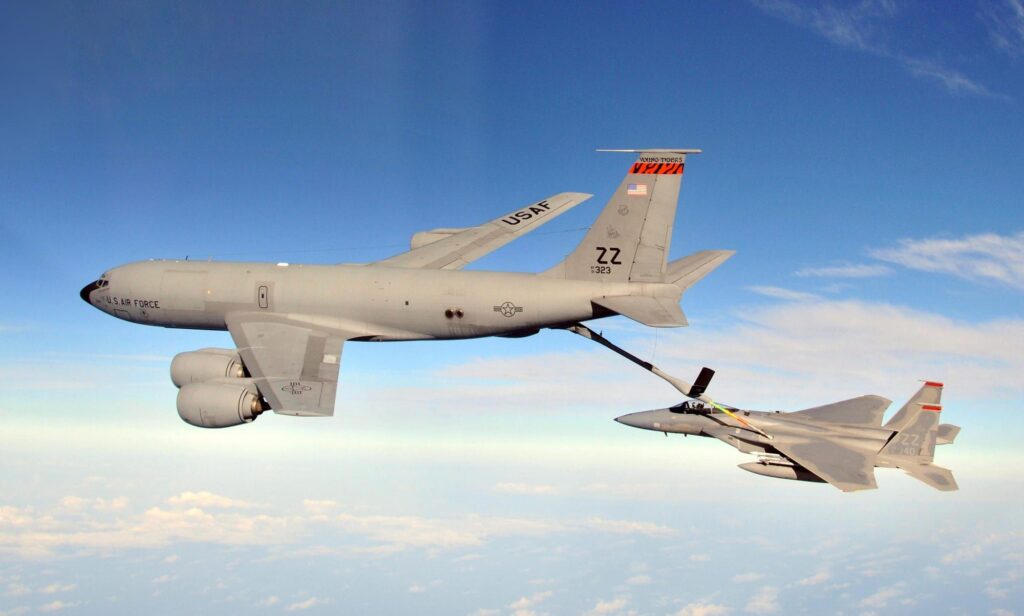
Two US tanker aircraft left Bulgaria’s Bezmer Air Base on 21 August, almost a month after arriving. Bulgaria’s defence minister confirmed their departure but did not say where they had moved or publicly link the decision to Iran’s increasing warnings.
The statement marks a shift from earlier reports that Tehran had privately assessed possible strikes against US assets in Bulgaria and Cyprus if US President Donald Trump escalated the conflict. Iranian officials have still not published a wider target list or indicated that they have decided to attack Europe.
Threat raises EU and NATO questions
An attack on Bulgaria would have consequences beyond its borders as the country is both a member of NATO and the EU. Bulgaria could request NATO consultations under Article 4 if it considered its security threatened. An armed attack could bring Article 5 into consideration, under which allies treat an attack against one member as an attack against them all. The clause does not prescribe an automatic military response, as each ally determines what action it considers necessary.
Article 42(7) of the Treaty on European Union separately requires EU countries to provide aid and assistance to a member state facing armed aggression on its territory. The form of that assistance would be decided by individual governments, while NATO remains the principal framework for the collective defence of its members.
NATO has said it is prepared to address any threat and “will always do what is necessary to defend all Allies”. The alliance cited its interception of four Iranian ballistic missiles heading towards Turkey this year as evidence of its defensive capability.
Bulgaria supports US refuelling operations
Bulgaria’s parliament approved the temporary deployment of up to eight KC-135 refuelling aircraft, 250 personnel, and supporting equipment at Bezmer in July. The two aircraft that have now left were part of this deployment, which was intended to support the refuelling of US military planes operating in the Middle East.
Bulgarian authorities maintained that the country would not serve as a launch site for attacks and said the deployment did not make Bulgaria a participant in the conflict. Iran nevertheless warned Sofia that allowing its territory to support US operations could make it complicit in attacks against Tehran.
Any country that hands its destiny over to foreigners will pay a heavy price — Kazem Gharibabadi, Iran’s Deputy Foreign Minister for Legal and International Affairs
Iranian Foreign Minister Abbas Araghchi raised the issue directly with his Bulgarian counterpart, Reuters reported. Iran’s Deputy Foreign Minister for Legal and International Affairs, Kazem Gharibabadi also warned that “any country that hands its destiny over to foreigners will pay a heavy price”.
Cyprus has already faced an attack
Cyprus presents a different legal situation because RAF Akrotiri is one of two British Sovereign Base Areas on the island. The facilities remain under UK sovereignty and are legally separate from the Republic of Cyprus, despite sitting within EU territory.
An Iranian-made drone struck Akrotiri in March. It remains the only European location reportedly hit by a drone since the war began. British fighter jets intercepted two further drones heading towards Cyprus, demonstrating how the conflict had already reached European soil. In July, Iranian forces also attacked the Cyprus-flagged container ship GFS Galaxy in the Strait of Hormuz.
Earlier reporting indicated that Cyprus remained under consideration as a possible location for retaliation. However, it did not establish whether Iran was considering RAF Akrotiri, another military facility, or infrastructure used by US forces.
The legal consequences of another attack on Akrotiri would be less straightforward than a strike on Bulgaria. Because the base is British territory, Cyprus could not automatically treat an attack on it as armed aggression against the Republic of Cyprus for the purpose of the EU mutual-assistance clause.
Iran’s latest statement may be intended primarily to discourage European governments from supporting further US operations. Nevertheless, by publicly naming Bulgaria after already striking Akrotiri, Tehran has moved the possibility of attacks on European military facilities beyond private contingency planning.