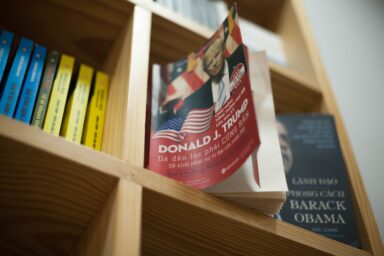
The US president also demands that Europeans pay back money the Biden administration spent on Ukraine. European leaders have publicly ignored the threats.
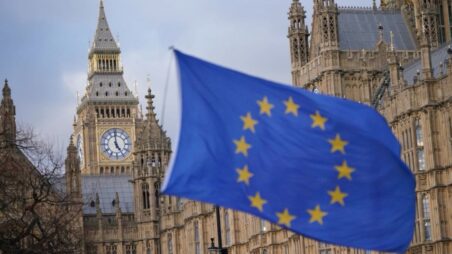
When US President Donald Trump took to social media on 3 September to demand that Europe repay “hundreds of billions of dollars” given to Ukraine “free of charge”, the continent’s leaders did something quietly effective: they said nothing. No emergency summit, no joint statement, no angry press conference. Just silence; given the circumstances, it was probably the most cutting reply on offer.
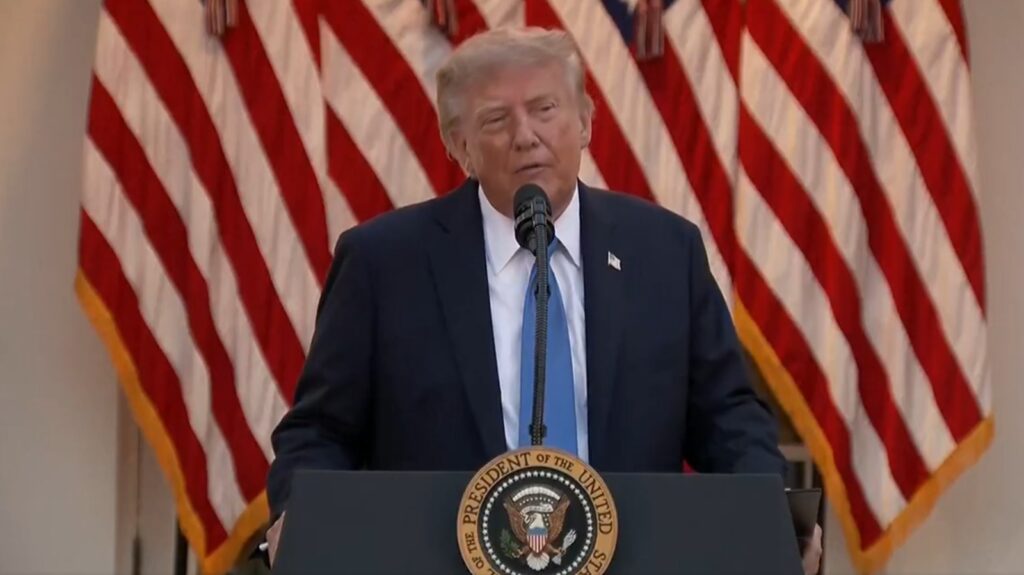
Mr Trump’s post was characteristically blunt. “Hundreds of Billions of Dollars was given to Ukraine and NATO, free of charge, that Europe would have paid for — If they were only asked, but we will be asking for that money, though somewhat belatedly!” he wrote, blaming the administration of his Democratic predecessor.
Envoys eastward, demands westward
Washington’s strongman also appeared to signal a halt in arms sales to (formerly, and still formally) allied nations. “We are taking them for ourselves, the U.S.A., rather than selling them to others, but the sales to Allies will soon again, begin,” he added.
The threat landed at a peculiar moment. His own peace envoys, Steve Witkoff and Jared Kushner, were preparing to visit Moscow and Kyiv that very weekend, according to Russian state news agency TASS. The Kremlin declined to comment on the report.
“I wouldn’t make any announcements right now, but we will inform you when these contacts take place,” Kremlin spokesman Dmitry Peskov told reporters. Meanwhile, a source familiar with the matter told Reuters that “the Russians don’t want them to visit Kyiv and are trying to make them change the plan.” Demanding repayment from your allies while simultaneously sending envoys to the country that started the war would, under different circumstances, be a markedly unorthodox negotiating posture.
The money Mr Trump wants back is real enough, even if his accounting is creative. Under US President Joe Biden, the US made available roughly $195bn in total Ukraine-related war spending by 31 March 2026. Of that, approximately $68.2bn was committed specifically as defence articles and services for Ukraine between February 2022 and June 2026.
What Biden actually spent
The breakdown is instructive: $31.7bn in Presidential Drawdown Authority (meaning weapons pulled directly from US stockpiles), $33.5bn in Ukraine Security Assistance Initiative funding for new procurement, and $3.7bn in Foreign Military Financing. About 59 per cent of the $195bn had seen disbursement by March 2026. The precise delivered value of the remainder is not publicly available.
Mr Trump, naturally, presents all of this as a gift Europe should have paid for. The inconvenient detail is that, increasingly, Europe has been paying — just not in the way Mr Trump implies.
Since 2025, European allies have been buying US weapons and routing them to Ukraine through the Prioritised Ukraine Requirements List, a NATO clearing house through which allies finance American equipment selected by the Supreme Allied Commander Europe. By June 2026, allies had announced $6.3bn in PURL packages, of which $4.8bn had already gone to the US Treasury.
Europe’s bill, already being paid
From January to June 2026 alone, European capitals placed at least €3bn in fresh orders with US defence firms, roughly 30 per cent of all European military aid to Ukraine in that period. The purchases were not trivial. European allies bought approximately 100 Patriot PAC-3 interceptor missiles in July alone, using €1bn from the EU’s Ukraine Support Loan tranche.
Hundreds of Billions of Dollars was given to Ukraine and NATO, free of charge, that Europe would have paid for — If they were only asked, but we will be asking for that money, though somewhat belatedly! — Donald Trump, US president
Roughly 95 per cent of all Patriot missiles reaching Ukraine in 2026 were financed by European states. Norway, the single largest European financier of US weapons for Ukraine this year, earmarked $1.35bn for US precision-fires munitions by May. PURL packages funded several thousand Guided Multiple-Launch Rocket System pods for HIMARS and M270 launchers.
European money also contracted at least one million 155 mm artillery shells from US suppliers, with more than $2.3bn of the $4.8bn PURL spend attributed to stock-replenishment of those rounds. An undisclosed but “substantial share” of ATACMS short-range ballistic missiles provided to Ukraine in 2026 were financed by European allies under PURL, NATO has confirmed.
Cheques to Washington
Tens of thousands of Javelin anti-tank missiles, sourced from new US production, appeared in every PURL tranche announced this year. Germany, the Netherlands, and Norway repeatedly pooled funds for multi-hundred-million-dollar lots. Sweden, Denmark, and Finland jointly financed a $500m January package heavy on Patriot missiles and GMLRS pods.
Poland contributed to two 2026 PURL tranches and handed over five PAC-3 interceptors from its own stock after receiving a US back-fill assurance. Belgium, Spain, Portugal, Slovenia, and Luxembourg co-financed a $500m spring lot of Patriot missiles and 155 mm rounds. Luxembourg’s share alone reached €15m.
In short, Europe has already been writing cheques to the US Treasury for Ukraine’s defence. Mr Trump’s demand that it do so retroactively, for aid disbursed under a different president, is a rather different proposition.
The shambles that is Pentagon
There is a further irony in threatening to withhold arms sales. The institution responsible for those sales is, at this precise moment, in conspicuous disorder. Army secretary Dan Driscoll resigned this week after a clash with defence secretary Pete Hegseth, whom Driscoll believed was causing “generational damage” to the largest branch of the US military.
“It’s a revelatory moment, and I think it illustrates that the Pentagon is in disarray,” said Tom Wright, a senior fellow at the Brookings Institution. Mr Hegseth has purged two dozen generals and admirals since the start of Mr Trump’s second term, through firings or forced removals.
The Pentagon pushed back. “The premise that the department is in disarray is completely baseless and an insult to every dedicated professional and warfighter in this building who comes to work every day to defend this nation,” Pentagon spokesperson Sean Parnell told the Financial Times. “This is what reform looks like,” he said.
A president at wit’s end
The midterms loom. Oil prices hit fresh six-week highs on 3 September as US strikes on Iran and renewed Israeli threats against Tehran revived fears of supply disruptions through the Strait of Hormuz. Both wars, in Ukraine and Iran, and their economic shocks could determine whether Mr Trump’s fellow Republicans maintain control of both chambers of Congress.
Trump has peaked. — Ravi Agrawal, Foreign Policy
US Treasury Secretary Scott Bessent sought to share the blame for rising energy prices. “We are going through an energy shock right now due to both the war in Ukraine. Because, you know, Ukraine has decided that they want to blow up Russian energy assets and refined products, so that is creating upward price pressure on a global basis, and then the conflict in Iran,” he told Fox News.
Meanwhile, a vast gulf remains between Russia and Ukraine on how to end the 4½-year-old war. Kremlin spokesman Peskov said the position that President Vladimir Putin set out two years ago (that Ukraine should cede four entire regions and abandon its plan to join NATO) was “unshakeable”. Ukraine refuses to surrender land it has successfully defended at enormous cost.
Has he peaked?
Two wars are straining US resources, munitions stockpiles are being depleted by the Iran campaign, the Pentagon is haemorrhaging credibility, and peace talks are going nowhere fast. In this light, Mr Trump’s demand that Europe repay Biden-era Ukraine aid reads less like policy than like a man rattling whatever is left in the tin.
There may not be much. This week, the influential Foreign Policy publication ran a piece named, tellingly, Trump Has Peaked. Meanwhile, The Economist reported that the president’s approval ratings remain at a perilous -26. A mere three months before the midterm election (the result of which may limit his effectiveness as the nation’s chief executive), he cuts a figure sitting increasingly uncomfortably.
Europe, for its part, has chosen not to rattle back; at least not yet. It is busy buying American weapons, while it can.