Two new laws promise Europe fewer empty pharmacy shelves and less reliance on foreign drug suppliers. Its own health lawmakers now say the money to deliver on that promise simply is not there. They are demanding 15 per cent more before EU4Health disappears for good.
On Monday, Parliament’s Committee on Public Health (SANT) adopted its opinion on the EU’s 2027 budget. It used the document to send the Commission a blunt message: the bloc’s new medicine security laws need more money to actually work.
The committee says “the insufficient level of funding for the implementation of the Critical Medicines Act and the pharmaceutical package risks limiting the effectiveness of these initiatives in addressing shortages, diversifying supply chains and strengthening the Union’s strategic autonomy in health.”
Three things would get EU4Health money if MEPs get their way: factories making critical medicines and their ingredients in Europe, joint deals letting member states buy medicine together for better prices, and stockpiles of medicines and equipment for the next shortage.
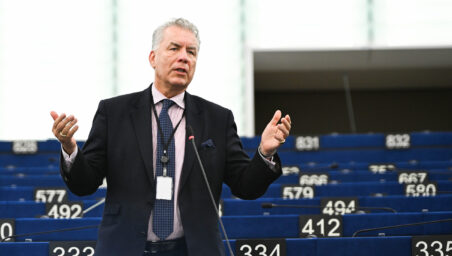
EU4Health will not survive as a standalone programme after 2027: this is its last budget before it disappears into a bigger fund. Getting there took work: rapporteur Michalis Hadjipantela (EPP/CYP) merged 87 rival amendments from every political group into just 10 compromises.
Cut once, then twice more
The opinion opens with a list. It asks the Commission, member states and stakeholders to focus the 2027 budget on EU added value in public health, naming “health security and preparedness, prevention of communicable and non-communicable diseases, including cancer, rare diseases, mental health, women’s health, sexual and reproductive health as well as investment in digital health, critical medicines, medical devices, addressing antimicrobial resistance, training of health workforce, innovation, as well as gender-responsive disease research”.
The committee also “calls for public health to be treated as a strategic autonomy, security, social cohesion and competitiveness priority in Union funding”. It puts particular weight on access in underserved and hard-to-reach areas, on the European Health Data Space, and on cross-border care for transplant patients and patients with rare and complex conditions.
On money, the ask sits against a run of reductions. The committee recalls that the programme’s envelope “was already reduced by close to EUR 1 billion in the context of the 2024 revision of the Multiannual Financial Framework”. The Commission then proposed less for EU4Health in 2027 than the programme has this year, and member states cut that proposal further in the Council’s position.
The committee says the programme “cannot absorb further reductions without compromising the delivery of its objectives under Regulation (EU) 2021/522”. The opinion calls for “the restoration of EU4Health Programme commitments to at least their 2026 level”, noting that commitments decrease from EUR 661.3m in 2026 to EUR 606.8m in 2027, representing a reduction of over 8 per cent. The committee stresses that commitments are essential for the Union’s capacity to launch and finance new health actions in the coming years, including on preparedness, prevention, access to innovation, critical medicines, cancer, cardiovascular health, mental health, rare diseases and health workforce.
The cliff at the end of next year
The committee lists what it wants protected when the programme ends: the European Reference Networks for rare and complex diseases, joint actions with member states, the medical countermeasures work of the Health Emergency Preparedness and Response Authority (HERA), and the rollout of the European Health Data Space. It asks the Commission to ensure these “continue without interruption or funding gaps into the post-2027 financial architecture”.
On prevention, the opinion recalls that “Article 5 of Regulation (EU) 2021/522 reserves a minimum of 20 per cent of the programme’s total envelope for health promotion and disease prevention”, and calls on the Commission “to deliver on this commitment in the 2027 annual work programme and its implementation”.
Parliament’s Committee on Budgets votes on the 2027 budget on 5 October, and the full Parliament is expected to adopt its position in the week of 19 October.
Operating grants: 187 groups, one ask
The day after the SANT vote, 187 civil society organisations published a statement calling on the Commission to reinstate operating support for EU health groups. Operating grants pay for an organisation’s core work rather than for a single project. The campaign describes them as an established mechanism under EU4Health for that purpose, with a one-year time frame until 2024 that limited predictability.
In 2024, more than 20 health organisations signed Framework Partnership Agreements with the Commission covering 2025 and 2026. The Commission then left operating grants out of the 2025 work programme. Signatories call the removal “particularly concerning” because it came despite those agreements, and because the grants “represent only a small share of the overall EU4Health budget”.
The signatories run well beyond health. They include the European Environmental Bureau, ClientEarth, Eurochild, the European Youth Forum and WWF EU, alongside Alzheimer Europe, EURORDIS-Rare Diseases Europe, the European Patients’ Forum and the European Public Health Alliance.
You can’t claim to champion civil society and cut its oxygen supply in the same breath. — Alberto Alemanno, founder, The Good Lobby
“You can’t claim to champion civil society and cut its oxygen supply in the same breath,” said Professor Alberto Alemanno, founder of The Good Lobby. “This is a test of whether the EU’s Civil Society Strategy means anything at all.”
Milka Sokolović, Director General of the European Public Health Alliance, said the statement “makes clear that operating grants for health civil society are not just a funding question”. Valentina Strammiello, Executive Director of the European Patients’ Forum, said the funding challenges facing health and patient organisations are “not only a sectoral issue, but a matter of democratic participation”.
The committee’s answer, a day early
The opinion adopted the day before does address these concerns. The committee “stresses the importance of ensuring the continued participation of health civil society organisations, including patient organisations in Union health actions, recognising their essential role in shaping patient-centred policies, supporting implementation and improving access to care”.
It “notes the concerns arising from the discontinuation of operating grants” under the 2025 work programme, naming the harm as “continuity of activities and support for patients and communities”. It calls for future support, “including the possible reintroduction of operating grants in the 2027 Work Programme”, based on “clear criteria of European added value, transparency, neutrality, sound financial management and measurable impact”.