The long-running push to tap frozen Russian billions is back on the table and will face its first test at next week’s Gymnich. Ukraine’s foreign minister will be there.
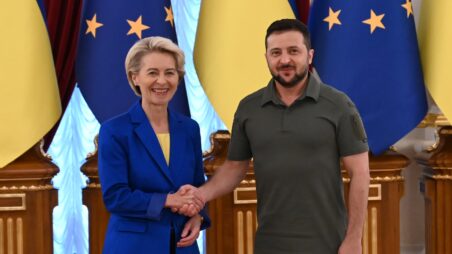
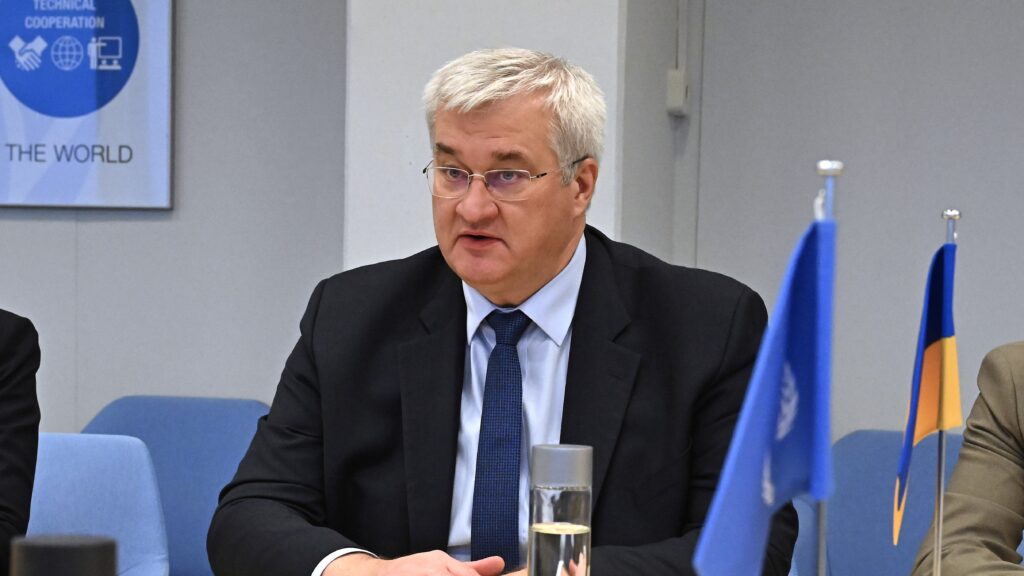
Kyiv has thrown its weight behind a fresh push by four European countries to reopen the debate over using frozen Russian state assets. Ukrainian Foreign Minister Andrii Sybiha said it was “fair and logical” to use Russian money to cover the rising cost of defending and rebuilding Ukraine, rather than leaving European taxpayers to foot the bill.
Mr Sybiha also confirmed that he plans to discuss ways of using the assets with his EU counterparts next week. He will attend the informal meeting of EU foreign ministers, known as the Gymnich, on 1–2 September in Wicklow, near Dublin.
Sybiha thanks four ministers
The Ukrainian foreign minister thanked his Swedish, Dutch, Polish and Spanish counterparts for a letter to the European Commission. Maria Malmer Stenergard, Tom Berendsen, Radosław Sikorski and José Manuel Albares urged Brussels to take another look at the legal and technical options for using frozen Russian assets to support Ukraine.
“It is only fair and logical to use Russian assets, rather than only European taxpayers’ money, to cover additional costs of defending Ukraine and the rest of Europe from the Russian threat,” Mr Sybiha wrote on X.
He stressed that the debate must remain “rational, not emotional”. Experts, he said, can find a workable solution that complies with European rules, international law and the rule of law. Any risks should be mitigated collectively and shared among member states, Mr Sybiha argued, so that no single country carries a disproportionate burden.
That is precisely where previous efforts ran into trouble. Most of the roughly €210 billion in frozen Russian assets in the EU sits at Belgium’s Euroclear. The country fears it could shoulder an outsized financial risk if Russia were to launch a legal challenge. The four countries’ new proposal includes a mechanism to spread that risk across all member states.
Gymnich to offer first political test
The Wicklow meeting, hosted by Ireland’s Foreign Minister Helen McEntee and the EU High Representative Kaja Kallas, will not be where the EU decides whether to use Russian money. The Gymnich is an informal gathering designed for open, strategic discussion, not formal decisions. But it could show whether the new initiative has enough political backing to get technical work moving again.
Alongside Mr Sybiha, foreign ministers from the UK, Canada, Norway, Iceland and Switzerland are also expected to attend, according to available information. The discussion will therefore reach beyond the EU’s 27 member states.
For Kyiv, the renewed push comes at a critical moment. Sybiha warned that the longer Russia’s war continues, the higher the costs of defence and reconstruction. The four EU countries behind the letter also argue that the €90 billion loan already agreed for 2026–2027 will not be enough.