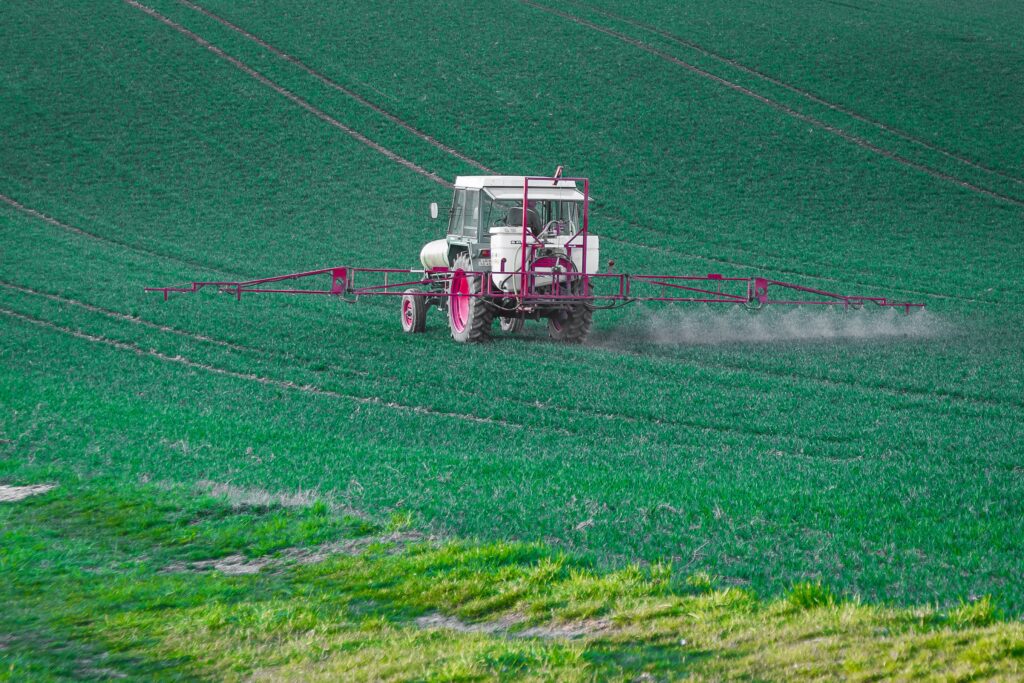
EU money pays farmers to keep fertilisers on their fields and out of rivers. In France, Germany, Denmark, and Luxembourg, however, the schemes fell well short of their plans in their first year, 2023. A new study shows how wide the gap is, and why it matters for the water Europeans drink.
The report, published on 9 October by the EU CAP Network, looks at schemes that reward farmers for changing how they manage their land. The aim is to keep excess nutrients out of rivers and groundwater. The study found a gap between the expected benefits of these schemes and estimates based on their first year of implementation, 2023.
The study covered seven CAP Strategic Plans. In them, member states set out how they will spend money from the EU’s Common Agricultural Policy (CAP). France, Germany, Denmark, and Luxembourg showed the largest gaps. The other three, Belgium’s Walloon region, Spain, and the Netherlands, came close to their plans.
The findings raise a question. Can the CAP deliver environmental improvements as fast as policymakers expect? The answer matters as Brussels shapes the next CAP, due to start in 2028.
Why excess fertilisers matter
Farmers need nutrients such as nitrogen and phosphorus to grow food. But when they spread more fertiliser than crops can use, the surplus does not stay in the field. It leaves the soil and pollutes the environment.
Excess nitrogen can seep into rivers, lakes, and groundwater, or escape into the air as a pollutant. Excess phosphorus washes off fields into rivers and lakes. There it feeds algal blooms that rob the water of oxygen.
The EU has tried to curb nutrient losses for decades. Its Nitrates Directive has protected waters from farm pollution since 1991. The CAP adds money to the rules. Under the current CAP, which runs from 2023 to 2027, farmers receive payments for practices such as planting cover crops, keeping permanent grassland, and protecting soil. According to the report, eco-schemes, voluntary annual payments for greener farming, do the most to cut nutrient surpluses. Longer-term environmental and climate commitments come second.
France and Germany show large gaps
The differences between national plans are substantial. On paper, Germany’s plan could cut the country’s nitrogen surplus by 43,000 tonnes a year on average. Based on what happened in 2023, the estimate falls to 25,000 tonnes, less than 60 per cent of the plan.
France showed an even wider gap. Its estimate fell from a planned 29,000 tonnes a year to 12,000 tonnes in the first year, about 40 per cent of the plan. Denmark’s and Luxembourg’s estimates halved. Denmark’s dropped from 10,000 to 5,000 tonnes, and Luxembourg’s from about 2,000 to 1,000 tonnes.
The report blames the gaps on several factors. Some environmental programmes started late, fewer farmers signed up than expected, and reported data had gaps. In France, the slow start owed much to weak uptake of support for organic farming.
Wallonia and the Netherlands closer to plans
The Netherlands came closest. Its plan pointed to a nitrogen surplus cut of 37,000 tonnes a year. Based on 2023 data, the estimate reached 36,000 tonnes, almost exactly on target.
Wallonia also came relatively close. Its plan pointed to a cut of 24,000 tonnes a year, and the 2023-based estimate reached 21,000 tonnes. In Spain, the estimate fell from a planned 28,000 tonnes a year to 24,000 tonnes.
But comparing countries requires care. According to the study’s modelling, the Netherlands starts from a much higher nitrogen surplus than Spain. So similar farming practices can produce different estimated reductions. Much depends on local conditions and on how much excess nitrogen is already present. A larger reduction does not automatically mean one country’s farm policy is more effective than another’s.
Water and soil
Healthy soil and clean water underpin farming, food production, and everyday life. Nitrogen and phosphorus losses threaten both. They pollute rivers and groundwater, harm aquatic life, and put drinking water at risk.
For farmers, lost nitrogen and phosphorus mean wasted fertiliser. Better soil management and careful use of fertilisers keep those nutrients in the field, where crops need them. The EU funds such practices. Yet the report cannot show how much pollution they have actually prevented. It calls for better data to measure the real added value of CAP support.
These findings highlight the importance of effective delivery and participation in determining the environmental performance of the CAP. — EU CAP Network, report on nutrient balance
The 2023 figures cover only the first of five years, so uptake may still catch up. “These findings highlight the importance of effective delivery and participation in determining the environmental performance of the CAP,” the network writes in its summary of the study. But protecting water and soil is about more than meeting environmental targets. Clean drinking water and fertile farmland are what future generations of farmers, and everyone else, will depend on.