Kyiv and Baku have signed six accords that bind them more closely in defence, diplomacy and energy. The deal could strengthen the European Union’s geopolitical hand even as its top leaders would struggle to say so aloud.
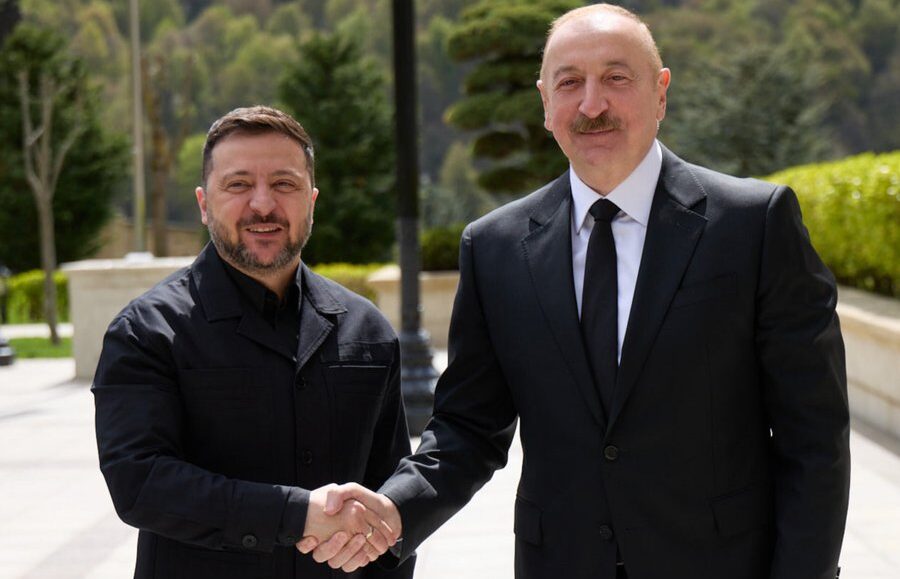
Ukraine’s President Volodymyr Zelenskyy unveiled a fresh partnership with his counterpart, President Ilham Aliyev of Azerbaijan, last weekend. The timing mattered. Russian cruise missiles kept battering Ukraine’s cities. European energy officials fretted about another winter without Russian gas. While the precise contents of the agreements remain unpublished so far, the known crumbs paint a revealing picture.
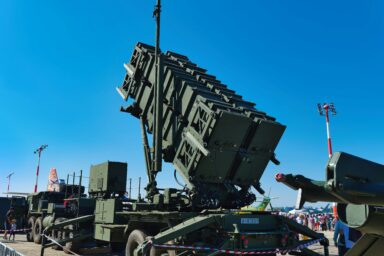
The centrepiece is a framework that sets up joint design and co-production lines for drones and air-defence components. Ukrainian engineers will share battlefield tricks learned the hard way over the skies of Kyiv and Kharkiv. “Ukraine has demonstrated resilience during this war and is sharing its experience today,” Mr Zelenskyy said. He confirmed that the two countries will strengthen regional security through the “development of co-production initiatives”.
New arsenals, new alliances
Azerbaijan, already a savvy drone operator, will offer production capacity and proximity to Iran—helpful for stress-testing kit against the kind of loitering munitions Tehran has sent to Russia. Other deals cover military training, humanitarian aid, trade facilitation and energy co-operation.
“Military-industrial partnerships between the two countries have wide-ranging perspectives,” said Mr Aliyev. The phrase captured both leaders’ logic: Russia’s war has turned Ukraine into a lab for modern air defence, while Azerbaijan wants to hedge against its own security worries in the South Caucasus.
Defence officials in both capitals stress urgency. Shared assembly lines could shorten delivery schedules for counter-UAV systems, loitering munitions, and radars that Ukraine needs at the front and Azerbaijan along disputed borders. Regular joint exercises—made easier by a new training memorandum—will accustom both forces to NATO-compatible tactics. That, in turn, gives Mr Aliyev leverage when shopping for Western kit and lets Mr Zelenskyy diversify supply chains strangled by Russian airstrikes on Ukrainian factories.
The partnership also nudges regional balances. A drone-and-missile axis stretching from the Black Sea to the Caspian complicates Moscow’s calculus and teases Tehran, which has sparred with Baku over transport corridors. Kyiv secures another vocal supporter of its territorial integrity; Baku gains a friend well-versed in fending off Russian pressure.
Pipes and pylons
Energy security forms the second pillar. Kyiv still relies on ageing coal plants and a bruised nuclear fleet. During the past winter Baku dispatched eleven emergency energy packages—fuel, cables, transformers—to keep the lights on. Mr Zelenskyy thanked his host, who promised to “launch new ones”. The new agreement envisages further technical help and hints at SOCAR, Azerbaijan’s state oil firm, taking stakes in Ukrainian reconstruction projects, from gas storage to petrochemicals.
Ukraine has demonstrated resilience during this war and is sharing its experience today.
— Volodymyr Zelenskyy, Ukraine’s president
Mr Zelenskyy’s diplomacy went beyond hardware and kilowatt-hours. “We are ready for the next talks [to be] in Azerbaijan if Russia will be ready for diplomacy,” he said, proposing Azerbaijan as the host of a potential diplomatic meeting with the Russians. The line signals a twin bet. First, that Moscow may one day sue for peace. Second, that Azerbaijan’s ties to the Kremlin, however pragmatic, could help convene the session. Baku, one of few regional capitals equally able to ring Kyiv and Moscow, relishes the role. Brokering even a preliminary ceasefire would boost Mr Aliyev’s regional stature and distract critics of his domestic governance.
For now, the practical gains look modest but real. Ukrainian technicians already train Azerbaijani crews in hardening power plants against missile strikes. Baku’s logisticians study how Ukraine keeps front-line generators running despite shelling. Officials on both sides whisper about future joint ventures—counter-drone lasers, perhaps, or smart munitions—that could win export orders in other worried neighbourhoods.
War diplomacy
Energy co-operation may advance faster. SOCAR engineers are mapping damaged Ukrainian refineries. Kyiv offers tax holidays and local-content sweeteners. If one refinery restarts with Caspian cash, others will follow. That would embed Azerbaijan in Ukraine’s recovery—and give Europe another plug for spare capacity when continental grids creak.
Trade matters too. Annual Kyiv-Baku commerce barely tops $500m. A facilitation pact aims to double that figure with fast-track customs lanes and reconstruction tenders. Agricultural goods head east, petrochemicals west. Humanitarian protocols formalise medical evacuations for Ukrainian civilians; another reminder that the war’s grind still shapes every bilateral initiative.
Meanwhile, Moscow watches. Russian analysts dismiss the agreements as “paper fireworks”. Yet the Kremlin lobbied hard against earlier Ukraine–Türkiye drone deals (and failed). Should Ukrainian engineers start bolting warheads to Caspian-made airframes, the fireworks may prove more metal than paper.
No time for being picky
For Brussels the deal offers indirect comfort. With Russian fossil flows waning, renewables do not come close to filling the gap. Extra cubic metres or spare transformers from the Caspian will not solve the continent’s crunch, yet every bolt and barrel counts. The prospect of Ukrainian-Azerbaijani energy corridors, even in embryonic stages, underscores how post-Soviet states can club together to keep Moscow out of their grids.
Military-industrial partnerships between the two countries have wide-ranging perspectives.
— Ilham Aliyev, Azerbaijan’s president
Western diplomats also see a mini-coalition that stiffens the eastern flank without dragging NATO into fresh treaty traps, or any kind of extra commitment. The importance of Baku (the capital of Europe’s new pragmatism, as Azeri press terms it) was plain to see: within days of Mr Zelenskyy’s visit, three European leaders—from Latvia, Czechia, and Italy—were scheduled to see the country.
European institutions, however, have remained silent. No wonder: as a leader, Mr Aliyev cuts a thoroughly unappealing figure. When he met Ursula von der Leyen, the European Commission president in 2022, the latter faced piercing criticism. But the world—featuring a rabid Russia, Washington oscillating between openly fascist tendencies and sheer ineptitude, NATO in tatters, and a freshly self-confident Iran—does not offer much room for being picky about allies.