European strategic liquidity is a step closer after the European Parliament’s security and defence committee backed a €409bn European Competitiveness Fund and a €81.4bn Connecting Europe Facility on Tuesday.
Defence spending has moved to win a stable place among the EU’s core economic programmes. On 14 April the European Parliament’s Security and Defence Committee (SEDE) approved two draft opinions that drag them into a single frame.
Members backed the European Competitiveness Fund, a planned €409bn pot that folds eight existing programmes into one scheme, and the revamped Connecting Europe Facility, an €81.4bn fund for transport, energy and military-mobility projects. The political message rings loud and clear: defence spending now shapes the Union’s core economic instruments.
Billions on the line
The European Commission unveiled the Competitiveness Fund on 16 July 2025. The proposal turns the 2023 Draghi report on competitiveness into budget headings. It would channel money to clean tech, semiconductors, biotech, space assets and a ring-fenced €27bn window for defence research and innovation. Eight separate lines—Horizon Europe, InvestEU’s SME window, the European Defence Fund and others—would melt into the new structure. The committee approved a favourable opinion by 29 votes for, six against, and two abstentions.
The second text amends the law that governs the Connecting Europe Facility. It repeals the 2021 regulation but preserves unspent cash until 2030. The envelope would rise to €81.4bn for 2028-2034, split into €33.9bn for transport, €29.9bn for energy and €17.6bn for military mobility. Forty per cent of the energy pillar would finance security-of-supply projects with Ukraine and Moldova, once those countries align with EU rules. The SEDE passage was more or less as smooth as that of the EDF file.
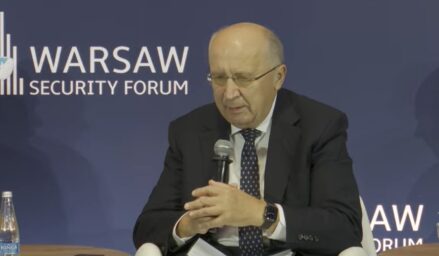
MEP Riho Terras (EPP/EST), rapporteur for the Competitiveness Fund opinion, secured language that protects the €27bn defence component and welcomes dual-use projects at lower technology-readiness levels. The opinion also inserts a ‘European first’ requirement: prototypes funded by the scheme must reach European customers before anyone else. Committee officials said more than eighty per cent of members supported the text. “I think we got together a good compromise that everybody can support,” Mr Terras said before the vote.
On the Connecting Europe Facility, rapporteur MEP Petras Auštrevičius (Renew/LTU) steered an opinion that guarantees at least 21 per cent of the transport pillar for corridors meeting both civilian TEN-T standards and NATO’s multimodal needs. The clause shields the €17.6bn military-mobility line from the usual budgetary pruning. No member spoke against the text during the vote. Investors planning cross-border rail upgrades can now assume that dual-use technical standards will survive later negotiations.
Defence takes centre stage
By acting on the same morning, the committee underscored a wider shift. Defence is no longer an afterthought bolted onto cohesion or digital funds. It sits at the heart of the Union’s economic strategy. The approach echoes the Draghi report’s warning that the single market risks strategic irrelevance without large-scale public backing.
In both cases, the SEDE votes expressed only the committee’s opinions supporting the files before the responsible committees (ITRE and ITRE/TRAN, respectively) decide whether to recommend them to the plenary. However, they send a signal that as far as the security side of the files is concerned, EU lawmakers are likely to be on board.
The Competitiveness Fund alone would consume one fifth of the next seven-year budget. Its toolbox copies the Innovation Fund and InvestEU but streamlines oversight. Annual work programmes will face only one comitology examination, giving the Commission latitude to move cash quickly. Some capitals grumble about weaker peer review, yet SEDE members argue that Europe cannot match foreign subsidies with a slow lane.
Budget muscle
Council fault-lines are already visible. Northern governments fret that generous subsidies will blunt market discipline. Southern states want looser state-aid rules. By uniting behind the €27bn defence window, Parliament narrows the list of cuts the Council can demand. The same logic applies to the Connecting Europe Facility.
The ITRE and TRAN committees plan to top up the military-mobility line by another €3bn , recycling unspent margins from the current budget. Once Parliament votes in plenary—4 July for the fund, 16 September for the facility—the Council will confront a chamber holding two firm red lines.
I think we got together a good compromise that everybody can support. — MEP Riho Terras (EPP/EST)
Investors study the calendar. ITRE amendments on the Competitiveness Fund close on 24 May, with a committee vote in mid-June. The Council aims for a first general approach under the Polish presidency in the second half of the year. Trilogues on both files will then track the wider multi-annual financial framework talks. If all stays on schedule, the two regulations will apply from 1 January 2028, giving industry a seven-year funding horizon.
Networks and sovereignty
The Connecting Europe Facility links security to supply chains in concrete ways. Money for rail and road corridors tightens NATO logistics and smooths civilian freight. The energy pillar finances grids that will carry hydrogen from Iberia to Germany and cables that plug Ukraine into the continental network. The European Investment Bank reckons the energy window could crowd in €110bn of private capital. That leverage attracts companies that once ignored Brussels programmes as too small to matter.
The Competitiveness Fund extends industrial logic to defence mid-caps. Missile makers, electronic-warfare specialists and secure-communications firms will compete for grants and equity. By allowing dual-use projects early in the research cycle, the programme aims to keep European intellectual property onshore. The Commission plans to publish guidelines on technology-sovereignty indicators by early 2027. Parliament attached a right of scrutiny, a mild check on executive ambition.
Europe has often struggled to match rhetoric with resource. These opinions shift that balance. Should the €409bn Competitiveness Fund survive intact, EU-level investment capacity would more than double compared with 2021-2027. The €17.6bn for military mobility almost triples the current allocation and makes infrastructure policy a pillar of deterrence. By linking Ukrainian projects to the facility, the Union uses its budget not only to rebuild a neighbour but also to anchor it in the single market.
Strategic pitfalls
Risks remain. The Council could shave the envelopes during autumn talks. A north-south split over subsidy rules may stall the Competitiveness Fund. Five member states already demand stricter conditions on Ukraine-related spending in the Connecting Europe Facility. Yet Parliament’s early unity narrows the trade-offs. Cutting the defence windows now carries political cost in Brussels and, perhaps more importantly, in Warsaw and Tallinn.
Both files must still pass ITRE, TRAN and plenary scrutiny. Trilogues will pit Parliament against budget hawks in the Council. The Commission’s streamlined governance model may face amendments that restore heavier expert review. Even so, the committee’s twin votes change the default. Defence research and military corridors are now embedded in the EU’s flagship investment schemes. Removing them would require an explicit decision, not mere neglect.
If the timetable holds, the first multi-year work programmes will appear in 2027. Calls could open days after the new budget cycle starts in 2028, avoiding the two-year lull that hampered the 2021 launch. Companies, infrastructure managers and regional authorities would then plan against a predictable seven-year envelope worth €490bn in commitments — about 40 per cent larger than the entire 2014-2020 cohesion budget.
The Union has long talked about strategic autonomy. The SEDE committee just voted for something more tangible: strategic liquidity.