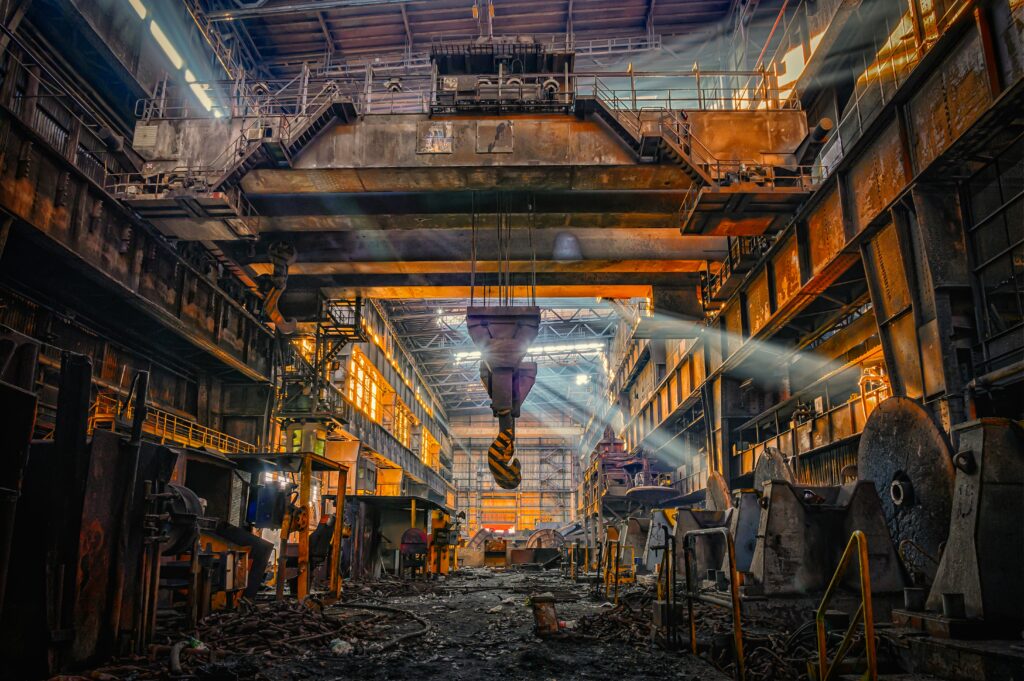
European steelmakers are running at just 65 per cent of their capacity. Cheap imports and Donald Trump’s tariffs have pushed mills across the continent to the edge. On Monday, the EU struck back — and the message to rivals was clear.
The European Parliament and Council reached a political agreement on 13 April on a new measure to protect the EU’s steel industry from global overcapacity. It cuts tariff-free imports by 47 per cent compared to 2024, setting an annual quota of 18.3 million tons. Imports above that threshold face a 50 per cent duty. According to industry estimates, the deal could push European production closer to 80 per cent of capacity.
The measure covers 30 categories of steel products and replaces a safeguard in place since 2018. It also introduces a “melt & pour” traceability requirement to stop cheaper steel taking a detour through third countries to dodge the new duties.
Existential threat
The scale of the pressure on European producers is stark. Global steel overcapacity looks set to reach 721 million tons by 2027 — more than five times the EU’s entire annual consumption. Last year, the biggest sources of steel imports into the EU were Türkiye, South Korea, Indonesia, China, India, Ukraine, and Taiwan.
The deal carries a clear geopolitical signal. It bars Russian steel from the EU market while preserving tariff-free access for Ukrainian steel. The deal comes as US President Donald Trump’s tariffs continue to squeeze European producers.
Rapporteur Karin Karlsbro (Renew/SWE) said steel is “a strategic priority for Europe” and that the industry’s strength is “central to Europe’s resilience” in times of geopolitical uncertainty. Behind the numbers are 2.5 million jobs spread across the continent, from blast furnaces in Liège to mills in Ostrava. Commissioner for Trade Maroš Šefčovič put it plainly: the agreement is “at its core, about people and jobs.”
Not a cure-all
Trade unions welcomed the agreement but warned it does not go far enough. IndustriAll Europe said the deal was “a step in the right direction” but that high energy prices, weak demand, and the cost of decarbonisation are challenges that tariffs alone cannot resolve.
Formal adoption by the Parliament and Council is expected before 1 July 2026, when the current safeguard expires. Industry groups are pushing for speed.
Global steel overcapacity is an existential threat to European steelmaking. — Axel Eggert, director general, EUROFER
“Global steel overcapacity is an existential threat to European steelmaking,” said Axel Eggert, director general of the European Steel Association EUROFER. He called the Commission’s proposal “balanced and effective” and warned it must be adopted “without delay and without being weakened.” With the current safeguard expiring on 1 July, the clock is ticking — and for the workers and mills that have kept European industry running, the stakes could hardly be higher.