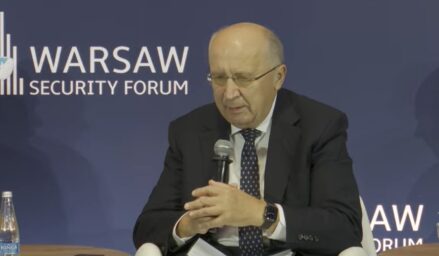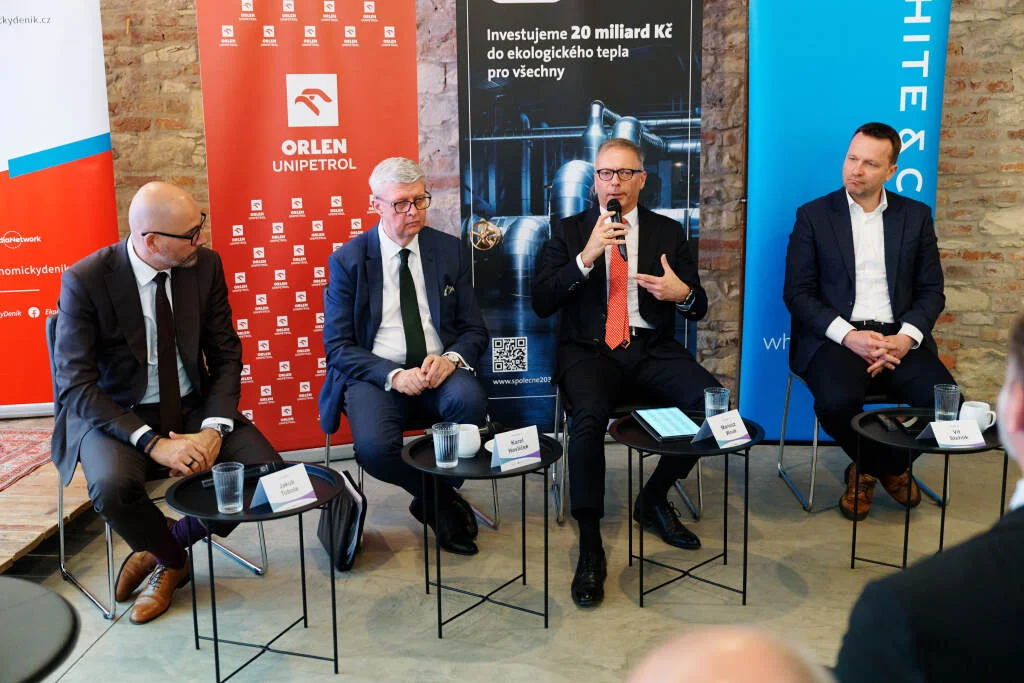
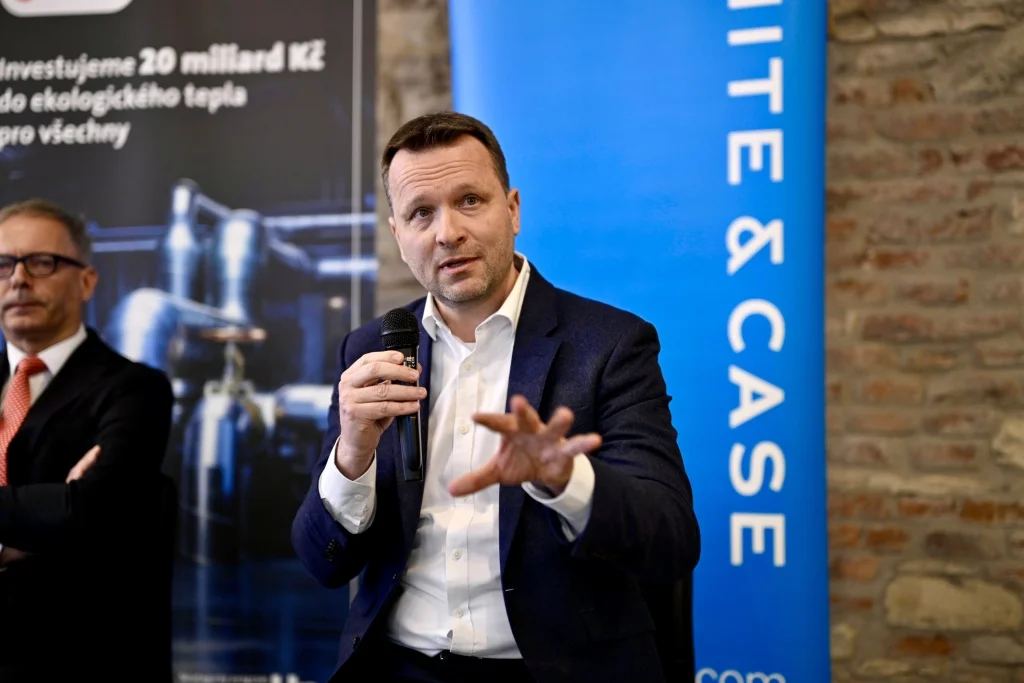
The debate on decarbonisation is becoming an exercise in juggling cost, security and public patience, a Prague conference on law and energy heard. Convened jointly by the news portals Economic Journal and Law Journal, four voices dominated the hall: Czech Deputy Prime Minister and Industry Minister Karel Havlíček; Jakub Tobola, commercial director of Veolia Energie Czech Republic; Mariusz Wnuk, chief executive of Orlen Unipetrol; and Vít Stehlík, managing partner at the country’s branch of White & Case.
Representatives of government ministries, utilities, and law wrestled with how to cut carbon without hobbling the economy. The sparring offered a snapshot of a region that wants to stay industrial yet meet Brussels’ green timetable. The stage was set for a brisk exchange on how to decarbonise without importing extra volatility.
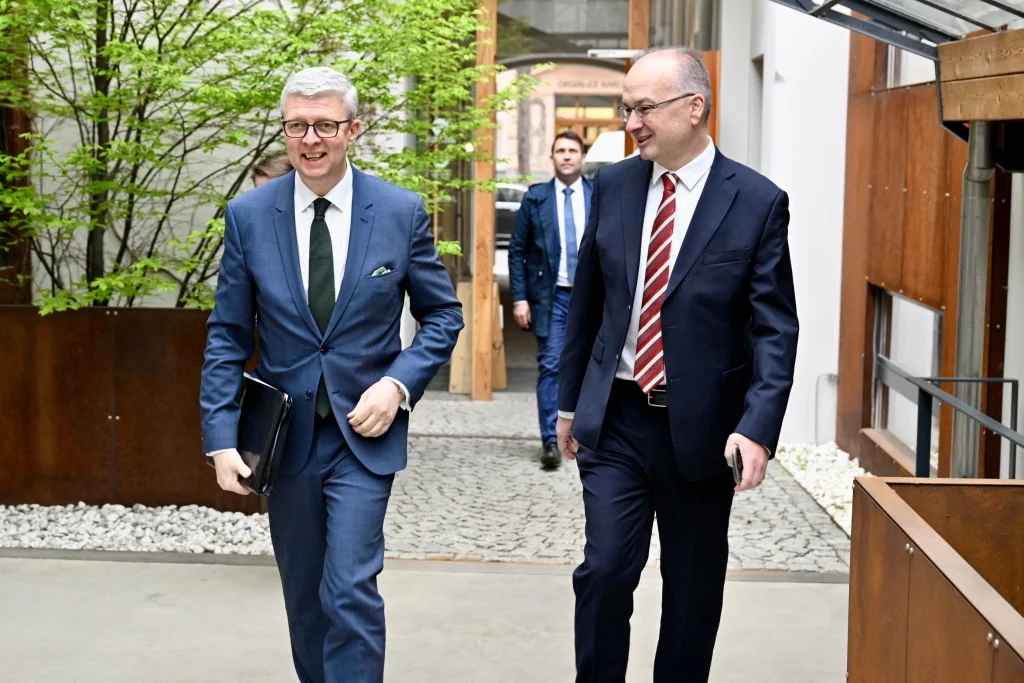
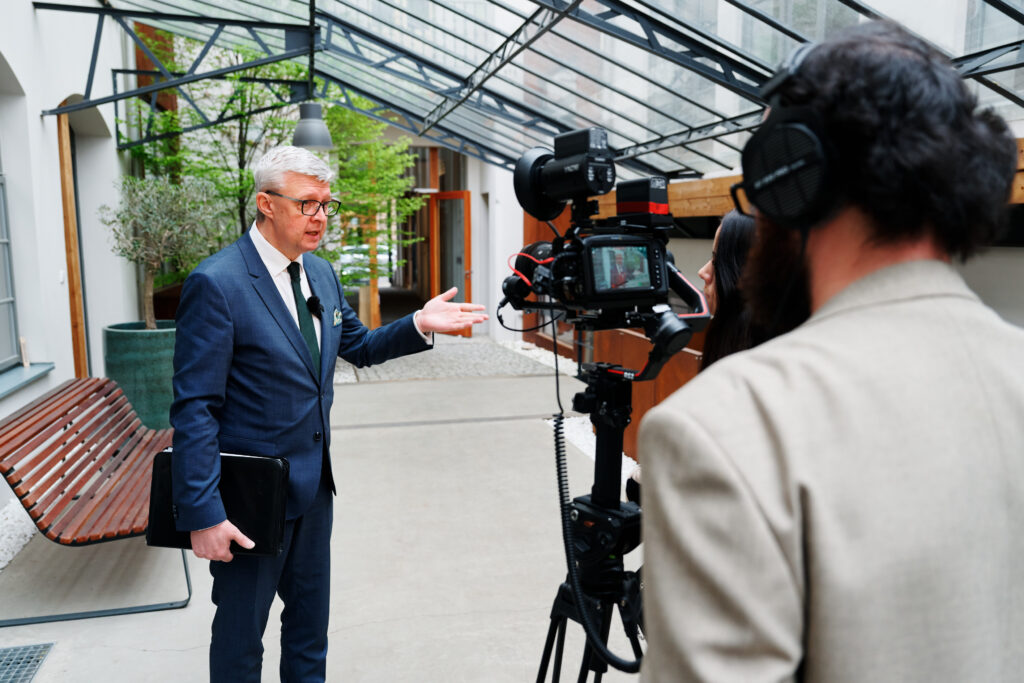
Minister Havlíček warned against complacency. Czech competitiveness, he said, was eroding as energy prices diverged across Europe. He urged fresh capacity—nuclear, gas and renewables—to anchor supply and cap prices. The state, he hinted, must underwrite risk to lure investors. Secure energy, he argued, now matters as much as tanks or police. He reminded the audience that 1.6m households draw heat from district networks, most of them middle- or low-income, and therefore vulnerable to price shocks.
Counting the cost
Mr Tobola, supplier of heat to a swathe of Czech cities, insisted that a one-fuel strategy would be reckless. “It is too great a risk for us to base our entire heating sector solely on gas. Even though replacing a coal-fired heating plant with a gas-fired one is the easiest thing you can do. We would build the same solution everywhere and wouldn’t have to worry much about it,” he said. The surge in gas prices after the Middle East war, he argued, vindicated Veolia’s decision to mix fuels—biomass, waste-to-energy and soon industrial heat pumps.
Carbon prices are hobbling the status quo. At roughly CZK 200 per gigajoule for coal and CZK 120-150 for gas, allowances now inflate district-heating bills by about 20 per cent. “Allowances are a significant cost for us today, but I am convinced that these costs will decrease in the future as we gradually modernise our operations by 2030,” added Mr Tobola.
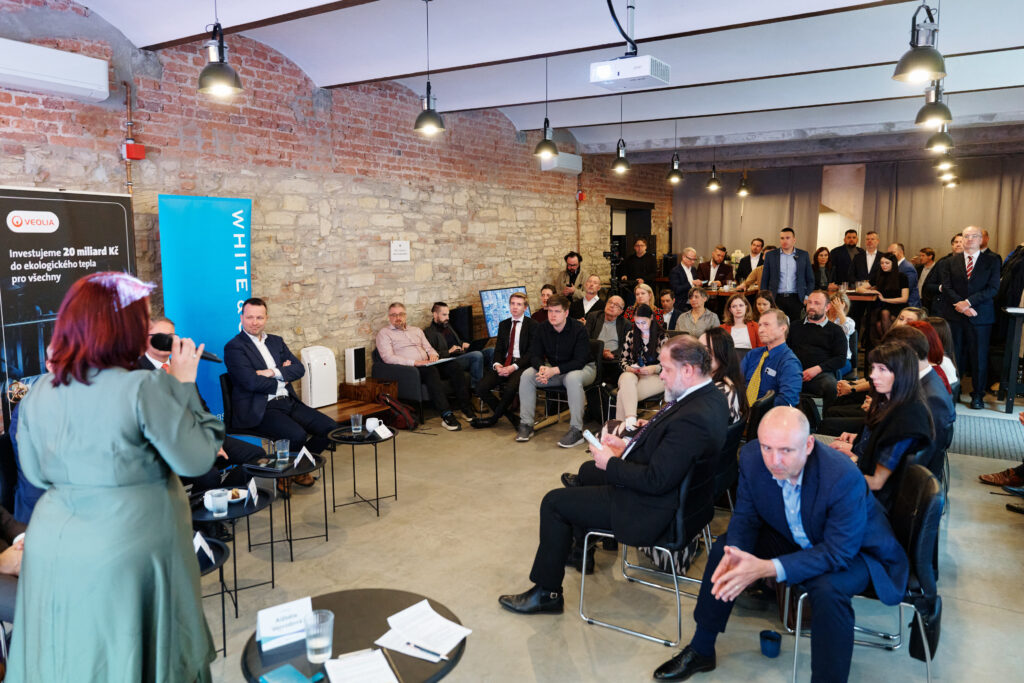
The company has secured grants from the Modernisation Fund and capacity-market auctions to back replacements worth almost 3 GW. Mr Tobola says it provides evidence that government money can tilt boardroom maths.
Pressure also comes from customers. Multinationals and large landlords, keen to polish their environmental scores, want ‘greener’ steam. Veolia’s task, therefore, is not only to meet regulation but also to keep clients from defecting to heat pumps or on-site boilers.
Pricing carbon, spending cash
Mr Wnuk, who runs the Czech subsidiary of Poland’s oil-and-chemicals giant Orlen, called the Emissions Trading System (ETS) a blunt but necessary spur. “What was the reason for introducing the ETS system? To motivate companies to invest in technologies with lower emissions. The financial logic is that the cost of allowances should be higher than investing in low-emission technologies. And that is exactly what we are doing,” said Mr Wnuk. Orlen Unipetrol will shift its Czech Litvínov-based refinery from lignite to gas, yet allowances already drain cashflow that could fund next-stage abatement.
The selling price (of gas) is determined in the single market based on supply and demand. If someone buys it cheaper, it increases their profit instead of lowering the price for customers. — Karel Havlíček, Czech industry minister
Refineries, he noted, emit only seven per cent of the life-cycle carbon in petroleum products; the real bulk arises when motorists burn fuel. Still, his sector must play its part and hunt alternatives for heavy freight, ships and jets.
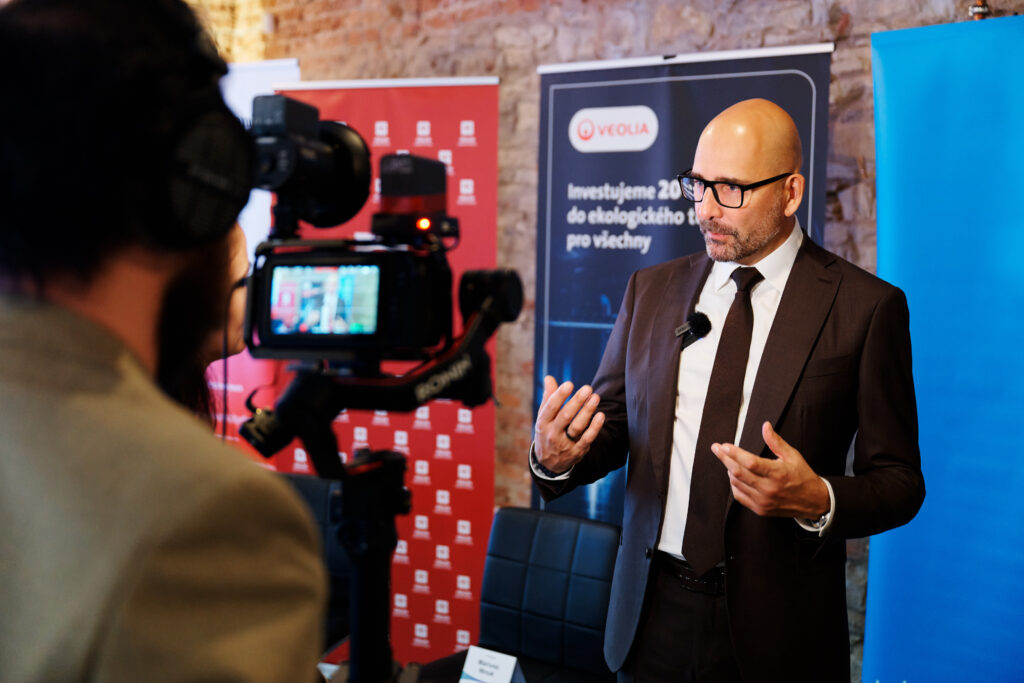
Batteries, he scoffed, will not do. “If we wanted to replace jet fuel with batteries, we would need batteries weighing 2,000 tonnes, which is 100 times more,” noted the head of Orlen Unipetrol. That leaves biofuels, hydrogen or synthetic kerosene. It is costly now but, he argued, will be vital for energy security.
Law, permits and physics
The lawyers conceded that rules, not turbines, will decide pace. “In my experience, it has proven very effective in both the energy sector and other infrastructure. It is a change that has had the greatest practical impact on the development of the energy sector,” said White & Case’s Mr Stehlík.
“Here, I would certainly urge that we not rest on our laurels,” the lawyer praised a specialised permitting office that has trimmed red tape. Brussels, he added, finally cares about keeping industry inside Europe and easing levies on power grids rather than only the wholesale price.
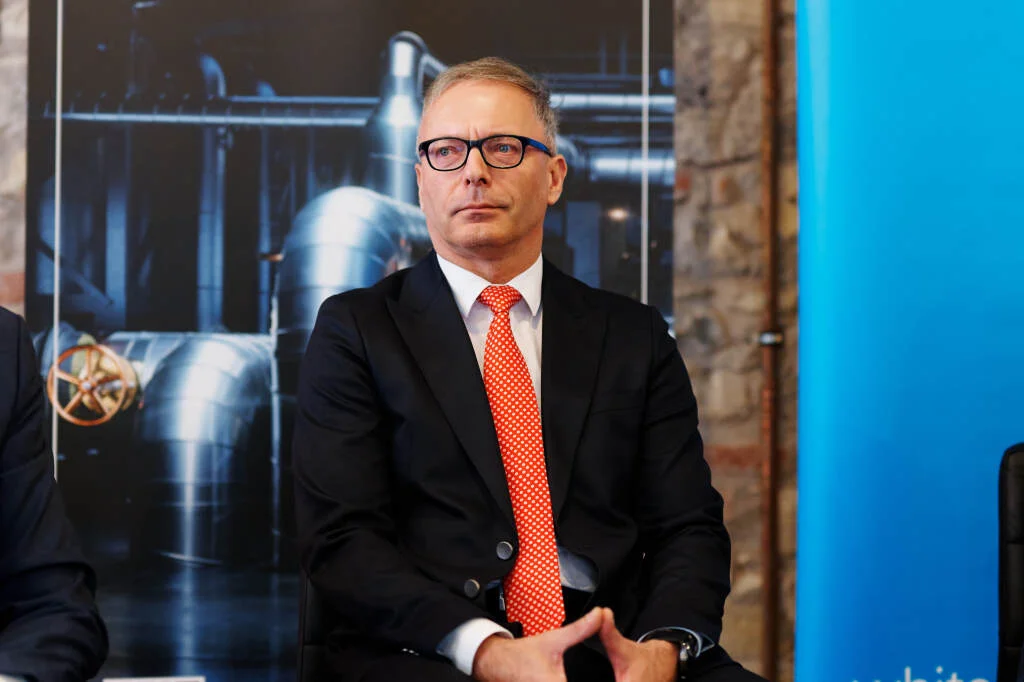
Mr Stehlík could not resist a jab at past policymaking. “At the beginning of this century, too many people with a humanities background, lacking knowledge of physics, were involved in the energy sector,” he commented. A new batch of Czech legislation might, he hoped, re-inject engineering sobriety. Yet it remains to be seen, he confessed, whether it cuts end-user tariffs.
The security premium
For Mr Havlíček, the prize is autonomy. He scoffed at “false prophets” who promise cheap Russian gas. “With gas, it’s absolutely clear. The selling price is determined in the single market based on supply and demand. If someone buys it cheaper, it increases their profit instead of lowering the price for customers,” he told delegates. The minister wants more nuclear—small modular reactors as well as large units—to lock in baseload and shield bills from gas spikes.
If we wanted to replace jet fuel with batteries, we would need batteries weighing 2,000 tonnes, which is 100 times more. — Mariusz Wnuk, CEO of Orlen Unipetrol
Europe, he recalled, once mocked such ambitions: “When I arrived at a European Union meeting in 2019 as the newly appointed industry minister, stating that we would revive the nuclear programme in the Czech Republic, they looked at me like I was a weirdo. They said they wouldn’t interfere with our energy mix, but that they thought we wouldn’t build anything anyway because it’s too expensive,” Mr Havlíček recalled.
The mood has swung. Many German officials now regret their reactor closures and woo Czech engineers for modular projects. Yet gaps persist. Wholesale prices for 2027 run at €55 per MWh in France but hover around €100 in Central Europe. Interconnectors could share surpluses, Mr Havlíček argued, but cheaper countries veto the plan for fear of higher domestic tariffs.
Who foots the bill?
None of the panellists expected energy prices to tumble. Mr Tobola warned that feed-in tariffs or strike-price contracts for new gas and nuclear plants will land on consumers’ bills. The task, said Mr Stehlík, is to trim network fees, taxes and other add-ons so that final invoices hold steady even as investment balloons.
Capacity mechanisms may pay dispatchable generators for being on standby. That might entice developers yet risks locking in costly assets. The European Commission must approve any scheme; details remain patchy.
Mr Wnuk thought fuel duty a frail decarboniser, given low elasticity of demand. Electric cars will spread, but trucks, planes and ships need liquid energy. Europe, he insisted, should not swap oil dependency for battery-metal dependency. Instead, it should diversify energy inputs and nurture domestic hydrogen, biofuels and nuclear-powered grids.
Keeping voters onside
How, then, to sell higher capital outlays and dearer electricity to households staring at stretched budgets? The Czech deputy prime minister believes social stability hinges on credible deadlines and transparent subsidies.
He advocated for capping retail fuel margins to ensure tax cuts flow to pumps, a light-touch move that he contrasted with Poland’s temporary VAT holiday. The state, he said, will act—sparingly—when markets misfire.
Allowances are a significant cost for us today, but I am convinced that these costs will decrease in the future as we gradually modernise our operations by 2030. — Jakub Tobola, Veolia Energie Czech Republic
Mr Tobola took comfort in mixed portfolios, both geographically and fuel-wise. He mentioned three Czech cities: heat pumps in Prague, biomass in Ostrava, waste-to-energy in Třinec. Spread bets, he said, and liability shrinks. Veolia pays about CZK 2bn a year in allowances; cutting coal by 2030 would slash that burden and reassure investors such as Heimstaden, a big landlord pressing for cleaner supply.
Opportunity and peril
The Czech grid’s advantage, argued Mr Stehlík, is reliability. Fast permitting shortens project timelines, while the EU’s Clean Industrial Deal cash can bridge finance gaps. Yet decarbonisation remains a race against time. If electricity stays twice as pricey in Prague as in Bordeaux, factories may “pack up”, in Mr Havlíček’s phrase, and re-locate. The minister’s ten-strong alliance of like-minded states seeks ETS reform (and scored partial success earlier this week).
All four speakers agreed on one point: energy security now carries a premium that most voters grasp. Europe’s share of global GDP has slipped; no-one in Prague or elsewhere wants that slide to accelerate because kilowatts cost too much or arrive too late.
The conference closed without grand declarations. Instead, it offered a portrait of incrementalism: mix fuels, price carbon high enough to sting but not to cripple, accelerate licences, and keep the poorest from freezing. Mr Tobola’s parting shot captured the mood: electricity prices may not fall, but resilience can rise. That, for now, is decarbonisation Czech-style: less a sprint to net-zero than a steady march to a safer, if scarcely cheaper, energy future.