The European Commission has unveiled its first EU Anti-Poverty Strategy, casting spotlight on one of Europe’s fastest-growing social fault lines: the working poor, people who are employed but still unable to afford a decent standard of living. The plan aims to lift 15 million people out of poverty by 2030 on the back a proposed €100bn for social policies in the next EU budget. It draws cautious support from NGOs saying the real test will be whether Brussels turns ambition into concrete action.
Introducing the package on Wednesday, Roxana Mînzatu, European Commissioner responsible for social rights was clear that the issue couldn’t be more relevant.
According to her, Europe’s economic pressures could deepen amid mounting geopolitical instability. Also, the energy shock in connection with the Middle East and its social consequences expected to hit the bloc’s most vulnerable citizens first.
In-work poverty
But vulnerability, Ms Mînzatu stressed, no longer applies only to those traditionally associated with poverty. “It is still a reality in the lives of many workers in the European Union. Some 16 million people who, although they have a salary, are not able to make ends meet. In-work poverty is an important challenge we want to address,” she said.
The statement goes hand in hand both with an increasing recognition of the concept of the “working poor” and with what the civil society has been vocal about for years now.
“Across Europe, a significant number of people are working, sometimes in multiple jobs, and still cannot afford a decent standard of living. This is not a marginal issue but a structural one.” — Caritas Europe
To tackle the issue, the Commission says the strategy’s first priority will be creating quality jobs, alongside new consultations with trade unions and a recommendation on working poverty and insufficient wages. The move could also reopen debate over the lack of EU-wide consensus on minimum wages.
Backing the strategy, Brussels says at least €100bn will go to social policies and anti-poverty measures in the next long-term EU budget. However, that figure does not appear as a dedicated allocation in the proposed 2028–2034 Multiannual Financial Framework, but is instead part of a broader social spending target covering employment, inclusion and housing.
Unable-to-work
Low wages are only part of the picture. For millions of Europeans, the challenge is not inadequate pay, but exclusion from the labour market altogether.
Later this year, the Commission will launch a first-stage consultation with European social partners with a view to presenting a directive on effective job integration measures for people excluded from the labour market.
“This is an important piece of legislation aimed at supporting people outside the labor market so they can access the opportunities best suited to their needs, wherever possible,” Ms Mînzatu said.
“There are over 50 million people in Europe who could work but remain excluded from the labor market for various reasons and are therefore at greater risk of social exclusion; a significant portion of this number are women, young people, and migrants,” she added.
Houses and homes
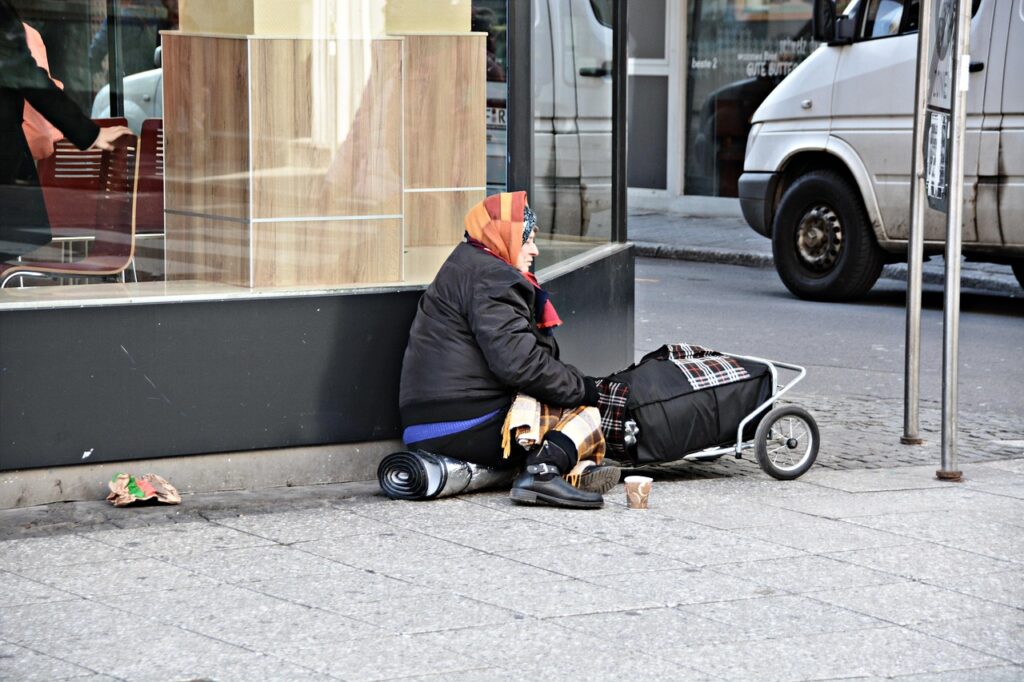
The strategy is also accompanied by a proposal for a Council Recommendation on combating housing exclusion, addressing one of the most visible and urgent forms of poverty, something NGOs long called for.
“A European Anti-Poverty Strategy worthy of the name must tackle the most urgent forms of poverty, such as homelessness,” Freek Spinnewijn, Director of the European Federation of National Organisations Working with the Homeless (FEANTSA), told EU Perspectives.
Now, Spinnewijn welcomed the proposal. “There are sufficient hooks to deliver real impact for the more than one million people experiencing homelessness every day in the EU area. FEANTSA is ready to partner up with the Commission to turn words into effective action,” he said.
The kids in EU are not alright
One in four children in the EU is at risk of poverty, according to Eurostat, making child poverty another major pillar of the strategy.
The Commission says it will support member states in offering personalised support to children, including tutoring programmes and stronger protection against online and offline threats. Among the new initiatives are a pilot European Child Guarantee Card to facilitate access to services, alongside measures to guarantee families access to quality jobs, childcare services and stronger safety nets.
The network of childrights organisations Eurochild welcomed the stronger focus on prevention, integrated child-centred support, mental health, online safety, early childhood education and care, while in the same breath calling for concrete action.
“The next phase must now focus on concrete delivery,” said Ally Dunhill, Eurochild’s Director of Policy, Advocacy and Communications. In particular, the organisation is calling for stronger national action plans, better outreach to the most excluded children, stronger accountability mechanisms and dedicated funding.
Disability and AI
The Commission has also proposed creating a European alliance dedicated to supporting the independence of people with disabilities, helping the transition from institutional to community-based services through EU funding.
The proposal forms part of the mid-term review of the EU Disability Rights Strategy and takes into account new challenges that have emerged since 2021, including the growing use of artificial intelligence in assistive technologies. European Disability Forum welcomed the inclusion of AI and accessibility initiatives, but said the proposals still fall short of its legislative demands. “Initiatives on AI and assistive technology: they are far from our demand for legislation, but it’s good to see some much-needed action,” the organisation said in a statement.
The updated strategy also aims to improve accessibility in transport and make elections and political participation more inclusive ahead of the 2029 European elections. However, the forum warned that “While the Strategy includes some valuable proposals and identifies key challenges, none of our proposed flagship initiatives were included.” In conclusion, various NGOs are “quite” satisfied with the European Commission’s strategy but demand concrete actions.