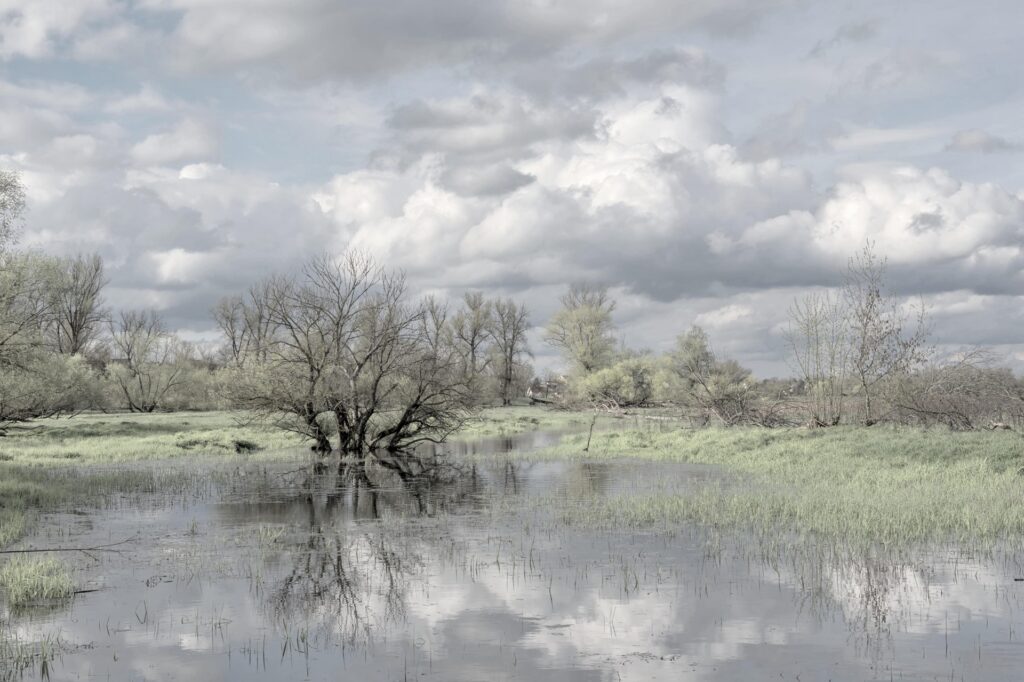
Floods that swept through more than a fifth of Spain between November and February destroyed crops and agricultural infrastructure across Andalusia and Extremadura, pushing many farms to the brink of collapse. The European Commission has now approved a €1.5 billion compensation scheme to help farmers recover and keep food production in the region alive. The decision raises a question Europe will face again and again: who foots the bill when the climate turns?
The floods struck between 10 November 2025 and 9 February 2026, tearing through more than 100,000 square kilometres — roughly a fifth of Spanish territory. They destroyed crops, damaged agricultural infrastructure, and halted production across both regions. Spain notified the Commission of the scheme shortly after; it will remain in place until the end of 2026.
Under the measure, farmers will receive direct grants covering up to 100 per cent of their eligible costs. These include losses from partially or completely destroyed crops and damage to agricultural assets. The aim is to stabilise the sector quickly and prevent permanent farm closures.
Footing the climate bill
The Commission assessed the scheme under Article 107(2)(b) of the Treaty on the Functioning of the European Union, which allows member states to compensate farmers for losses caused by natural disasters. Spain had to show a direct causal link between the flooding and the damage incurred. The Commission confirmed that link and approved the measure within weeks.
The approval also had to clear the 2022 Agricultural Guidelines, the EU’s rulebook for state aid in the farming sector. Those guidelines define what counts as eligible damage and how far public money can go to cover it. In this case, the Commission concluded that both conditions were met.
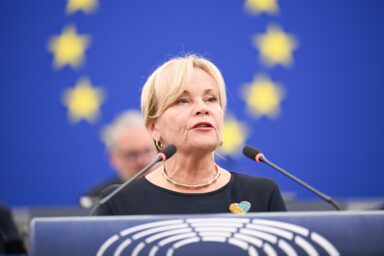
Executive Vice-President Teresa Ribera, who oversees the EU’s clean transition agenda, framed the decision as part of a broader commitment to protecting farmers from climate shocks. The Commission must be ready to act quickly when natural disasters strike, she argued. This time, it did.
Her involvement is telling. Ribera is not the agriculture commissioner. She is the EU’s climate chief. Her prominent role in announcing the decision suggests Brussels no longer treats agricultural disaster relief as a one-off measure, but as a structural feature of life in a warming continent.
A new normal for farming
Ribera left little doubt about the stakes. “Agriculture plays a crucial role in the EU’s economy and society,” she said. “The increasing frequency of natural disasters, such as floods, poses a significant threat to agricultural production and food security. Compensatory measures are critical to protect the agricultural sector and to ensure its long-term sustainability.”
The increasing frequency of natural disasters, such as floods, poses a significant threat to agricultural production and food security.
— Teresa Ribera, Executive Vice-President for Clean, Just and Competitive Transition
The decision rests on the 2022 Agricultural Guidelines, which allow the Commission to compensate natural disaster losses provided a clear causal link exists between the event and the damage claimed. Once confidentiality issues are resolved, the full decision will appear in the Commission’s state aid register.
The Spanish case will not be the last. Southern Europe faces more frequent and more intense extreme weather events as temperatures rise. Whether the EU’s state aid framework can keep pace, and whether member states are willing to keep funding it, will define how much protection European farmers actually have.