Europe’s energy crisis just got a new lifeline, but it comes with a catch. Brussels has told member states they can raid cohesion funds, money meant for poorer regions, to plug the gap left by soaring energy costs. The funds were never designed for this.
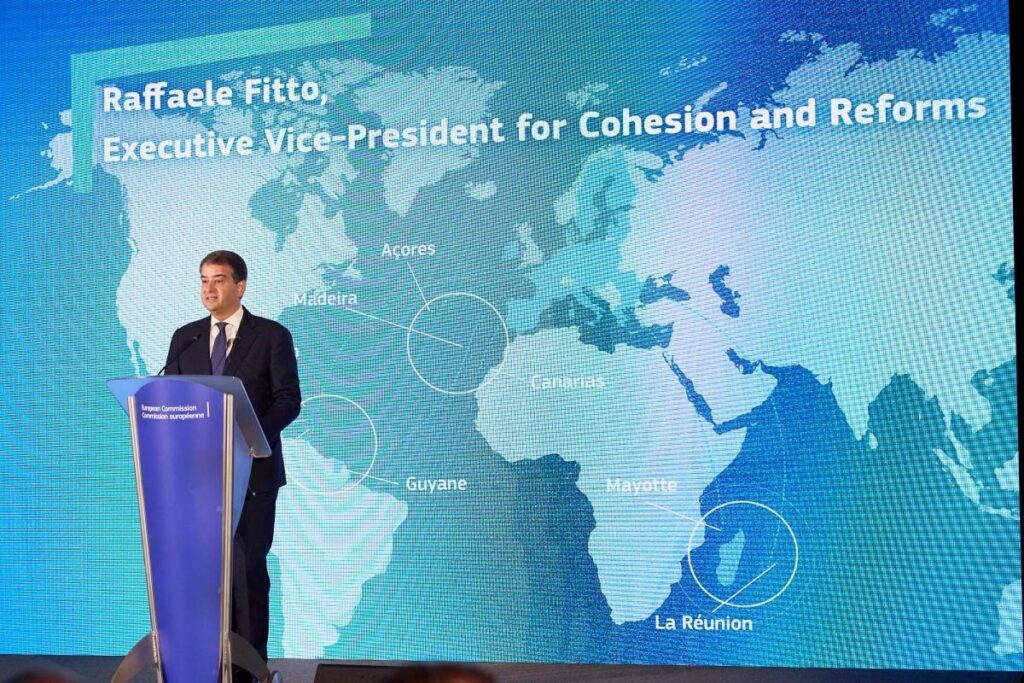
In a letter sent on Thursday, Commissioner for Cohesion and Reforms Raffaele Fitto urged member states to reprogram available cohesion resources towards energy. “The goal is clear: to rapidly redirect available cohesion resources towards investments that deliver immediate relief to families and businesses suffering from high energy prices,” Mr Fitto said. Governments could tap several funds to finance new energy projects. These includes the European Regional Development Fund, the Cohesion Fund, and the Just Transition Fund.
Cohesion funds are designed to reduce regional disparities. They support economic development in less-developed regions of the bloc, helping them converge with more prosperous areas within the European Union. The overall budget stands at €392bn to finance regional and national programs.
Mr Fitto said that member states could create new financial instruments or adjust existing financing programmes. The Commission hopes these measures will reduce dependence on fossil fuels and strengthen energy market stability. Both goals align with its recently released AccelerateEU strategy.
Energy security
Mr Fitto’s words are reminiscent of those used by Italian Prime Minister Giorgia Meloni. Last week, Ms Meloni asked the European Commission to relax fiscal rules for households and industries. Both have been struggling with soaring energy costs, exacerbated by the closure of the Strait of Hormuz.
According to Ms Meloni, energy security should be treated with the same urgency as defence spending. The EU could not reasonably explain to its citizens why it granted financial flexibility for defence, while refusing the same for energy, Ms Meloni argued. A new energy crisis could severely damage the real economy, she warned.
Ms Meloni asked the Commission to extend the scope of the national escape clause for defence expenditure. She wants it to cover investments and measures aimed at addressing the energy crisis. This clause currently allows member states budgetary flexibility to boost defence spending.
In response to Ms Meloni’s letter, Economy Commissioner Dombrovskis said last Friday that the Commission was weighing its options. It was “currently looking at the policies, including fiscal policy options, to best address the crisis, including the use of existing flexibilities within our framework,” he said.
Adel El Gammal, secretary general of the European Energy Research Alliance (EERA), sounded a note of caution. Speaking to EU Perspectives in April, he said “I think that we should be extremely careful with any fiscal or other tool which would represent let’s say directly or indirectly a subsidy to fossil fuels.”
Mr Gammal argued that Europe had one way out of the crisis. It must accelerate the transition to “renewable energy and to a certain extent nuclear” to build resilience against future geopolitical shocks.
Shifting priorities
Mr Fitto’s letter reflects the EU’s focus on energy security. In March, the Commission published its mid-term review of the cohesion policy. It allocated €34.6bn to “EU strategic priorities” such as defence and security, and €1.2bn to the green transition.
The goal is clear: to rapidly redirect available cohesion resources towards investments that deliver immediate relief to families and businesses suffering from high energy prices.
— Raffaele Fitto, European Commissioner for Cohesion and Reforms
“This is an important step towards a European Union that takes responsibility for its own security,” Marie Bjerre, Minister for European Affairs of Denmark, who helped negotiate the file, said at the time. “The EU must be better prepared for tomorrow’s challenges,” Ms Bjerre said. The review would enable member states to use cohesion funds to address current challenges, she argued.
The review examined whether cohesion funds were delivering on their objectives. These range from green transition projects to digital modernisation and social inclusion. Officials argued that priorities have altered since the original programmes were negotiated.