Brussels is bracing for Britain’s political shake-up. Sir Keir Starmer’s threatened Downing Street exit could hand Labour successors radically different EU agendas, ranging from a customs union to single-market talks. The Union may thus face multiple legal scenarios.
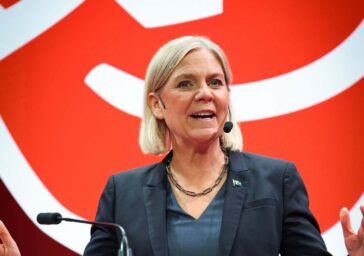
“The last government was defined by breaking our relationship with Europe. This Labour government will be defined by re-building that relationship, by putting Britain at the heart of Europe so that we are stronger on the economy, on trade, on defence,” UK Prime Minister Sir Keir Starmer said in a Monday speech heralded as a make-or-break survival plea after last week’s local-election drubbing.
It failed to staunch the bleeding. On Monday night, Mr Starmer’s future appeared extraordinarily bleak. Four Cabinet ministers came to see him in Downing Street on 11 May to press the Labour leader for a timetable to quit. Their revolt follows six aide resignations and more than 70 Labour MPs demanding change.
What is in it for Brussels?
The European Union has learnt to like Sir Keir’s incrementalism. Since 2024 he has stitched together a modest package: a draft EU–UK security pact; veterinary and touring-artists fixes to the Trade and Co-operation Agreement (TCA); association to Horizon Europe and Copernicus; and a still-unsettled youth-mobility visa capped by an ’emergency brake’. None upset his famous red lines of no single market, no customs union, no free movement. If he falls, continuity is not guaranteed.
Three heirs circle No 10. Wes Streeting, the health secretary, calls a customs union “the best way to get more growth”. Andy Burnham, mayor of Greater Manchester, says he hopes Britain will rejoin the European Union in his lifetime. Angela Rayner, former deputy prime minister, damns Sir Keir’s tougher settlement rules as ‘un-British’. Each would tug the TCA in a different direction — and with it, possibly, the EU’s own statutes.
The draft security pact tops Brussels’s wish-list. It promises deeper Europol data access, joint cyber-operations and scope, later, for participation in the European Defence Fund. Sir Keir’s departure would not derail it. Both Mr Streeting and Ms Rayner signal continuity.
Mr Burnham would go further, backing British entry into the Permanent Structured Co-operation (PESCO) schemes that underpin future EU battlegroups. That would force tweaks to Council Decision 2017/2315, which sets PESCO’s membership tests, yet diplomats see few legal snags: the decision already lets third states join missions case by case.
Trade follows politics
Sir Keir’s method—bolt-on deals without reopening the TCA—keeps the EU’s acquis intact. Mr Streeting would rip that up. A customs-union deal means re-applying the Common External Tariff and articles 26–32 of Regulation 952/2013, the Union Customs Code. Brussels would ask for dynamic alignment on future tariff changes and jurisdiction for the European Court of Justice. That is lighter than single-market rules but still a shock to Westminster leavers.
Mr Streeting also rules out free movement; hence Protocol I of the TCA on social-security coordination would stay frozen. Trade wins could be large—cars and chemicals escape rules-of-origin red tape—but Tory and Reform MPs would howl.
Mr Burnham eyes the single market itself. He could start with sanitary-and-phytosanitary alignment, extending Regulation 2017/625 to British farms, then move on to mutual product recognition under Regulation 2019/515. By 2029 he might table a Swiss-style accord bundle covering industrial goods, professional qualifications, and road freight.
Immigration and visas
Brussels would demand budget payments and Council oversight. That path ends either in a Norway-style European Economic Area slot or full EU membership. Neither is imminent, but even exploratory talks alter the EU legislative calendar.
The last government was defined by breaking our relationship with Europe. This Labour government will be defined by re-building that relationship. — Sir Keir Starmer, Britain’s prime minister
Ms Rayner takes a different tack. She would keep the TCA but loosen Home Office rules. Restoring a five-year settlement route and lowering salary thresholds means more Tier 2 visas for nurses, welders, and coders. If she also raises the youth-mobility cap, Article Mob.8 of the still-draft mobility annex snaps into force, obliging Brussels to adjust Directive 2004/114 on student residencies. Continental governments mostly shrug; labour-short Germany wants the nurses. Yet higher inflows could reignite referendum passions in Britain.
Mr Streeting keeps migration tight. Mr Burnham goes the other way; a hint at partial free movement lights Brexiters’ bonfires. All three leaders would, however, protect Horizon Europe. That ensures British universities keep tapping the €95.5bn pot and spares the EU a budget re-write of Regulation 2021/695. In science at least, Brussels hears harmony.
Steel and strategic sectors
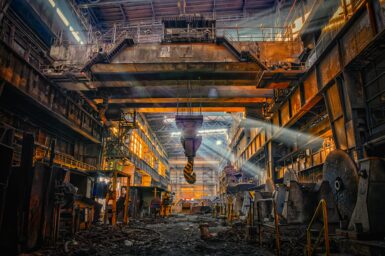
Sir Keir’s green-steel pledge adds another twist. “Strong domestic steel production is vital for our economy. New legislation will give us the powers to take British Steel into full public ownership if that is what it takes to secure jobs, supply chains and Britain’s industrial future.”
Business Secretary Jonathan Reynolds promised that the government is “putting the full weight of Whitehall behind the industry … committing up to £2.5 billion to the future of steel”. Mr Streeting likes industrial activism; Mr Burnham adores it. Yet full nationalisation would complicate Brussels’s carbon-border-adjustment mechanism, embedded in Regulation 2023/956.
The customs union mooted by Mr Streeting would lift goods exports, says the Centre for European Reform, by 0.3–0.7 per cent of GDP. The single-market leap aired by Mr Burnham could double that. Ms Rayner’s migration easing might swell labour supply and blunt wage pressures.
Money on the table
Yet each option carries costs. A customs union denies Britain an autonomous tariff. Rejoining free movement revives culture-war skirmishes. Looser visas upset union backers. Continental leaders care mainly about predictability: they need to know which directives to amend and when.
Timing matters. The TCA’s first formal review opens in late 2026. If Labour crowns a new leader before then, Brussels can slot fresh demands into that process rather than start another treaty. For a customs-union pivot, lawyers would amend Part Two, Title X of the TCA and cross-reference the Union Customs Code. For single-market access the list lengthens: competition rules, VAT, agricultural quotas. Officials mutter about ten-thousand-page annexes.
It brings vital certainty for the workforce and safeguards a critical foundation of the UK’s industrial base. — Gareth Stace, CEO of UK Steel
Each plan collides with Westminster arithmetic. Mr Streeting’s customs-union bid splits Labour’s Brexit-sceptic core but lures Conservative moderates. Mr Burnham’s re-entry drumbeat rallies Remainers yet electrifies Nigel Farage’s Reform UK. Ms Rayner’s liberal visas soothe Labour’s union voters but risk Tory attacks on borders. Mr Streeting comes across as the most negotiable, Mr Burnham as the most ambitious, Ms Rayner as the safest pair of hands.
Industry stakes
Business craves certainty. “It brings vital certainty for the workforce and safeguards a critical foundation of the UK’s industrial base,” said Gareth Stace, CEO of UK Steel of Mr Starmer’s plan to nationalise the company. The Confederation of British Industry hailed Sir Keir’s Europe reset as “the clearest signal yet that the UK wants to lower trade frictions”. Now, lobbyists draft three sets of talking points.
London’s pro-European change of tack is by no means a given. On Monday, Mr Farage branded Mr Starmer’s less-than-revolutionary speech an “audition for a Brussels job”. It is unlikely that he should abandon his proven anti-European message any time soon. However, should the UK and the EU decide to deepen their ties significantly—as a result of the current Downing Street tumult or otherwise—which EU acts would feel the shock-waves first?
Legislation in play
• Security
– Regulation (EU) 2016/794 on Europol: an annex could list the UK as a third state with enhanced operational access under the eventual security pact.
• Customs union
– Regulation (EU) 952/2013 (Union Customs Code): the UK would have to apply it in full via an association protocol; the Regulation itself need not be amended.
– Council Decision (EU) 2021/1114 (concluding the TCA): would stay in force for non-tariff chapters but be complemented—not rewritten—by a separate customs-union treaty.
• Single-market access (goods and transport)
– Directive (EU) 2019/515 on mutual recognition of goods: the UK would have to align and accept its notification procedures.
– Regulation (EU) 2018/1139 on aviation safety and the ‘Fourth Railway Package’ trio (Regulations 2016/796 and 2016/2338, Directive 2012/34): deeper market entry would require annexes or parallel accords referencing these measures.
• Free movement / visas
– Directive 2004/38/EC on citizens’ free-movement rights and Regulation (EU) 2019/1157 on uniform residence-permit formats: any mobility deal that restores broad movement would have to dovetail with these instruments.
• Research
– Regulation (EU) 2021/695 establishing Horizon Europe: remains unchanged; the UK is already an associated country.
Waiting for the knife
Sir Keir insists he will fight on. “People need hope – and they will get it when Britain once again leads in Europe, not stands apart from it.” Hope now rests on the weekly Cabinet. If ministers strike, a summer leadership contest looms. Ballots close, perhaps, just as the TCA review opens. The EU senses leverage.
Should Mr Burnham win, expect Brussels to push dynamic alignment and budget payments within months. If Mr Streeting prevails, customs-union texts could emerge in early 2027. In the case that Ms Rayner seizes the crown, talks shrink to youth visas and Horizon fees. The EU would bank progress on security whichever name graces No 10.
Europe rarely gains from British turmoil. Yet instability sometimes spurs integration. In 1955 the abortive Commonwealth Economic Conference nudged Britain towards EFTA. In 1974 Harold Wilson’s renegotiation paved the way for a confirmatory referendum. Today’s drama could set another pivot. Brussels prepares for three futures; and prays Westminster picks one quickly.