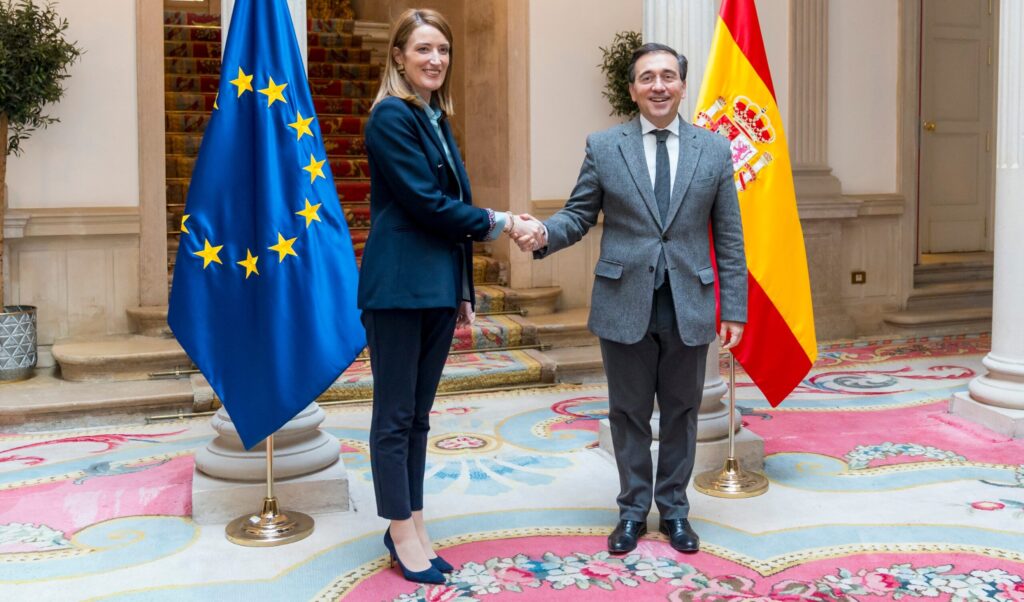
Late last week, Spanish Foreign Minister José Manuel Albares floated the idea of the EU building armed forces of its own. European governments let it sink: it generated scant official response and zero direct support.
Madrid’s latest foray into Europe’s defence debate has not fared well. French and German diplomats quietly reminded journalists that “most capitals still see NATO as the primary shield”. Baltic and Nordic officials said they backed stronger European capabilities yet insisted they must remain “firmly embedded inside NATO structures”. By the time of publication, Spain’s foreign ministry has not responded to EU Perspectives’ enquiry into the matter.
Southern Europe responded more warmly; Italy and Portugal offered no objections. It is difficult to miss the irony. Madrid pitches itself as leader of a Mediterranean bloc keen on strategic autonomy even as Pedro Sánchez is the only head of EU-member state government openly defying even NATO spending requirements. This is despite the fact that, realistically speaking, the requirements are very low.
Signals from Washington
Mr Albares explained the logic. “The European Union must build its own military,” he told journalists last week. “Europeans cannot be waking up every morning wondering what the US will do next” and therefore need “a military, a common defence capacity”. He stressed that a European army would complement, not replace, the Atlantic alliance.
His timing felt deliberate. President Donald Trump has announced plans to withdraw 5,000 troops from Germany and hinted at further pull-outs, rattling faith in NATO’s Article 5 guarantee. Mr Trump’s focus on the Iran–Hormuz crisis—and threats of punitive tariffs on European goods—adds to the sense that America’s umbrella might fold just when Europe needs it.
That uncertainty has revived an old argument. France began talking up “strategic autonomy” after America’s Afghan exit in 2021. Germany did the same when Russian missiles landed near the Polish border in 2024. Yet neither capital has endorsed a standing EU force. Paris dreads diluting nuclear clout; Berlin fears hostile referenda if treaty change looms.
On a related note—but with no connection to Mr Albares’ statements—Brussels points to its new €150bn Security Action for Europe loan facility, or SAFE, as proof that money now matches rhetoric. Commission President Ursula von der Leyen has long promised to turn the Union into a “military powerhouse” and will test that pledge when SAFE cash begins to flow.
Money and mechanisms
SAFE changes the calculus somewhat. The facility lets member states borrow collectively for defence, a political leap on a par with the pandemic recovery fund. The first loan—€44 bn for Poland—was signed on 8 May, days before Mr Albares spoke. Warsaw’s government applauded; nationalist President Karol Nawrocki dissented. “EU-level defence financing undermines sovereignty,” he said.
Markets are watching the game closely. Defence stocks jumped after Madrid’s announcement, even as bond investors fretted about treaty change and fresh debt. Analysts reckon that, by 2030, cumulative EU defence outlays could hit €943bn if member states channel half their SAFE allocations into common projects such as air defence and satellites.
Institutional architects already sketch options. One study envisions a 50,000-strong Rapid Deployment Corps under the EU Military Staff, expandable into a standing force. Another suggests a “coalition of the willing” outside EU treaties, echoing Operation Aspides, the Red Sea escort mission. Lawyers prefer the latter: it dodges unanimity and referenda, though at the cost of permanence.
Domestic headwinds
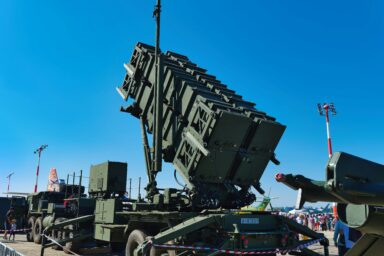
Industrial planners spy windfalls. Joint procurement could consolidate Europe’s fragmented arms market, now dotted with duplicate tank, frigate and fighter programmes. SAFE money might bankroll common air-defence batteries or long-range missiles. These are assets the Union sorely lacks. Defence firms lobby hard; taxpayers blanch at price tags.
Europeans cannot be waking up every morning wondering what the U.S. will do next. — José Manuel Albares, Spain’s foreign minister
Spain must first persuade its own voters. Opinion polling shows support for NATO remains high, while appetite for treaty change is lukewarm. Opposition conservatives are skeptical of anything that comes from socialist-run La Moncloa. Catalan parties fear an EU army might one day police separatists. Madrid counters that pooled defence cuts duplication and earns influence.
Elsewhere, frontline states harbour long-held concerns. Their reservations from the past include the following: Estonian generals want any EU force to train under NATO command to guarantee rapid American reinforcement. Romanian officials note that only Washington fields heavy-lift aircraft in sufficient numbers. Greek ministers worry that an EU army would not necessarily back Athens in the Aegean.
Political choreography
June’s Defence Foreign Affairs Council will test the mood. There is no indication that the ministers will even ponder mandating the High Representative to draft blueprints for a corps. They might well haggle over SAFE’s rulebook: what share of loans must fund joint assets rather than national wish lists? Clarity must come before the NATO summit in Ankara this summer.
France and Britain provide a cautionary tale. Their 51-nation coalition for the Strait of Hormuz took shape only after Iranian mines shut a fifth of global oil flows. Even then, smaller members offered cheques, not frigates. A European army could suffer the same two-tier fate: core contributors at the sharp end, spectators in the rear.
Has Madrid set the agenda, or just put out feelers through an impromptu remark? The reasoning behind the idea of a joint force is sound, but obstacles are daunting. Whether Europe listens depends on cash, law and threat perception. SAFE offers some of the money; treaty change could enable the mechanism; Russia and Iran provide the menace. The latter, ominously, is by far the most tangible of the three.