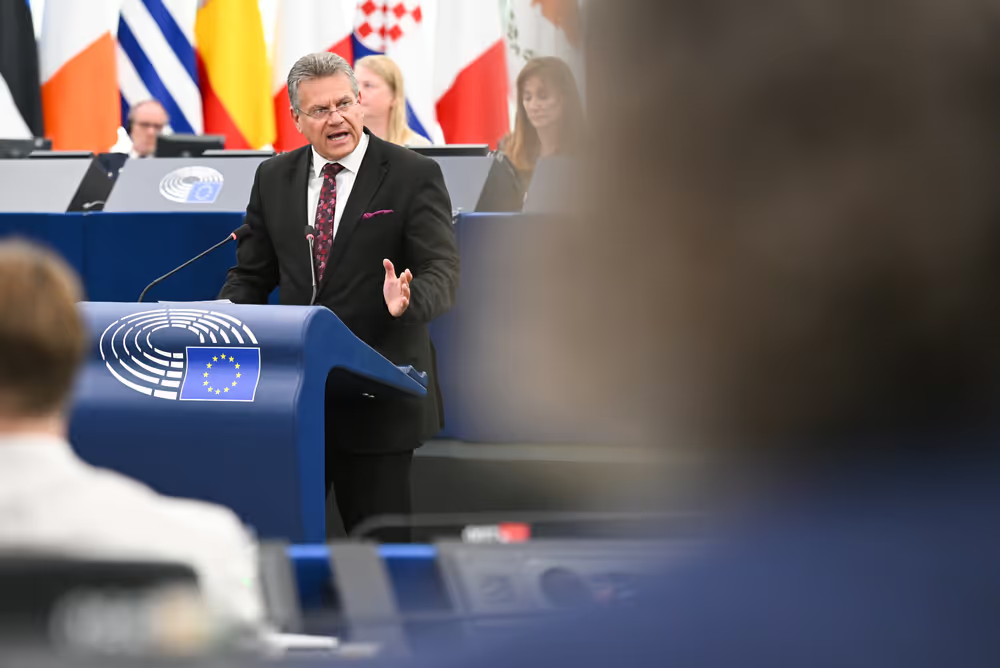
The European Parliament held one of its most charged debates on EU reform in years today, as MEPs clashed over whether deeper integration or stronger national sovereignty can save the bloc in today’s world. Commission Vice-President Maroš Šefčovič delivered the starkest warning: without reforming its decision-making, the EU’s capacity to act will weaken as it expands to 30 or more members. Some MEPs called for a European army and a federal union, while others warned that scrapping the national veto would end the equality of member states for good.
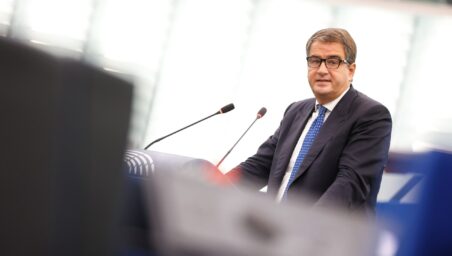
The question before the chamber was simple enough. Can the EU, built for a different era, act fast enough in today’s world? As Sven Simon (EPP/DEU) framed it opening the debate in Strasbourg today, the answer depends on something harder than institutional design. Citizens want protection from war, economic dependency, and geopolitical pressure. But they also need to feel that European decisions remain within their democratic reach. “Europe will only remain strong externally if it remains democratically trusted internally,” Mr Simon said.
The Commission’s answer was pragmatic. Treaty change is not the only option available. Passerelle clauses already embedded in the existing treaties would allow a shift from unanimity to qualified majority voting in key areas without opening a full revision process.
Commission charts a path
The Commission has advocated using passerelle clauses in foreign and security policy since 2018. In practice, unanimous decision-making has already stalled EU positions on sanctions and foreign policy crises, leaving the bloc unable to speak with a single voice at precisely the moments it matters most.
Enhanced cooperation offers a further route. The €90 billion support loan to Ukraine was delivered precisely through this mechanism, Mr Šefčovič noted, as proof that the tools work when political will exists.
On formal treaty revision, Parliament’s November 2023 resolution already set in motion the Article 48 process. “The ball is now in the Council’s court,” Mr Šefčovič said. The Commission is waiting to be asked.
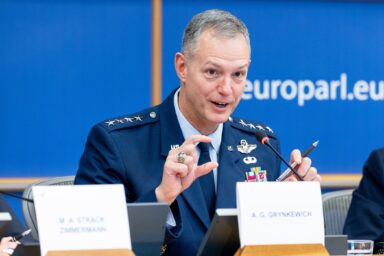
The caution came quickly. Even activating passerelle clauses requires unanimity in the Council, Cyprus Presidency representative Marilena Raouna reminded the chamber. The circularity was not lost on anyone in the room. The EU has acted in crises before, she argued: four years of support for Ukraine, the recent repatriation of citizens from the Middle East. Consensus, though, must come first.
Two Europes
What gave the debate its sharpest edge was enlargement. With the EU growing to 30 or more members, the current framework will simply not hold. “If we maintain the status quo, decision-making will be slower and our capacity to act will be weakened,” Mr Šefčovič warned. That sharpened every argument that followed.
If we maintain the status quo, decision-making will be slower and our capacity to act will be weakened.
— Maroš Šefčovič, Commission Vice-President
The case for deeper integration found its most vivid expression in a single image. “There is a man living in a cave,” said Reinier Van Lanschot (Greens/NLD). “He has a piece of paper saying this is his cave and that he has sovereignty. But what will he do when people enter his cave and threaten to kick him out? Europeans don’t want a sovereign cave. They understand real sovereignty is only achieved when you can actually shape your surroundings.”
Mr Van Lanschot did not stop there. Trump, Putin, Xi and the tech oligarchs, he told the chamber, all share one fear: a united Europe. “And the far-right nationalists in this parliament are helping them destroy it,” he said.
The counter-argument reached further back. Abolishing unanimity sets the EU on a dangerous slope, Christine Anderson (ESN/DEU) warned: a system where decisions are made everywhere and responsibility rests nowhere. She did not reach for abstract principle. She reached for history. “History has seen such systems before,” she said. “Rome, the Soviet Union. Hit the books, read up on it and draw the lessons.”
The debate closed without commitments. But the paradox that hung over the whole afternoon remains unresolved. To change the rule that is slowing Europe down, Europe must first agree unanimously to change it. Enlargement is coming regardless. And the clock does not wait for consensus.