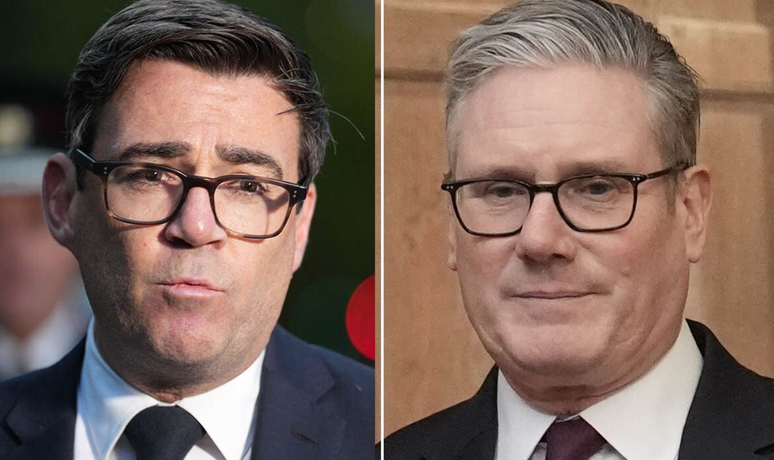
Sir Keir Starmer is out. Andy Burnham will inherit a promising—yet unfinished—European reset, and has little time to prepare.
The most tangible consequence of Andy Burnham becoming prime minister—if he does— may arrive before he has fully unpacked his boxes. The UK–EU reset summit in Brussels falls on 22 July. Sir Keir Starmer’s resignation makes it almost certain that Mr Burnham, not his predecessor, will sit across the table from European Commission President Ursula von der Leyen. That single scheduling accident concentrates minds on what a Burnham premiership would mean for Britain’s relationship with the continent.
The answer, in short, is: more of the same, then gradually more than that. Mr Burnham is incrementalist by necessity and integrationist by inclination. He has not questioned Starmer’s ongoing negotiations on electricity, agrifood sanitary and phytosanitary standards, and carbon markets—all of which lock Britain into future EU rules in return for market access.
A dignified departure
Every percentage-point reduction in non-tariff barriers with the EU is estimated by the UK in a Changing Europe (UKICE) to raise UK goods exports by approximately £1.2bn per year. The current package may claw back around 15 per cent of the Brexit-related trade loss; a customs union could double that.
Liberal Democrats and pro-EU Labour MPs have already urged Mr Burnham to “drop the red lines” on the single market and customs union. Business lobbies will use the 2027 UK–EU review clause to press for deeper supply-chain integration. The pressure will be hard to resist.
Sir Keir’s departure was, in the end, dignified. “The question my party is asking now is whether I am best placed to lead us into the next general election,” he said on 22 June. “I have heard the answer of my parliamentary party to that question, and I accept that answer with good grace.” He added: “Every decision I’ve taken has been about putting the country I love first. That is why I will resign as leader of the Labour party.”
The resignation ends a tenure defined by cautious management. Starmer stabilised the party and won power, but his reset with Europe remained incomplete and fragile. He leaves behind sectoral alignment deals still in negotiation, a draft security pact unsigned, and a parliamentary party impatient for bolder moves.
The path to No. 10
The timing is brutal for continuity. The NATO summit falls on 7 July. Mr Starmer will almost certainly attend, and Britain must present its Defence Investment Plan by then. The EU reset summit follows a fortnight later. The handover lands squarely between two defining European moments.
Labour’s National Executive Committee will open nominations on 9 July. If no challenger emerges—and none has declared as of writing—Mr Burnham could be prime minister on or around 17 July, the day before the summer recess begins. Two NEC members confirmed to the Guardian that the timetable is achievable. If a contest materialises, Sir Keir said he expects it to conclude by September.
I’m not proposing that the UK considers re-joining the EU. — Andy Burnham, contender for UK premiership
Nigel Farage, the Reform UK leader, wasted no time. He called the succession “ridiculous”, arguing that Mr Burnham had “any kind of meaningful mandate to lead the country” based on fewer than 25,000 votes in the Makerfield by-election last week. (Reform lost the contest by a wide margin.) The Conservatives have not joined the call for an immediate general election (no wonder, given their abysmal polling), leaving Mr Farage isolated on that demand.
Bold or bust
The Greens are sceptical for different reasons. Zack Polanski, their leader in England and Wales, said: “We are still waiting to see which version of Andy Burnham might going to show up in Downing Street. While he has talked about a change of course, the early indications are not encouraging and suggest more of the same with better communication skills.”
The question my party is asking now is whether I am best placed to lead us into the next general election. I have heard the answer of my parliamentary party to that question, and I accept that answer with good grace. — Sir Keir Starmer, outgoing UK prime minister
Mr Burnham’s duality is well documented. In 2025 he said he “wants Britain to re-join the EU“. By May 2026 he had walked back the statement: “I’m not proposing that the UK considers re-joining the EU”. That oscillation reflects genuine political constraints as much as a whiff of opportunism.
Net migration has already halved since 2024; Mr Burnham says “It needs to fall further.” He backs Home Secretary Shabana Mahmood’s tougher visa rules, arguing voters want “control as well as compassion”. Sector-specific mobility schemes—for the public healthcare system, the NHS, as well as for digital industries—are the most he is likely to offer before 2028.
A defence upgrade
On defence, the stakes are highest. The US National Defense Strategy now explicitly urges Europe to take primary responsibility for its own conventional defence. Mr Burnham is expected to upgrade David Lammy’s draft UK–EU Security Pact into a treaty-level agreement, giving Britain observer status in the EU Foreign Affairs Council on defence matters and a structured dialogue on hybrid threats and cyber.
He would also unblock Gibraltar-related reservations and ratify UK participation in the PESCO Military Mobility project by 2027. Post-2028, entry into logistics-hub and counter-hypersonic-missile projects is plausible, accepting limited decision rights in exchange for industrial access. There might well be a financial catch, though. Analysts warn that Mr Burnham must square ambitious European co-operation with an overstretched defence budget.
I want Britain to re-join the EU. — Andy Burnham
Diplomatically, expect Britain to attend European Political Community summits regularly, re-activate its observer status in the Committee of the Regions, and open talks on a UK–EU Joint Parliamentary Assembly to scrutinise the Trade and Cooperation Agreement. None of this reverses Brexit. But over a six-to-ten-year arc, it re-embeds Britain inside many of the EU’s regulatory and security frameworks. It also leaves a future government only a small step from debating full single-market membership. On the eve of the fateful referendum’s tenth anniversary—23 June—it is a fitting coda to the decade of political madness. It may even be meaningful.